Choline in Pregnancy: Hit Your 450mg Daily Goal
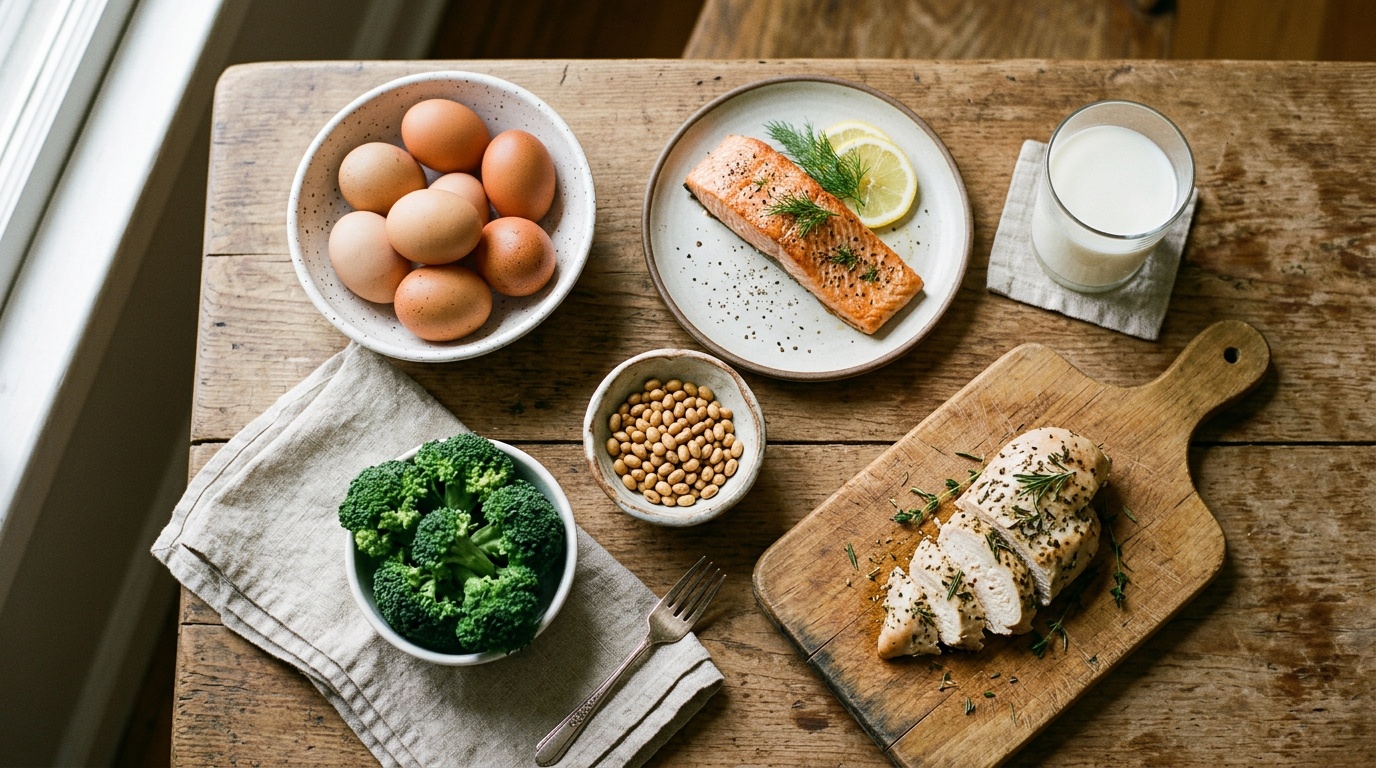
If you are pregnant and reading labels on your prenatal vitamin, there is a good chance you have never noticed choline — because it probably is not there. And yet this one nutrient may be the single biggest nutritional gap in American pregnancies right now. This guide walks through exactly how much you need, why it matters, and the real choline-rich foods that can get you there during pregnancy.
Quick Answer: How Much Choline Do You Really Need?
Pregnant women need 450 mg of choline per day, according to the American College of Obstetricians and Gynecologists (ACOG). This is an Adequate Intake (AI) set by the National Academies and confirmed by the NIH Office of Dietary Supplements. The tricky part: research shows that fewer than 10% of pregnant women in the US actually hit that number, and less than half of prenatal supplements on the US market contain any choline at all. In other words: you almost certainly need to get this from food, and this guide shows you exactly how.
What Choline Does for Your Baby's Brain
Choline is an essential nutrient your body uses to build cell membranes, neurotransmitters, and the structural tissue of the nervous system. During pregnancy, it becomes especially important because your baby is building an entire brain from scratch, and the demand rises sharply. The NIH Office of Dietary Supplements notes that choline plays a direct role in fetal central nervous system development, and that low choline intake during pregnancy may increase the risk of neural tube defects.
But the story goes beyond birth. In a 7-year follow-up of a randomized controlled feeding trial, children whose mothers consumed roughly double the choline AI during the third trimester showed better sustained attention years later. A separate randomized feeding study on third-trimester choline supplementation found improvements in infant information processing speed. These are not casual observational studies — they are controlled feeding trials, which is about as strong as pregnancy nutrition evidence gets.
The takeaway: choline is not a "nice to have" nutrient. It is foundational brain nutrition, and the first trimester through the third trimester is the window where it counts most.
Top 12 Choline-Rich Foods (With Real Numbers)
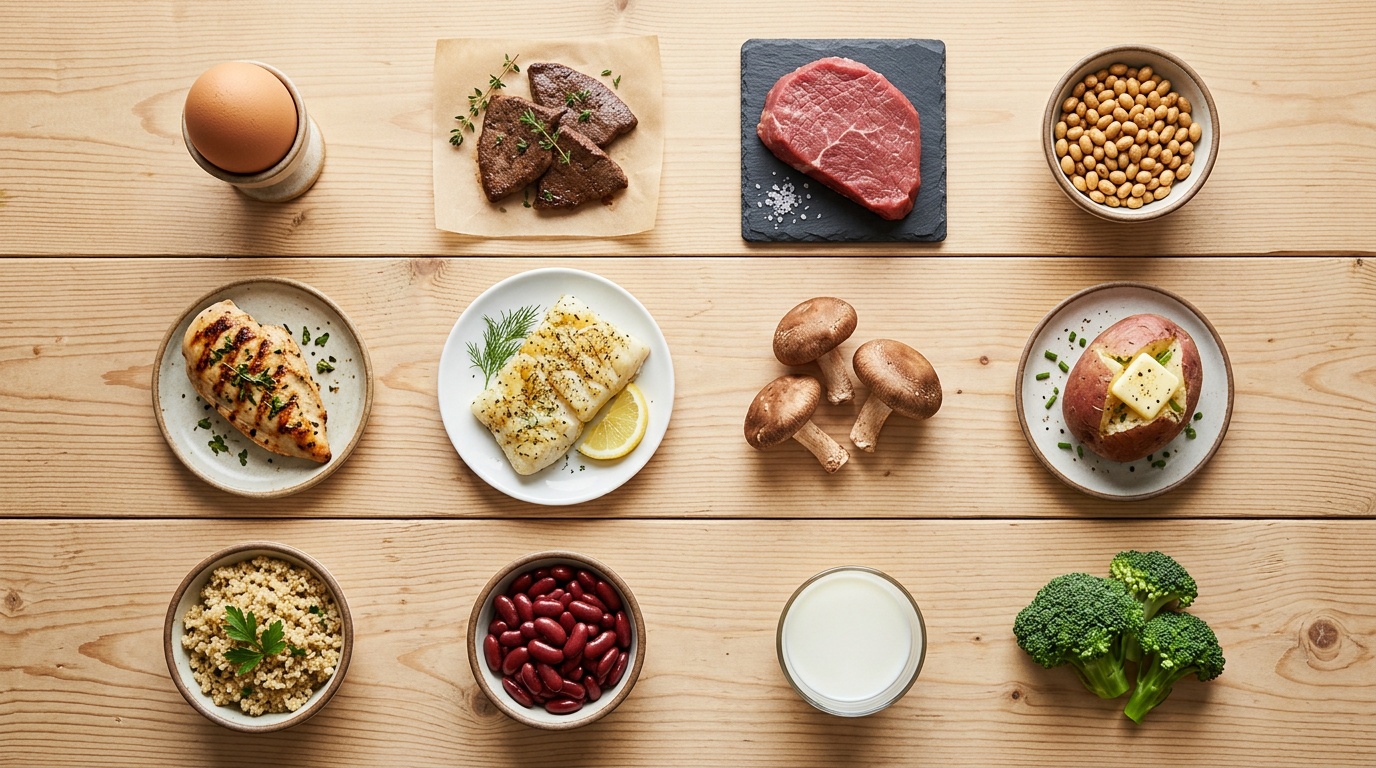
All of the numbers below come directly from the NIH Office of Dietary Supplements Choline Fact Sheet, which is built on USDA FoodData Central values. We are giving you realistic serving sizes, not marketing portions.
- Beef liver, pan-fried, 3 oz — 356 mg — the single highest natural source
- Egg, hard-boiled, 1 large — 147 mg — almost all of it in the yolk
- Beef, top round, 3 oz — 117 mg
- Soybeans, roasted, 1/2 cup — 107 mg
- Chicken breast, roasted, 3 oz — 72 mg
- Cod, cooked, 3 oz — 71 mg
- Shiitake mushrooms, cooked, 1/2 cup — 58 mg
- Red potato, baked, 1 large — 57 mg
- Kidney beans, canned, 1/2 cup — 45 mg
- Quinoa, cooked, 1 cup — 43 mg
- Milk, 1%, 1 cup — 43 mg
- Broccoli, boiled, 1/2 cup — 31 mg
A few quick things to notice. First, eggs are the best everyday source — two large eggs give you roughly 294 mg, which is more than 65% of your daily target in one meal. That is why eggs deserve to live in your weekly rotation during pregnancy, and why we feature them in our 15 high-protein pregnancy snacks guide as well. Second, beef liver is unmatched — but once or twice a week is plenty because it is also extremely high in vitamin A, which has its own upper limit in pregnancy. Third, plant-only sources exist but you need volume.
Sample 1-Day Meal Plan to Hit 450 mg
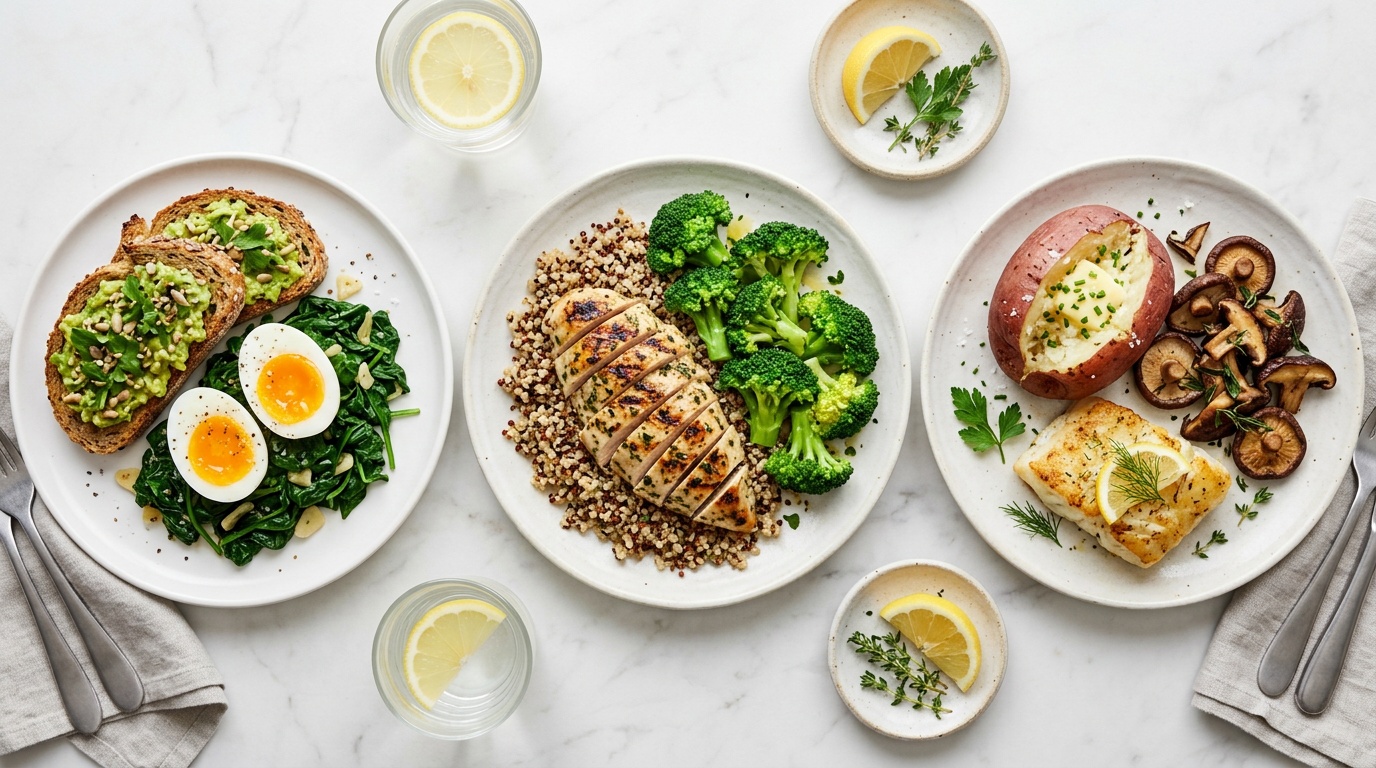
Here is what a completely normal pregnancy day looks like when you are actually thinking about choline. Every number comes from the same NIH ODS reference table linked above:
Breakfast: Two hard-boiled eggs with sauteed spinach and whole-grain toast. Two eggs alone deliver 294 mg of choline (147 mg per large egg). That is about 65% of your daily target before 9 AM, and it is one of the easiest habits to build into your pregnancy week.
Lunch: Grilled chicken breast (3 oz) over cooked quinoa (1 cup) with steamed broccoli (1/2 cup). Using the NIH ODS values, that is 72 + 43 + 31 = 146 mg of choline, built from a meal you would eat anyway.
Dinner: Pan-seared cod (3 oz) with a baked red potato and roasted shiitake mushrooms (1/2 cup). That adds 71 + 57 + 58 = 186 mg.
Day total: 626 mg (well above the 450 mg ACOG target). That gives you a real margin for variety, for days when you skip a meal, and for the growing evidence that slightly higher choline intake during the third trimester may offer additional benefits to your baby's developing brain.
You do not need to measure anything with a scale. You just need to include at least one concentrated source (eggs, liver, beef, soybeans, or chicken) at every meal of the day. The math takes care of itself.
Do Prenatal Vitamins Cover Choline?
The short answer: almost certainly not. The NIH ODS pregnancy fact sheet is explicit on this — less than half of prenatal supplements on the US market contain choline at all, and those that do typically provide a fraction of the 450 mg daily target. ACOG is even blunter, stating plainly in its nutrition during pregnancy guidance that choline is not found in most prenatal vitamins and urging patients to get it from food.
This is unusual in prenatal nutrition, where most of the essential micronutrients (folic acid, iron, iodine, vitamin D) are routinely baked into a standard prenatal. Choline is the one big exception, and the reason is physical: even choline bitartrate, the most concentrated supplement form, would require roughly 560 mg of bulk powder to deliver the full 450 mg daily target (the ACOG pregnancy target). Adding that to a standard prenatal would make the pill impractically large, so most brands leave it out entirely.
The practical implication is that if you are relying on your prenatal to cover everything, you are almost certainly undershooting on choline — and you would never know from the bottle. Check your label. If choline is listed at 50 mg or less, assume the rest needs to come from food. Or consider a separate choline (phosphatidylcholine or choline bitartrate) supplement if your diet makes food sources difficult.
Vegetarian and Vegan Choline Sources
If you are vegetarian or vegan during pregnancy, hitting 450 mg is absolutely doable — it just requires more intention, because the most concentrated sources (liver, eggs, beef, chicken, fish) are animal-based. The highest plant sources listed in the NIH ODS Choline Fact Sheet are roasted soybeans (107 mg per 1/2 cup), kidney beans (45 mg per 1/2 cup), quinoa (43 mg per cooked cup), broccoli (31 mg per 1/2 cup), peanuts (24 mg per 1/4 cup), and cauliflower (24 mg per 1/2 cup).
A realistic vegan day might look like: 1 cup of soybeans (214 mg) plus 1 cup of quinoa (43 mg) plus 1/2 cup of kidney beans (45 mg) plus 1/2 cup of broccoli (31 mg) plus 1/4 cup of peanuts (24 mg), which lands at 357 mg — close but not quite. This is the case where most practitioners suggest considering a choline supplement (often as phosphatidylcholine or choline bitartrate) to comfortably bridge the gap, and it is worth bringing up with your OB or a prenatal dietitian.
Vegetarians who eat eggs and dairy have a much easier time: two eggs and a glass of milk push you to 337 mg before you even count the rest of the day.
Frequently Asked Questions
How much choline do I need while pregnant?
Pregnant women need 450 mg of choline per day according to ACOG and the NIH Office of Dietary Supplements. Lactating women need 550 mg. Some research, including a 7-year follow-up randomized trial, suggests slightly higher intake in the third trimester may offer added cognitive benefits for the baby, but 450 mg remains the official floor.
Do prenatal vitamins contain enough choline?
Usually no. Per the NIH ODS pregnancy fact sheet, less than half of US prenatal supplements contain any choline, and those that do often provide well under 100 mg. Check your specific bottle and assume food needs to cover the gap.
Is it safe to eat 2 eggs a day during pregnancy?
Yes, as long as they are fully cooked (whites set, yolks firm or cooked through). Two eggs deliver about 294 mg of choline — roughly 65% of the daily pregnancy target — and they are listed as a recommended protein source in ACOG pregnancy nutrition guidance. Avoid raw or runny yolks during pregnancy due to salmonella risk.
What are plant-based sources of choline?
According to the NIH ODS Choline Fact Sheet, the highest plant sources are roasted soybeans (107 mg per 1/2 cup), kidney beans (45 mg per 1/2 cup), quinoa (43 mg per cooked cup), shiitake mushrooms (58 mg per 1/2 cup cooked), broccoli (31 mg per 1/2 cup), peanuts (24 mg per 1/4 cup), and cauliflower (24 mg per 1/2 cup). Hitting 450 mg on plants alone is possible but usually requires intentional planning.
Can I get choline from a supplement instead of food?
You can, but most OBs and dietitians recommend getting choline primarily from food when possible. Common supplement forms include phosphatidylcholine and choline bitartrate. If your prenatal does not contain meaningful choline and your diet cannot comfortably reach 450 mg (the ACOG pregnancy target) — common for vegans or those with severe food aversions in early pregnancy — a supplement is a reasonable bridge. Discuss dose with your provider.