Quick Answer: Is Cottage Cheese Safe in Pregnancy?
Yes, pasteurized cottage cheese is safe and recommended during pregnancy. One cup delivers about 25g protein, 200mg calcium, and meaningful choline and B12, according to USDA FoodData Central. The non-negotiable rule is pasteurization. Skip any tub labeled raw milk or unpasteurized, and skip queso fresco-style cheeses regardless of label, since the FDA flags these for repeated listeria outbreaks. Almost all U.S. and U.K. supermarket cottage cheese is pasteurized by default. If you suddenly cannot stand the texture (very common in weeks 8 to 12 due to first-trimester smell sensitivity and hCG-driven aversions), Greek yogurt, ricotta, skyr, paneer, and labneh are similar-nutrition swaps. The protein and choline gap is easy to fill from these alternatives until your aversion fades, which usually happens by the second trimester. Daily portions are fine for most pregnant adults, although low-sodium varieties are worth choosing if you have hypertension or are watching salt intake. Cottage cheese is not on any pregnancy avoid-list at major authorities, including ACOG and the NHS, as long as it is pasteurized.
Why Cottage Cheese Is a Pregnancy Powerhouse
Cottage cheese earned its reputation as a prenatal staple for one reason: the nutrient density per dollar is hard to beat. According to USDA FoodData Central, one cup of low-fat (1%) cottage cheese provides roughly 24 to 28g protein, 200 to 230mg calcium, 35 to 60mg choline depending on the variant, and about 1.4mcg of vitamin B12, plus supporting amounts of phosphorus, selenium, and riboflavin.
- Protein: 24 to 28g per cup, roughly half of the daily prenatal target (USDA)
- Calcium: 200 to 230mg per cup, supports fetal skeletal development (USDA)
- Choline: 35 to 60mg per cup, contributes to the 450mg daily target set by the NIH Office of Dietary Supplements
- Vitamin B12: 1.4mcg per cup, supports red blood cell formation (USDA)
Each of these has a specific job during pregnancy. Protein supports fetal tissue growth and maternal blood volume expansion. Calcium goes into the baby's developing skeleton. According to the American College of Obstetricians and Gynecologists (ACOG), dairy is a primary calcium source for most pregnant people in the U.S. and U.K.
Choline is the underrated one. The NIH Office of Dietary Supplements lists 450mg as the daily pregnancy target, and most prenatals do not cover it. Cottage cheese is one of the easier ways to chip away at that gap. We covered the math in detail in our choline daily-goal guide.
Compared to other dairy choices, cottage cheese sits in a useful middle ground. It has more protein per cup than yogurt, less fat than ricotta, and does not need the long resting time of hard cheeses. The downside: the texture is divisive, especially when first-trimester smell sensitivity kicks in.
The Pasteurization Rule: What Actually Matters
The single rule that determines whether cottage cheese is safe during pregnancy is whether it is made from pasteurized milk. Pasteurization heats milk enough to kill Listeria monocytogenes, the bacteria responsible for listeriosis.
The risk is not theoretical. According to the U.S. Centers for Disease Control and Prevention (CDC), pregnant people are about 10 times more likely to develop listeriosis than other non-pregnant adults. Listeriosis during pregnancy has been linked to miscarriage, stillbirth, premature delivery, and serious newborn infection.
How to Read the Label
- Look for the word pasteurized on the carton or tub.
- If the label says raw milk, unpasteurized, or does not mention pasteurization at all (common at farmers markets), skip it.
- In the U.S., almost all commercial cottage cheese sold at major grocery chains is pasteurized by default.
- In the U.K., the NHS classifies pasteurized cottage cheese as safe in pregnancy.
Brands that are clearly pasteurized and widely available include Friendship Dairies, Daisy, Good Culture, Breakstone's, and Organic Valley in the U.S. In the U.K., Longley Farm and Lancashire Farm cottage cheese both meet the standard. Always re-check the label, since recipes do change.
One source of confusion is the soft-cheese rule. Pregnant people are told to avoid soft cheeses with white rinds (Brie, Camembert) and blue-veined varieties because of higher listeria risk. Cottage cheese is technically a fresh cheese, not a soft-ripened one, and pasteurized cottage cheese sits squarely in the safe column. According to the U.S. Food and Drug Administration (FDA), the cheeses to avoid are queso fresco-type cheeses (queso blanco, queso fresco, requesón, panela), even when pasteurized, due to repeated outbreaks. Cottage cheese is not in that group.
For more on navigating high-risk foods during pregnancy, see our breakdown of deli meat in pregnancy.
When You Suddenly Cannot Stand It
You bought the tub. You ate it happily for years. Now it tastes like wet drywall. This is one of the most common food-aversion stories in early pregnancy, and you are not imagining it.
Aversions typically appear between weeks 6 and 12, often peaking around weeks 9 and 10. Research published in PubMed shows that food aversions cluster tightly with the same window when nausea and vomiting peak. The mechanism is not fully understood, but two factors are well documented in the literature.
- Hormonal shifts. Human chorionic gonadotropin (hCG) peaks roughly between weeks 9 and 14, which lines up with the aversion peak (PMC review).
- Heightened smell sensitivity. Pregnancy increases olfactory acuity for many people, and dairy proteins carry strong volatile compounds. The taste does not actually change. Your perception does.
Cottage cheese is unusual because it can hit two aversion triggers at once: the slightly sour smell and the lumpy texture. If you find yourself gagging at curds you used to love, that is a normal pattern, not a sign that your body is rejecting the nutrients.
One of our writers documented this exact moment in Week 9 Day 7: The Cottage Cheese Tastes Like Wet Drywall, which is worth reading if you want a real-time look at what the aversion feels like, not just the science.
The reassuring part: most aversions fade by the second trimester. According to the Mayo Clinic, food preferences usually shift again around weeks 14 to 16 as hCG levels stabilize.
5 Aversion-Friendly Alternatives
If cottage cheese is off the menu for now, you do not have to chase the same nutrients with one perfect substitute. Rotate through these. All of them are safe during pregnancy as long as they are pasteurized. Values below come from USDA FoodData Central.
| Swap (1 cup) | Protein | Calcium | Choline | Best for |
|---|---|---|---|---|
| Greek yogurt (plain, 2%) | 20g | 230mg | 36mg | Mild taste, easy texture |
| Ricotta (whole milk, pasteurized) | 28g | 510mg | 70mg | Heat-stable in baked dishes |
| Skyr (Icelandic-style) | 17g | 220mg | 25mg | Tangy, dense, spoonable |
| Paneer (pasteurized) | 25g | 480mg | 50mg | Firm, no curd texture |
| Labneh (strained yogurt) | 14g | 240mg | 22mg | Spreadable, savory base |
Greek yogurt is the simplest swap. The texture is smooth, the taste is neutral, and full-fat varieties carry similar satiety. Add berries or honey if plain yogurt feels too dairy-forward.
Ricotta is the closest nutritional match. Spread it on toast, fold it into pasta, or layer it into baked dishes where heat masks the dairy smell that often triggers aversions.
Skyr sits between yogurt and cottage cheese in density. The tangier flavor can actually be more tolerable when sweet things feel cloying. Brands like Siggi's and Icelandic Provisions are pasteurized.
Paneer solves the curd-texture problem entirely. It cubes, sears, and holds shape. If the lumpy mouthfeel is your issue, paneer is often a quiet win, especially in stir-fries and curries.
Labneh is strained yogurt with a creamy, almost sour-cream texture. Use it as a base for savory bowls or as a dip with vegetables. It is gentle on a sensitive stomach.
If you want recipe ideas that use these swaps without ten ingredients, our high-protein pregnancy snacks roundup has a few worth trying weekly. Mombite builds trimester-safe meals around what you already have, so the swap list above can also become a meal plan.
How to Reintroduce Cottage Cheese
If the aversion is strong, it is fine to wait two to three weeks before trying again. Pushing food during peak aversion tends to extend the avoidance window, not shorten it.
When you are ready to test, lower the difficulty. Try whipped or blended cottage cheese first, since the curds are the most common trigger. Friendship Whipped 4% works well, and you can also blend regular cottage cheese with a splash of milk for 20 seconds at home.
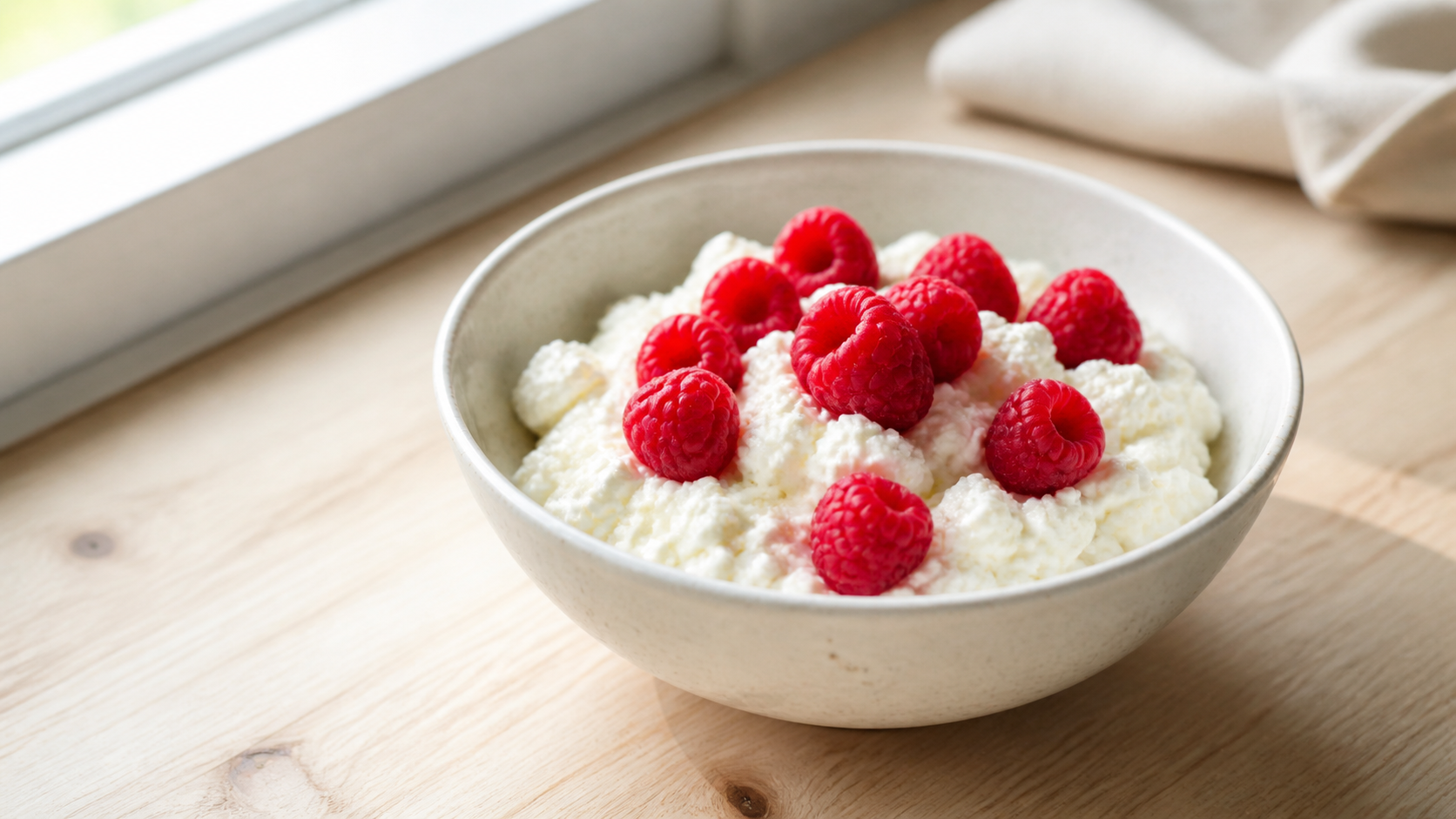
Pair it with a strong contrasting flavor. Raspberries, honey, sliced peach, tomato, cracked pepper, or everything-bagel seasoning all help override the dairy notes. Warm preparations (folded into scrambled eggs, baked into pancakes) also tend to land better than cold spoonfuls.
And if it never comes back, that is fine. The choline and protein gap is easy to fill from the alternatives above and from eggs, fish, and legumes. We tracked exactly this in the choline tracker diary.
Frequently Asked Questions
Can I eat cottage cheese every day in pregnancy?
Yes. There is no upper limit specific to cottage cheese for pregnant adults. Daily servings are a reasonable way to hit protein, calcium, and choline targets. If you have hypertension or are watching sodium, choose low-sodium varieties, since regular cottage cheese can carry 400 to 900mg of sodium per cup according to USDA data.
Why does cottage cheese taste different now?
Pregnancy heightens smell and taste sensitivity, especially in the first trimester. Cottage cheese has subtle sour and dairy notes that become much louder when olfactory acuity increases. The food has not changed. Your perception has.
Is full-fat or low-fat cottage cheese better in pregnancy?
Both are safe. Full-fat versions provide more satiety and slightly more fat-soluble vitamins. Low-fat versions trim calories without losing the protein. Pick based on your overall diet, hunger pattern, and any guidance from your prenatal provider.
Can cottage cheese cause heartburn?
It can in some people, particularly later in pregnancy when reflux is common. Full-fat dairy can slow gastric emptying and worsen reflux. If cottage cheese triggers heartburn for you, try smaller portions, low-fat versions, or shift it earlier in the day.
Is cottage cheese safe in the first trimester?
Yes, pasteurized cottage cheese is safe in every trimester. The first trimester is when many people develop their strongest aversions, so it can taste wrong even though it is perfectly safe to eat. If you have specific concerns, ask your OB.