Quick Answer: what are the best folate-rich foods in pregnancy?
So here's the short version: some of the most folate-dense foods you can lean on are cooked lentils, chickpeas, leafy greens like spinach, asparagus, avocado, and fortified breakfast cereals. The NHS advises 400 micrograms of folic acid daily until you're 12 weeks along, and food helps you build on that. I've put the full food-by-food table, exact amounts, and cooking tips further down — keep reading for the whole list.
Why does folate matter so much in early pregnancy?
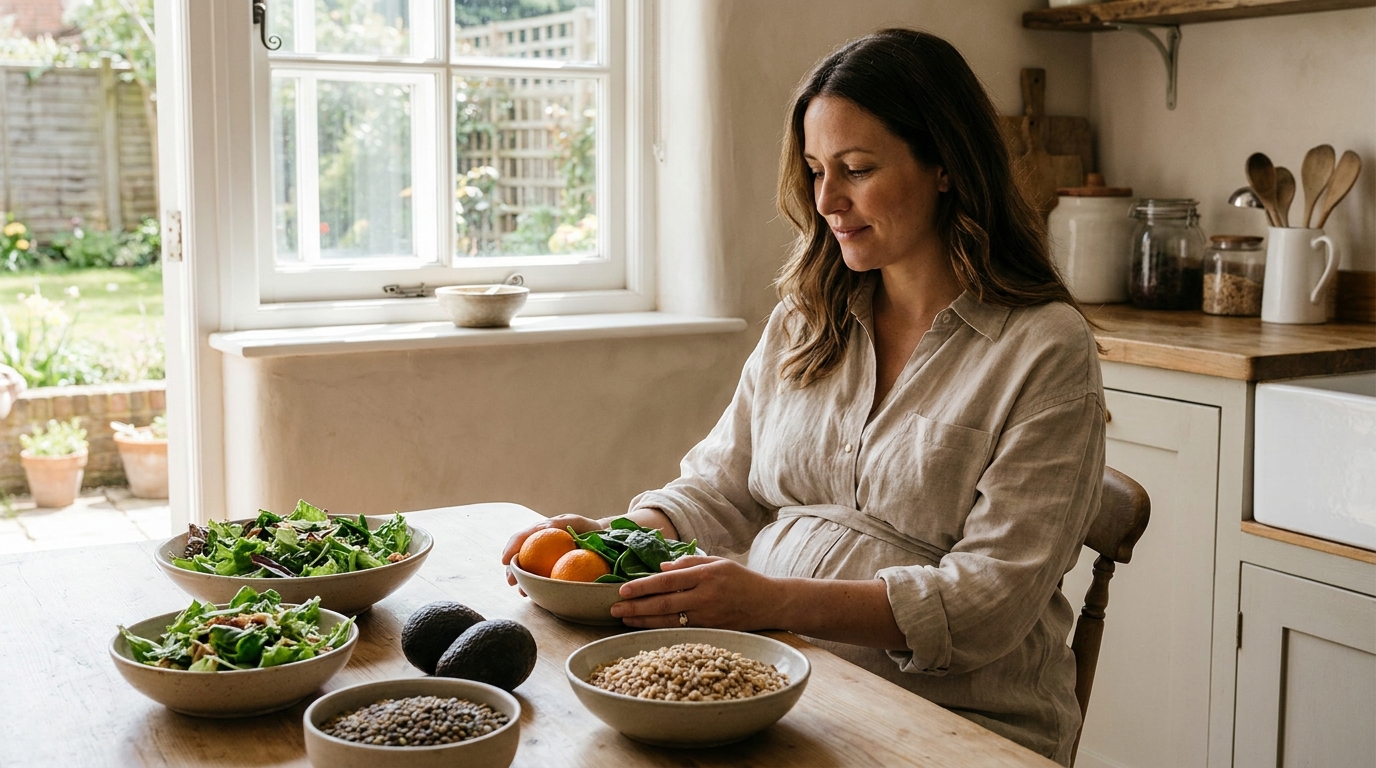
Okay, can we talk about why everyone suddenly throws the word "folate" at you the second you see two lines? Folate is the B vitamin your baby needs to close the neural tube — the early structure that becomes the brain and spine — and this happens in the first few weeks, often before you even know you're pregnant. According to the CDC, getting enough folic acid before and during early pregnancy can prevent a large share of neural tube defects like spina bifida.
Quick jargon decode: folate is the form found naturally in food, and folic acid is the man-made version used in supplements and fortified foods (your body absorbs the man-made one more easily). I'm not gonna lie, I read this at 1am and had to re-read it three times. The takeaway from the CDC's folic acid guidance is simple: it's an early-window nutrient, so starting sooner matters more than being perfect later. If you're still piecing together the basics, my first-trimester nutrition guide walks through the whole plate.
How much folate do you actually need each day?
Here's the number everyone wants: pregnancy raises your folate target to 600 micrograms of dietary folate equivalents per day, according to the NIH Office of Dietary Supplements. On top of that, both the NHS and ACOG single out a daily folic acid supplement so you're covered during that critical early window. Think of the food as the foundation and the supplement as the guardrail.
The exact wording differs a little by country, and I think it's genuinely helpful to see them side by side:
- The NHS advises 400 micrograms of folic acid every day until you are 12 weeks pregnant.
- The NIH Office of Dietary Supplements sets the pregnancy RDA at 600 micrograms DFE per day (food plus supplement combined).
- The EFSA uses a similar folate reference value for pregnancy across the EU.
One plain-language note on "DFE": it just means the amount is adjusted so a microgram from a supplement and a microgram from spinach are counted fairly, since your body handles them differently. You don't need to do that math — the food table below already gives you real, usable amounts.
What are the best folate-rich foods for pregnancy?
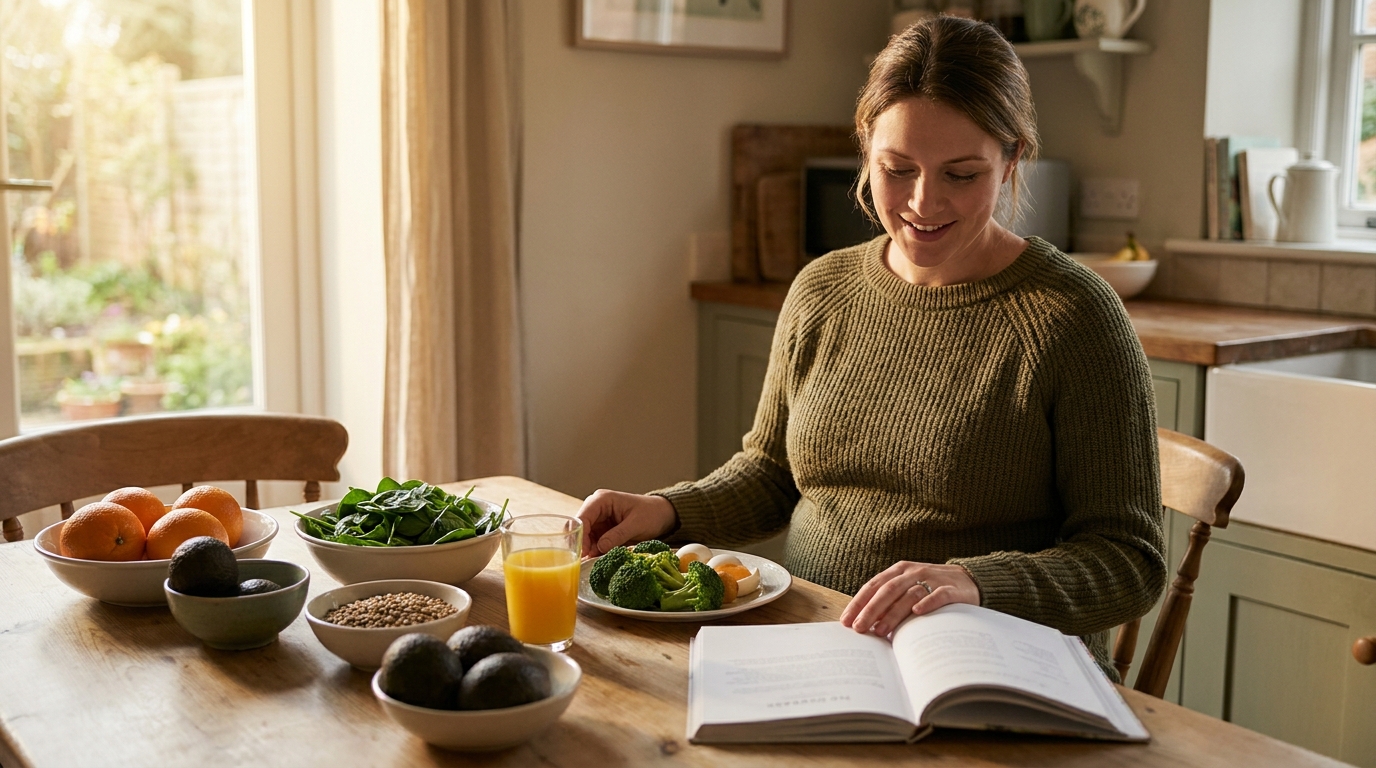
If you only remember one section, make it this one. The heaviest hitters are cooked lentils and chickpeas, dark leafy greens, asparagus, avocado, and fortified cereal. A single cup of cooked lentils delivers roughly 358 micrograms of folate per USDA FoodData Central — picture a warm bowl of lentil soup carrying more than half your day in one go. Here's the full comparison, with amounts turned into something you can actually plate up.
| Food | Everyday serving | Folate (approx.) | Roughly this much of your daily target | Source |
|---|---|---|---|---|
| Cooked lentils | 1 cup (a bowl of soup) | 358 mcg | About half a day | USDA FoodData Central |
| Chickpeas | 1 cup (a big scoop of hummus-worth) | 282 mcg | Just under half | USDA FoodData Central |
| Cooked spinach | 1 cup (a large handful, wilted) | 263 mcg | Just under half | USDA FoodData Central |
| Asparagus | 1 cup cooked (about 8 spears) | 268 mcg | Just under half | USDA FoodData Central |
| Avocado | 1 whole | 120 mcg | About a fifth | USDA FoodData Central |
| Broccoli | 1 cup cooked | 168 mcg | About a quarter | USDA FoodData Central |
| Fortified breakfast cereal | 1 bowl | 100–400 mcg (check the box) | Varies widely | NIH Office of Dietary Supplements |
In my first trimester, cooked green vegetables made me gag, so asparagus was off the table for weeks — but a bowl of fortified cereal with orange juice was something I could actually keep down at 7am. That's the real trick: the "best" source is the folate-rich food you can stomach on a given day. If iron is also on your radar (it usually is), lentils and spinach pull double duty; there's more in my iron-rich foods guide.
Do folate-rich foods replace your prenatal vitamin?
Short answer: no, and this is the part I wish someone had told me plainly. Both ACOG and the NHS treat the daily folic acid supplement as non-negotiable in early pregnancy, precisely because it's hard to guarantee 400 micrograms from food alone every single day, especially when nausea has other plans. According to ACOG's nutrition-during-pregnancy guidance, food and a prenatal work together — they're not either/or.
Where US and UK advice line up: both want a supplement plus a folate-rich diet. Where they phrase it differently: the NHS puts a firm clock on it (until 12 weeks), while US guidance emphasizes starting before conception if you can. If you have a family history of neural tube defects or take certain medications, the NHS notes some people are advised a higher dose — that's a conversation for your own doctor or midwife, not something to self-prescribe. For how the supplement itself fits in, see my prenatal vitamins guide.
How do you cook without losing all the folate?
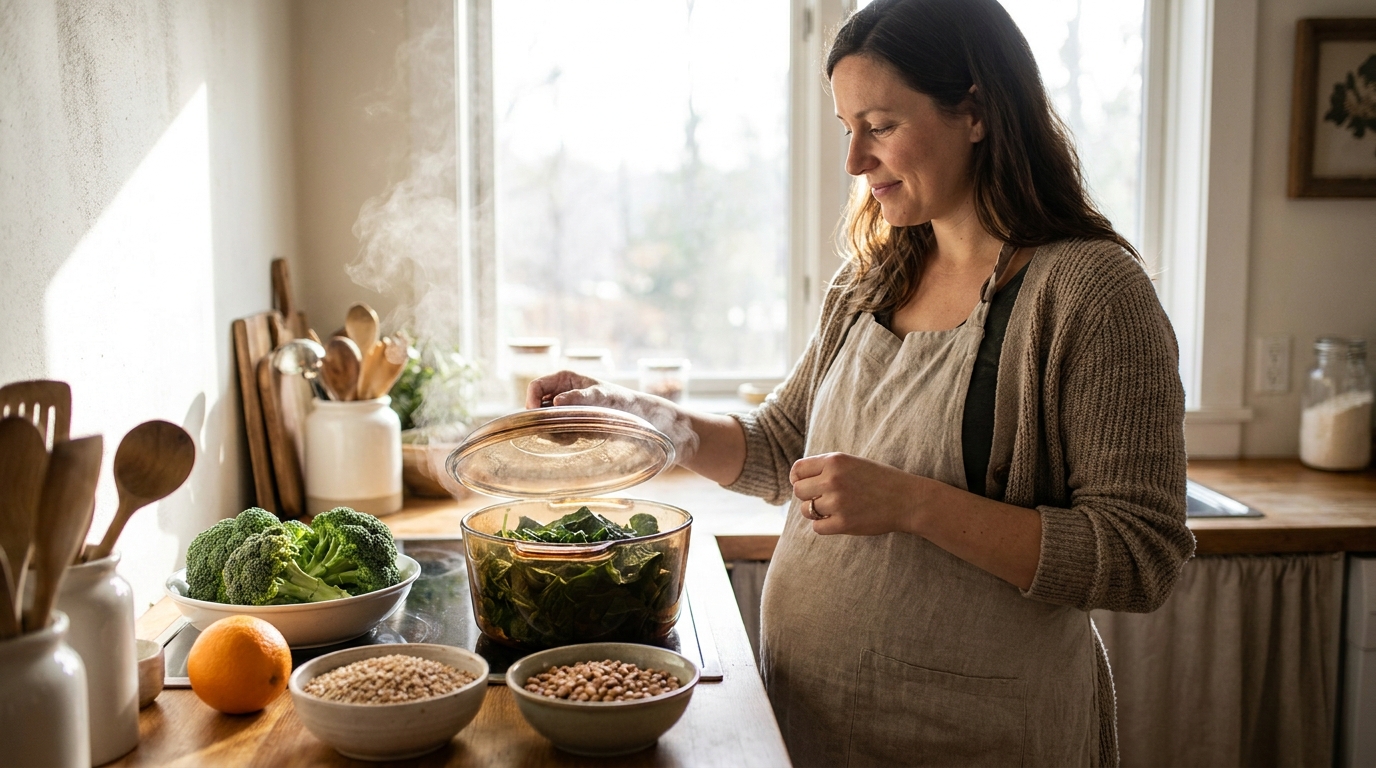
Bear with me, because this one's easy to get wrong. Folate is water-soluble and heat-sensitive, which means long boiling can leach a chunk of it out into the cooking water, per the NIH Office of Dietary Supplements. The fix isn't complicated: steam or microwave your greens instead of boiling them to death, keep cooking times short, and where a food is safe raw — like avocado or a squeeze of orange — eat it that way.
A few gentle habits that helped me: I started saving the liquid from cooked lentils and beans to build into soups, so any folate that escaped went right back in. I leaned on fortified cereal on low-energy mornings because the folic acid in it is both stable and well-absorbed. And I stopped over-boiling broccoli into sad grey mush — a quick steam keeps both the color and more of the nutrients. Small swaps, real difference.
Frequently Asked Questions
Can I get enough folate from food alone in pregnancy?
Realistically, food gets you a long way but shouldn't be your only plan for the first trimester. The NHS advises a 400-microgram folic acid supplement every day until 12 weeks precisely because hitting the target from food alone, every single day through nausea and food aversions, is hard to guarantee. Treat folate-rich foods as your daily foundation and the supplement as the guardrail that closes any gaps — they work best together.
Which foods have the most folate for pregnancy?
Per USDA FoodData Central, cooked lentils lead the pack at roughly 358 micrograms per cup — more than half a day in one bowl of soup. Chickpeas, cooked spinach, and asparagus each land in the mid-200s per serving, while avocado and broccoli are solid mid-range options. Fortified breakfast cereals can also deliver a big dose, but amounts vary a lot by brand, so check the label on the box.
When should I start eating more folate-rich foods?
As early as possible, ideally before conception. The CDC emphasizes that folic acid does its most important work in the first few weeks, when the neural tube closes — often before a positive test. If you're planning a pregnancy or could become pregnant, building folate-rich foods into your routine now, alongside a daily supplement, means you're covered during that critical early window rather than racing to catch up.
Is folate the same as folic acid?
Not quite. Folate is the form found naturally in foods like lentils and greens, while folic acid is the man-made version used in supplements and fortified foods. According to the NIH Office of Dietary Supplements, your body absorbs folic acid more efficiently than natural food folate, which is one reason guidelines recommend the supplement specifically in early pregnancy — it's a reliable, well-absorbed way to hit your target.