Quick Answer: Is there really a preeclampsia diet?
So here's the thing: no single food prevents or cures preeclampsia, and any site promising that is selling something. What the guidance actually supports is a calcium-adequate, whole-food eating pattern — plus not crash-restricting salt. Calcium is the standout nutrient the research keeps circling back to. The full food-by-food breakdown, the nutrient table, and the salt myth are all in the sections below.
What is preeclampsia, and can diet actually prevent it?
Preeclampsia is a pregnancy blood-pressure condition — usually after 20 weeks — that can affect the kidneys, liver and placenta. Diet can nudge your risk and support your overall health, but it is not a cure and cannot replace monitoring. The CDC reports preeclampsia affects about 1 in 25 pregnancies in the US (CDC), and the NHS notes early signs are often picked up at routine antenatal checks rather than felt (NHS).
I'm not gonna lie — when my blood pressure crept up at a midwife appointment, I fell straight down the 3am search hole. What steadied me was reading the actual guidance instead of the panic forums. According to ACOG, the strongest dietary lever we have is calcium, and mainly for people whose usual intake is low (ACOG). If you want the bigger picture on eating well overall, our pregnancy nutrition guide covers the foundations.
Which nutrients matter most for a preeclampsia diet?
Calcium leads, followed by adequate protein, and an overall pattern rich in vegetables, fruit and whole grains. The NHS advises adults need about 700mg of calcium a day (NHS), while EFSA sets an adequate intake of 1000mg a day for adults across the EU (EFSA). That 700mg lands somewhere around a bowl of yogurt plus a glass of milk and a handful of almonds — genuinely doable food, not a chore.
Here's how the key players stack up, with the authority behind each:
| Nutrient | Why it matters here | Everyday food equivalent | Source |
|---|---|---|---|
| Calcium | Supplementation is linked to lower preeclampsia risk in low-intake groups | Yogurt bowl + a glass of milk + a small handful of almonds | ACOG |
| Protein | Supports normal pregnancy tissue; no benefit from mega-doses | Eggs, lentils, chicken, tofu across the day | NIH ODS |
| Fibre | Supports steadier blood pressure and gut health | A bowl of lentil soup + a pear + oats | NHS |
| Potassium | Part of a blood-pressure-friendly pattern | A banana + a baked potato + spinach | USDA FoodData Central |
| Sodium (salt) | Restricting it purely to prevent preeclampsia is not advised | Season to taste — don't crash-cut | NICE |
Deep dive (if you want it): "low-intake groups" simply means people who don't get much calcium from food day to day — that's where the supplementation signal is strongest. Talk to your OB-GYN or midwife before adding any supplement.
What foods should I actually eat?
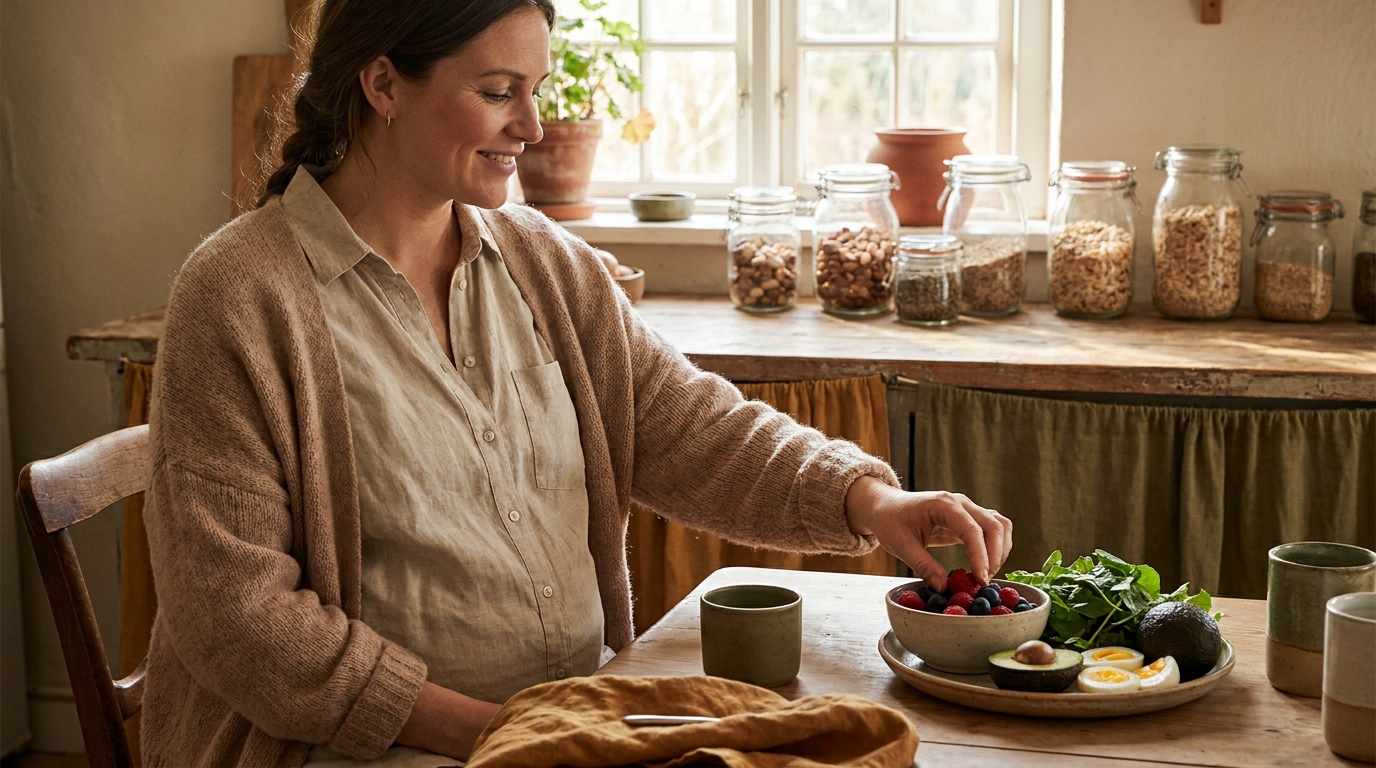
Build meals around calcium sources, colourful vegetables, whole grains, and steady protein — the same pattern NICE describes as healthy eating in pregnancy rather than any special "preeclampsia menu" (NICE). Think dairy or fortified plant milks, leafy greens, beans and lentils, eggs, fish you're cleared to eat, oats, nuts and plenty of fruit and veg.
In my second trimester my go-to was embarrassingly simple: a big yogurt with oats and berries in the morning, lentil soup at lunch, and something green shoved onto the dinner plate whether I felt fancy or not. It hit calcium and fibre without me tracking a single milligram. For the calcium angle specifically, our calcium in pregnancy piece breaks down the friendliest sources.
What should I limit or avoid?
The honest answer: there's no magic "avoid" list that stops preeclampsia. The sensible limits are the usual pregnancy ones plus keeping ultra-processed, very high-salt convenience foods from crowding out real meals. The NHS points to a balanced pattern and staying within general food-safety guidance rather than eliminating whole food groups (NHS).
So instead of fearing salt at every meal, I aimed to cook more from scratch so the salt was mine to control — less about restriction, more about swapping the packet dinner for the lentil pot. If your blood pressure is already being watched, follow your maternity team's personalised plan over anything you read online, including me.
Does cutting salt help prevent preeclampsia?
This one surprises people: NICE does not recommend restricting salt intake solely to prevent hypertensive disorders in pregnancy (NICE). Aggressively cutting salt won't shield you from preeclampsia, and it can make food joyless during a stretch when eating is already hard. A moderate, balanced approach beats the salt-panic myth.
Where US and UK guidance align nicely is on the bigger message: a whole-food pattern and proper antenatal monitoring matter far more than any single seasoning rule. ACOG frames preeclampsia care around screening and follow-up, not a restrictive diet (ACOG). If high blood pressure is your main worry, our high blood pressure in pregnancy guide goes deeper.
Frequently Asked Questions
Can a preeclampsia diet prevent preeclampsia?
Not on its own. No eating pattern guarantees prevention. What the evidence supports is adequate calcium — especially for people with low intake — within an overall whole-food diet, per ACOG. The CDC reports preeclampsia affects about 1 in 25 US pregnancies, and routine antenatal monitoring, not diet alone, is how it's caught and managed. Treat food as support, not a substitute for your maternity care.
How much calcium do I need in pregnancy?
The NHS advises adults need around 700mg of calcium a day, while EFSA sets an adequate intake of 1000mg a day across the EU. That's roughly a yogurt bowl, a glass of milk, and a handful of almonds spread through the day. Fortified plant milks and leafy greens count too. Before adding a supplement, check with your OB-GYN or midwife so it fits your personal situation.
Should I cut out salt if I'm worried about preeclampsia?
No. NICE does not recommend restricting salt purely to prevent hypertensive disorders in pregnancy. Aggressive salt-cutting won't protect you and can make eating miserable when appetite is already fragile. A more useful move is cooking from scratch more often, so you control the seasoning and crowd out ultra-processed, very high-salt convenience foods — without turning every meal into a restriction exercise.
What foods are best for a preeclampsia-supportive diet?
Build plates around calcium sources (dairy or fortified plant milks, leafy greens), beans and lentils, eggs, whole grains like oats, nuts, and plenty of fruit and vegetables. NICE describes this as ordinary healthy pregnancy eating rather than a special menu. It naturally covers calcium, fibre and potassium — the nutrients tied to a blood-pressure-friendly pattern — without you tracking a single milligram.
Where US and UK guidance differ, who should I follow?
Follow the authority for your own country and, above all, your own maternity team. US guidance (ACOG, CDC) and UK guidance (NHS, NICE) agree on the core message: adequate calcium, a whole-food pattern, no salt panic, and proper monitoring. Small numeric differences — like EFSA's 1000mg calcium intake versus the NHS's 700mg — reflect regional reference values, not a disagreement about what to eat.