Ultra-Processed Foods & Pregnancy: 2026 Study Risks
New Nutrients study links UPF intake during pregnancy to preterm birth and hypertensive disorders. The numbers, the mechanisms, and 8 whole-food swaps.
By Mombite Editorial Team · Last reviewed: April 27, 2026 · Sources: 8 (ACOG, NHS, UW Medicine, MDPI Nutrients, USRTK, RealClearHealth, Medical College of Wisconsin, Children's Health Defense)
Quick Answer
A February 2026 Nutrients study of 6,693 pregnancies found every 10% rise in ultra-processed food (UPF) calories raised preterm birth risk by 11% and hypertensive disorders by 5%. Replacing UPFs with whole foods cuts exposure to additives, phthalates, and excess sodium during pregnancy.
Ultra-processed foods are industrial formulations with ingredients you would not find in a home kitchen — emulsifiers, hydrolyzed proteins, hydrogenated oils, artificial flavors, and color additives. The 2026 study used the NOVA classification system to separate them from minimally processed and unprocessed foods. Researchers controlled for income, education, age, BMI, smoking, and pre-existing conditions, and the UPF signal still came through.
This article walks through the study itself, the four numbers clinicians keep citing, the eight UPF categories worth swapping first, and a trimester-by-trimester plan that fits real pregnancy constraints — including nausea in the first trimester, batch-cook windows in the second, and sodium-sensitive needs in the third. Every figure links back to a primary source.
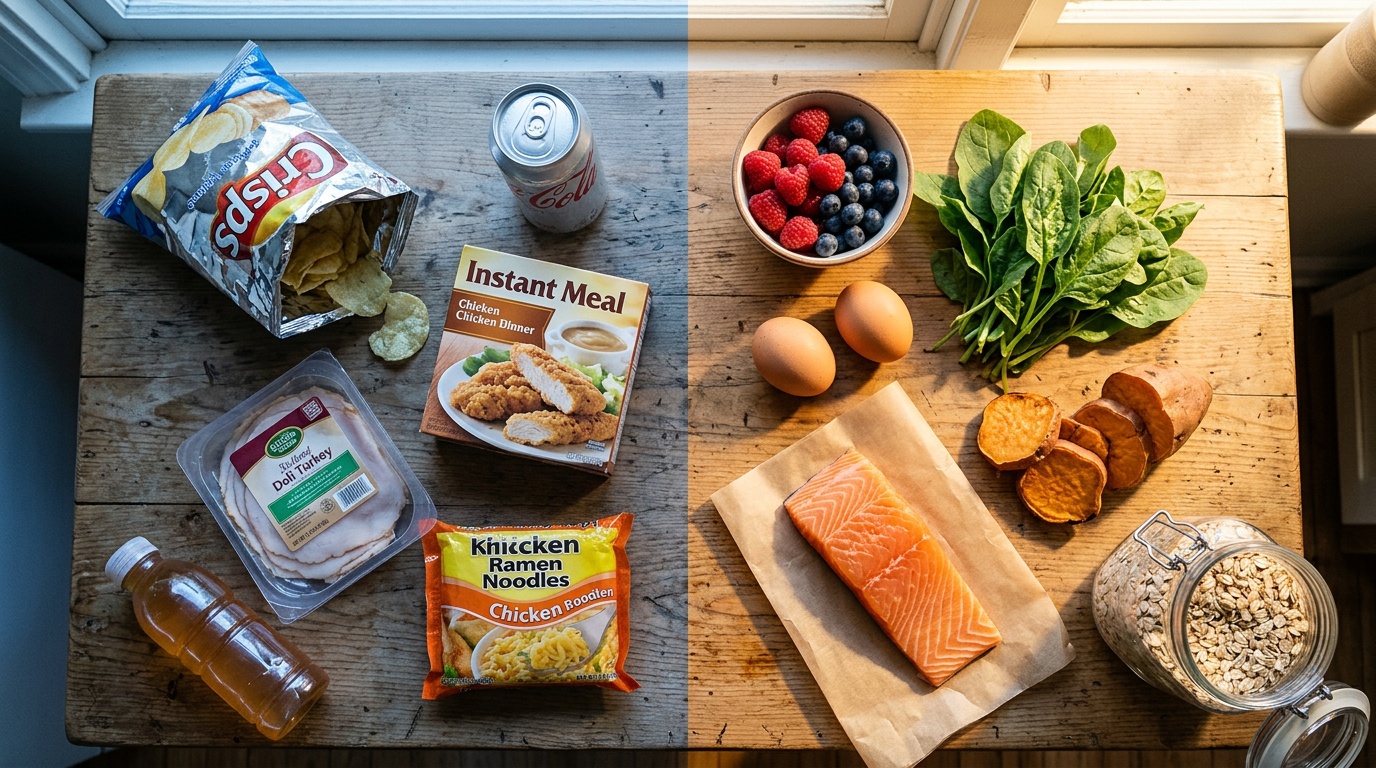
Two pantries, two pregnancy outcomes — the contrast at the center of the 2026 Nutrients study.
The 2026 Study: What 6,693 Pregnancies Revealed
On February 14, 2026, researchers at the Medical College of Wisconsin published a secondary analysis of the nuMoM2b cohort — one of the largest prospective pregnancy datasets in the United States. The team analyzed three trimesters of dietary data from 6,693 nulliparous pregnant women and grouped foods using the NOVA classification system, which separates whole foods from ultra-processed industrial formulations.
The findings, which went viral in mainstream coverage on April 14, 2026, reframed how clinicians talk about pregnancy diets. Lead author Anna Palatnik summarized the result plainly:
"Higher intake of these foods was associated with increased risk of preterm birth and hypertensive disorders of pregnancy, even after accounting for important social and medical factors." — Anna Palatnik, Medical College of Wisconsin
The "even after accounting for" part matters. The researchers controlled for income, education, age, BMI, smoking, and pre-existing conditions. The UPF signal still came through.
A separate research stream from the University of Washington put a chemical mechanism on top of that statistical signal. Sheela Sathyanarayana, a UW Medicine pediatrician studying phthalates in pregnancy, noted in an institutional release:
Phthalates are plasticizers used in food packaging, processing equipment, and conveyor belts. They show up in higher concentrations in people who eat more UPFs — which is exactly why the chemistry and the epidemiology now point in the same direction.
The Numbers That Should Concern You
The pregnancy nutrition story usually focuses on what to add — folate, iron, choline, omega-3. The 2026 data adds a second axis: what to remove. Here are the figures clinicians and reporters keep citing.
51.3% of daily calories in the cohort came from ultra-processed foods, on average (±12.7%) — meaning more than half of what these pregnant women ate every day was industrially formulated, per the MDPI Nutrients analysis.
Each 10% increase in UPF calories was linked to an 11% higher risk of preterm birth (adjusted odds ratio 1.11, 95% CI 1.02–1.21), per the same Nutrients study.
The same 10% UPF increase was tied to a 5% higher risk of hypertensive disorders of pregnancy (AOR 1.05) — including gestational hypertension and preeclampsia, per the Nutrients data.
A 10% higher UPF intake corresponded to a 13% higher urinary phthalate concentration, per UW Medicine. That is the chemical signature of plastics moving from packaging into the body.
The 8 Ultra-Processed Foods to Swap First
NOVA's ultra-processed category is broad, but the 2026 cohort overwhelmingly ate from eight buckets. Swapping these first removes the largest share of UPF calories with the least disruption to family routines. The American College of Obstetricians and Gynecologists frames the goal this way: "Instead of 'eating for two,' think of it as eating twice as healthy."
UPF Category
Common Examples
Whole-Food Alternative
Pre-prepared dishes
Frozen dinners, microwave meal kits
Home-cooked meals from fresh ingredients (batch cook on weekends)
Homemade dessert, fresh fruit, or 1–2 squares of dark chocolate
Instant products
Instant noodles, mashed potato mix
Fresh potatoes, homemade noodles, or simple grain bowls
The NHS reaches the same conclusion from the UK side: "Most people would benefit from eating less ultra-processed foods that are high in saturated fat, salt or sugar, as these foods are not needed in our diet and should be eaten less often and in smaller amounts." During pregnancy, that case becomes sharper.
Why UPF Causes These Risks
An 11% statistical bump only matters if there is a plausible biology underneath it. Five mechanisms now have peer-reviewed support, and they are not mutually exclusive — most UPFs trigger several at once.
Chronic low-grade inflammation. UPFs are calorie-dense and nutrient-poor, which keeps the immune system in a low-grade alarm state. Sustained inflammation is a known pathway to preeclampsia and preterm labor, per the Nutrients authors.
Endocrine-disrupting chemicals. Phthalates and bisphenols (BPA/BPS) leach from packaging and processing equipment into food. Once ingested, they cross the placenta, as UW Medicine documented in pregnant cohorts.
Nutrient displacement. A diet built around UPFs leaves little room for the foods that supply folate, iron, choline, B12, and vitamin D — the same nutrients ACOG flags as critical during pregnancy. The result is what independent reporting calls "calories without coverage."
Gut microbiome disruption. Emulsifiers, artificial sweeteners, and refined oils common in UPFs alter the gut microbiota. That ecosystem shift is now linked to systemic inflammation and metabolic stress in pregnancy.
Cardiometabolic load. UPFs deliver large amounts of refined sugar, sodium, and industrial fats, which together drive insulin resistance, oxidative stress, and elevated blood pressure — the core machinery of hypertensive disorders of pregnancy.
None of these mechanisms requires you to eliminate every packaged food. They explain why dose matters: every 10% you push UPF calories down, you push these five pathways down with them.
Trimester-by-Trimester Action Plan
Pregnancy is not one nutritional phase — it is three. Each trimester has its own constraints, and the realistic UPF-reduction strategy looks different in each.
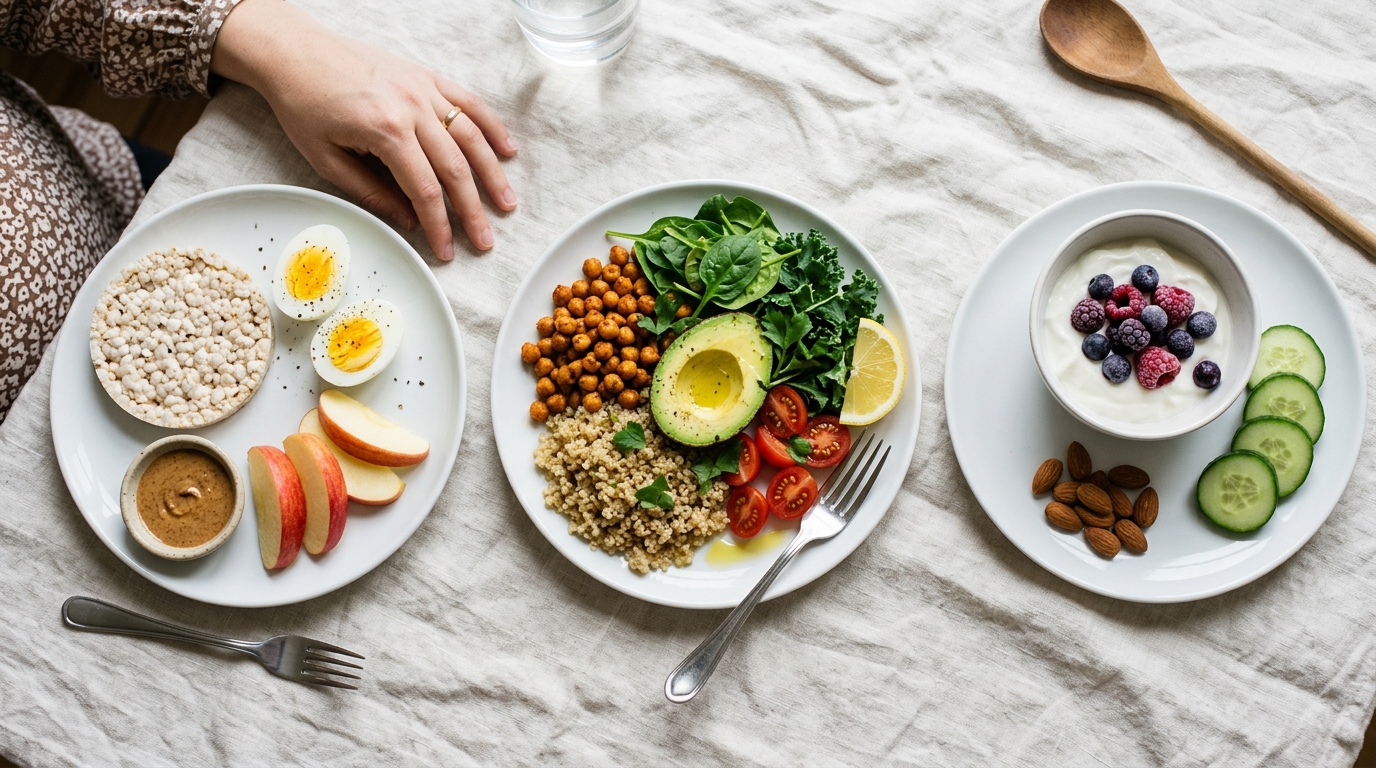
Whole-food templates for each trimester — small and gentle in T1, robust grain bowls in T2, smaller frequent meals in T3.
First Trimester (Weeks 1–13)
Nausea and food aversions dominate. The instinct is often to reach for crackers, chips, and ginger ale because anything else feels impossible. The pragmatic move is to keep the form (crunchy, salty, mild) but switch the ingredients.
Replace packaged crackers with plain rice cakes plus nut butter.
Replace ginger ale with sparkling water plus fresh ginger and lemon.
Keep iron-rich meals small and frequent rather than large and ambitious.
Second Trimester (Weeks 14–27)
Energy returns, appetite stabilizes, and the kitchen is workable again. This is the trimester where the biggest UPF reductions actually happen. Batch-cook two whole-food meals on a Sunday and freeze single portions — this is the homemade answer to the frozen-dinner aisle.
Build a default lunch: grain bowl with a protein, two vegetables, and an oil-based dressing.
Pre-portion snacks once a week: nuts, fruit, hard-boiled eggs, plain yogurt with frozen berries.
Limit sugary drinks to weekends only — water and herbal tea become the weekday default.
Third Trimester (Weeks 28–40)
Heartburn, fatigue, and reduced stomach capacity make large meals difficult again. Sodium-heavy UPFs also worsen edema and blood-pressure risk — exactly the window where the 5% hypertensive-disorder signal in the Nutrients study matters most.
Drop deli meats and packaged soups (sodium peaks here).
Eat smaller meals more often — five or six small whole-food snacks beat three large processed ones.
Pre-stage labor and postpartum freezer meals from whole-food recipes, not store-bought freezer kits.
How Mombite Approaches This
When we built Mombite's recipe database, we made one architectural decision early: every recipe's calorie, protein, iron, folate, and choline value comes directly from USDA FoodData Central — not estimated, not crowdsourced. Across our 600+ pregnancy recipes, zero qualify as ultra-processed under the NOVA classification system. Every ingredient is whole-food or minimally processed.
We didn't set out to be "anti-UPF." But when you build a pregnancy nutrition app that takes ACOG's "eating twice as healthy" guidance seriously, ultra-processed shortcuts disqualify themselves. A recipe that calls for instant noodles or a frozen dinner kit can't pass NOVA's whole-food test, and it can't carry verified USDA nutrition values either — because UPF brands change formulations quietly and the numbers stop matching reality.
The same logic shows up in our editorial work. We document our methodology, our sources, and our conflict-of-interest rules in Mombite's editorial standards, and the 2026 Nutrients findings only sharpened the case for being transparent about why a pregnancy resource should source food data the same way a hospital sources a drug label.
Frequently Asked Questions
Is one frozen meal during pregnancy harmful?
No single meal is the issue. The 2026 Nutrients study measured cumulative dose across three trimesters, not a single dinner. The risk signal appears when UPFs make up a meaningful share of total calories — the cohort average was 51.3%. An occasional frozen meal during a tough week does not erase a whole-food diet.
Are all packaged foods ultra-processed?
No. The NOVA system distinguishes between "processed" and "ultra-processed." A jar of pasta sauce with five recognizable ingredients is processed but not ultra-processed. A microwave dinner with thirty ingredients including emulsifiers, hydrogenated oils, flavor enhancers, and colorants is ultra-processed. The NHS guide walks through the difference in plain language.
What about pregnancy cravings for chips, candy, or fast food?
Cravings are real and often worse during the first and third trimesters. The pragmatic move is substitution, not denial — homemade baked sweet-potato wedges instead of bagged chips, or a small piece of dark chocolate instead of a candy bar. Removing the brand without removing the experience is what survives nine months.
Does this apply to gestational diabetes or preeclampsia diets?
Yes, more so. Both conditions are sensitive to refined carbohydrate and sodium load — exactly the two things UPFs deliver in excess. If you've been diagnosed, follow your OB-GYN or registered dietitian's specific plan; the UPF-reduction approach generally aligns with both gestational diabetes and hypertensive-disorder management.
How do I read a label for ultra-processed signals?
Quick test: scan the ingredient list. If it contains words you wouldn't keep in a home kitchen — emulsifiers (mono- and diglycerides), high-fructose corn syrup, modified starches, hydrolyzed proteins, artificial flavors, color numbers — it falls into the ultra-processed category. ACOG's broader rule of thumb still works: half your plate fruit and vegetables, half your grains whole grains.
ℹ️ Important note
This content is nutrition information based on USDA data, published research, and ACOG/RCOG pregnancy guidelines — not medical advice. Every pregnancy is different. Please consult your OB/GYN, midwife, or registered dietitian for personal medical decisions, especially if you have any pregnancy complications or health conditions.
Ready to eat well during pregnancy?
Mombite is launching soon. Drop your email — we'll let you know the moment it's live.