Can you get enough protein in a vegan pregnancy?
Yes. A well-planned vegan diet can hit the roughly 71g of protein a day that USDA's Dietary Guidelines set for pregnancy, and the NHS confirms a vegan diet is safe in pregnancy when you plan it and cover B12. The move most people miss isn't eating more protein — it's spreading plant proteins across the day so your amino acids balance out. The full chart, the combining rule, and a real 71g sample day are all below.
I went plant-based two years before I got pregnant, and my first reaction to that number was mild panic. Turns out the 71g is very doable on beans, tofu, and grains — you just have to be a little intentional. Here's exactly how, with the food math done for you.
How much protein do I need per day while pregnant?
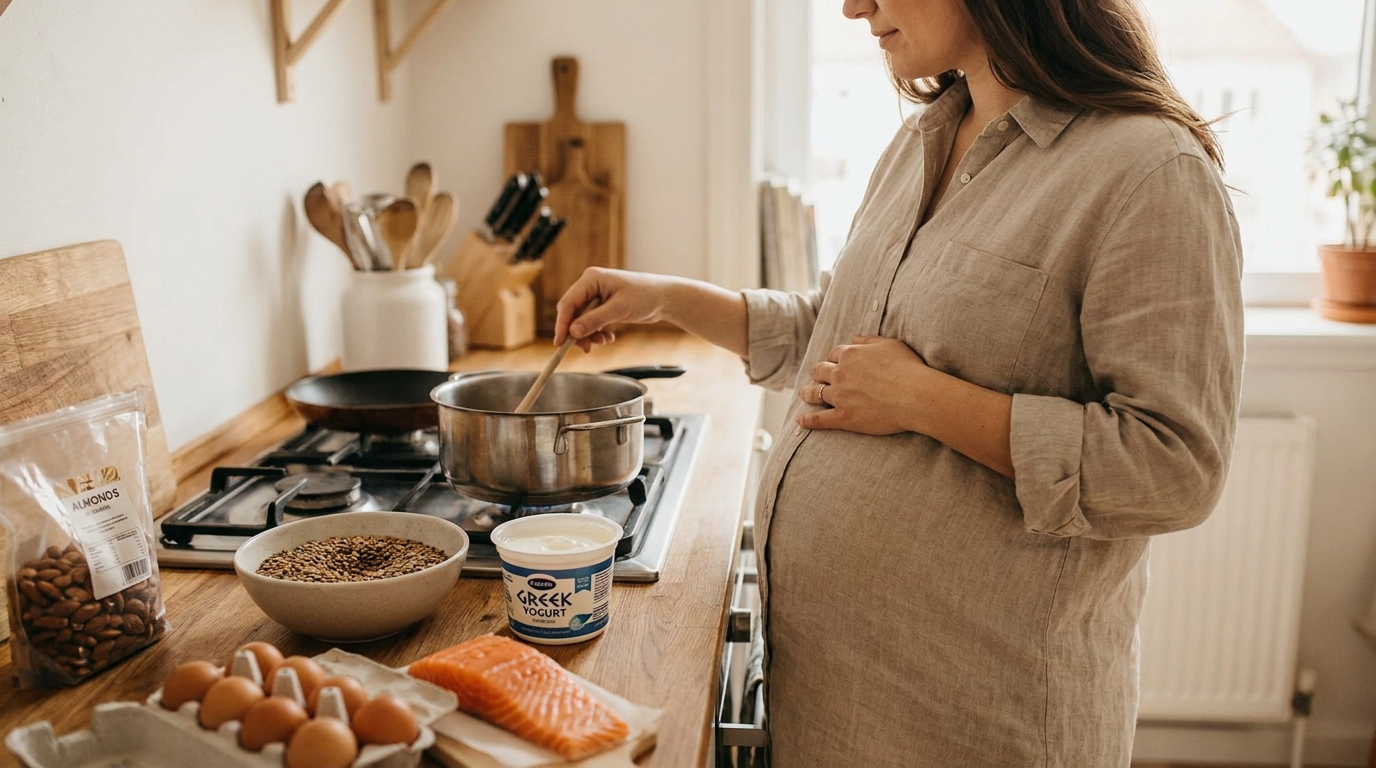
USDA's Dietary Guidelines put pregnancy protein at about 71g a day — that's roughly 1.1 grams per kilogram of body weight, up from 0.8g/kg when you're not pregnant. ACOG frames protein as a core building block for your baby's tissue and your own expanding blood volume, especially from the second trimester on. In plain terms: about 25g more than your pre-pregnancy self needed, or one extra solid protein serving per meal.
What does 71g actually feel like? Think a bowl of lentil soup, a block-sized serving of tofu across two meals, a scoop of peanut butter, and a bowl of oats — spread over a day, not stacked at dinner. According to ACOG, steady protein through the day supports your baby's growth better than one big hit. If you want the snack-sized version of this math, I broke it down in high-protein pregnancy snacks.
In week 9, when nothing but carbs sounded edible, I stopped counting grams and just aimed for "a protein at every meal and every snack." That single habit got me most of the way there without a spreadsheet.
What are the best plant-based protein sources for pregnancy?
The heaviest hitters are legumes, tofu and tempeh, seitan, and grains — a single cup of cooked lentils delivers about 18g of protein per USDA FoodData Central, and 100g of tempeh brings around 19g. Below is the chart I actually keep on my fridge. "Complete" means the food carries all nine essential amino acids on its own; "partial" foods still count fully once your day balances out (more on that next section).
| Plant food | Serving | Protein (USDA) | Complete protein? | Bonus co-nutrient |
|---|---|---|---|---|
| Cooked lentils | 1 cup (~198g) | ~18g | Partial | ~6.6mg iron (USDA) |
| Firm tofu | 1/2 cup (~126g) | ~22g | Complete (soy) | ~250mg calcium if set with calcium |
| Tempeh | 100g | ~19g | Complete (soy) | ~2.7mg iron (USDA) |
| Seitan | 100g | ~25g | Partial (low lysine) | ~5mg iron (USDA); NOT gluten-free |
| Chickpeas | 1 cup (~164g) | ~15g | Partial | ~4.7mg iron (USDA) |
| Cooked quinoa | 1 cup (~185g) | ~8g | Complete (grain) | ~2.8mg iron (USDA) |
| Peanut butter | 2 tbsp (~32g) | ~7g | Partial | healthy fats + folate |
Numbers above are drawn from USDA FoodData Central. Soy foods — tofu, tempeh, edamame — are the quiet MVPs here because they're complete on their own and iron-rich, which matters double when you're plant-based.
Do I need to combine proteins at every meal?
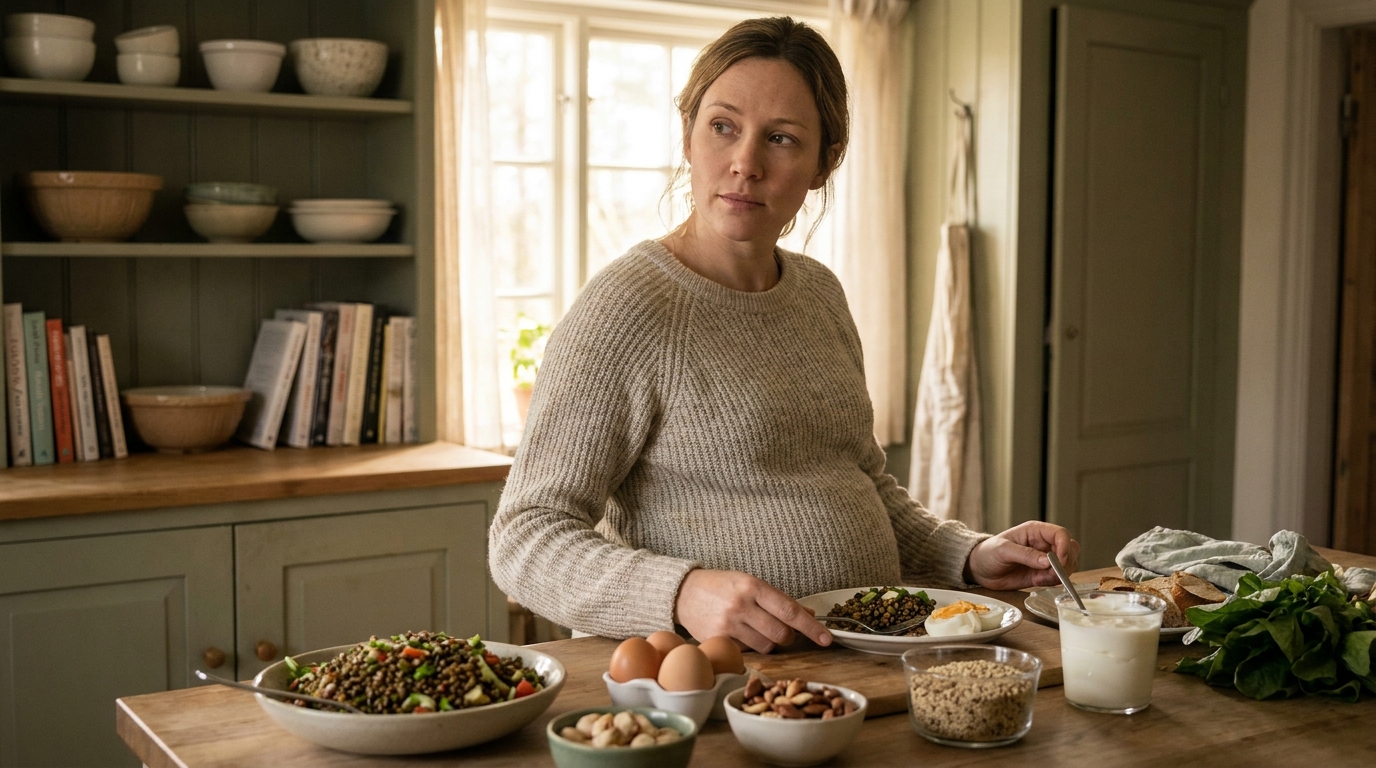
No — and this is the myth I'm happiest to bury. You do not need to pair rice and beans in the same bowl to "complete" a protein. Your body pools amino acids from everything you eat across the whole day, so the simplified rule is: eat a variety of legumes, grains, nuts, and seeds over 24 hours and the amino acids sort themselves out. ACOG's guidance on plant-based eating leans on variety, not meal-by-meal engineering.
Here's the only combining fact worth remembering: legumes are lower in the amino acid methionine, and grains are lower in lysine — so eating both groups sometime that day covers the gap. Beans at lunch and toast at breakfast already does it. In practice I never once thought about pairing; I just kept beans, soy, oats, and peanut butter in rotation and the balance happened on its own. Soy and quinoa are complete anyway, so on lazy days they carry me.
What nutrients should vegan moms watch most closely?
Three: B12, iron, and omega-3 DHA. B12 is the non-negotiable — it's essentially absent from plant foods, and the NHS advises vegans in pregnancy to get B12 from fortified foods or a supplement, targeting the 2.6 mcg/day that NIH's Office of Dietary Supplements sets for pregnancy. This is a talk-to-your-OB item, not a food-hack item.
Iron rises to 27mg/day in pregnancy per NIH ODS, and plant (non-heme) iron absorbs less readily — so pair iron foods with vitamin C (lentils with peppers, tofu with broccoli) to boost uptake. I go deeper on that pairing trick in my iron pregnancy meals guide. For omega-3, EFSA recommends an extra 100–200mg of DHA a day in pregnancy on top of the general 250mg EPA+DHA; vegans get this from an algae-based source rather than fish, which is again an OB-supplement conversation. Ground flax and chia give ALA, but the algae route is the reliable one.
Calcium rounds out the watch-list if you skip dairy — I pulled together dairy-free options in calcium-rich pregnancy meals without dairy. The pattern here: food covers most of it, but B12 and DHA are supplement territory, and your OB-GYN sets the doses.
What does a sample 71g vegan day look like?
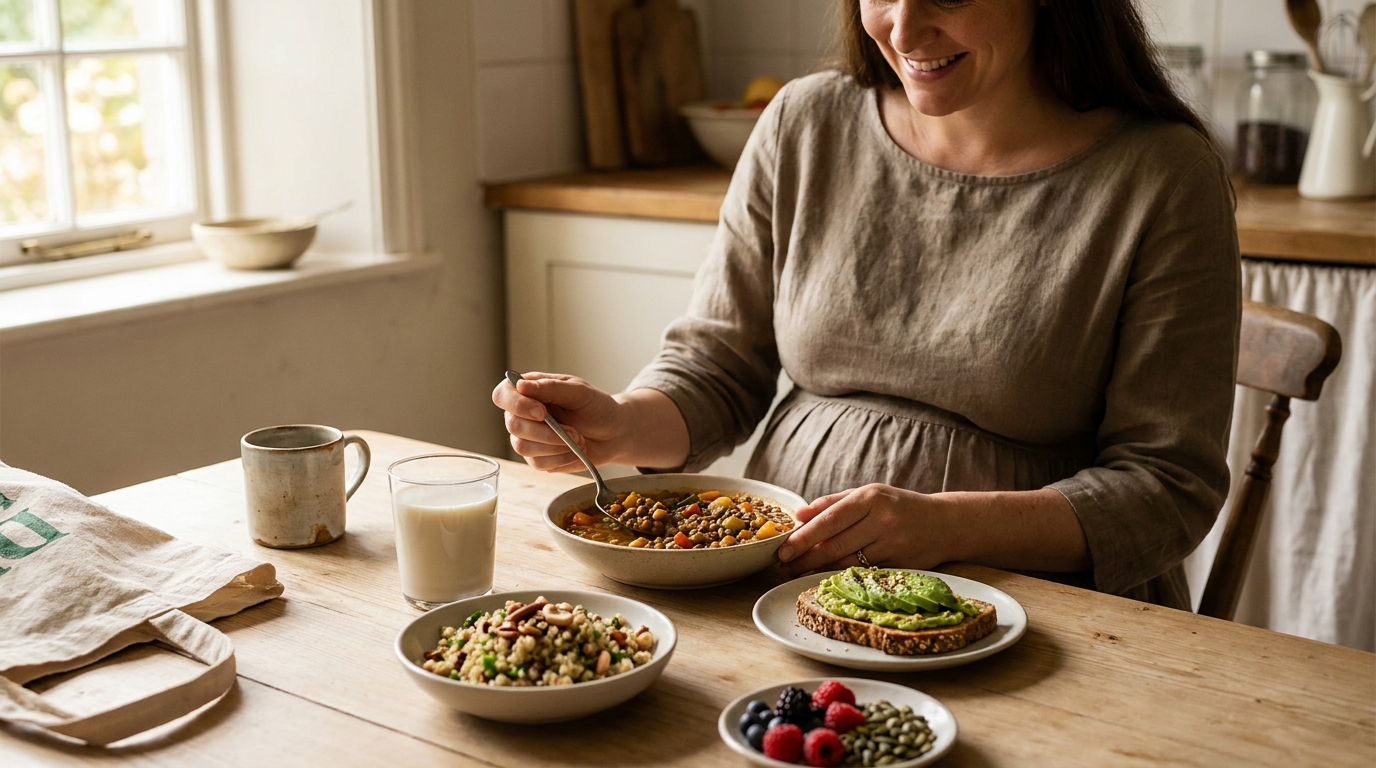
Here's a full day that lands right around 71g without a single meat or dairy swap — real food I've actually eaten while nauseous. Totals use USDA FoodData Central values and land at roughly 72g.
| Meal | What's on the plate | Protein (USDA) | Key co-nutrient |
|---|---|---|---|
| Breakfast | Oats + 2 tbsp peanut butter + soy milk | ~15g | fortified B12 (soy milk) |
| Snack | 1/2 cup roasted edamame | ~9g | ~1.8mg iron |
| Lunch | 1 cup lentil soup + wholegrain roll + orange | ~22g | ~7mg iron + vitamin C |
| Snack | Soy yogurt + handful almonds | ~9g | calcium |
| Dinner | 1/2 cup tofu stir-fry + 1 cup quinoa + broccoli | ~17g | ~5mg iron + vitamin C |
| Total | ~72g | hits the 71g target |
Notice B12 shows up via fortified soy milk and the vitamin C (orange, broccoli) sits right next to the iron foods on purpose. That's the whole strategy in one day.
How do gluten-free vegans hit protein?
Drop seitan and wheat, lean harder on legumes, soy, and naturally gluten-free grains. Seitan is pure wheat gluten, so it's out — but you replace its ~25g per 100g with tofu (~22g per half cup) and tempeh (~19g per 100g), both gluten-free and complete per USDA FoodData Central. Quinoa (~8g/cup) becomes your grain workhorse since it's gluten-free and complete on its own.
The one trap: some tempeh and veggie products use barley or wheat as a binder, so the NHS's general advice to check labels applies double here. My gluten-free stretch in week 20 ran on chickpea pasta (~14g per serving), tofu, lentils, and quinoa — the 71g held up fine, it just meant reading more packets at the shop. Buckwheat and amaranth are useful backups if you want to rotate beyond quinoa.
Frequently Asked Questions
Can you get enough protein in a vegan pregnancy?
Yes. The NHS confirms a vegan diet is safe in pregnancy when it's well planned, and the ~71g/day protein target from USDA's Dietary Guidelines is reachable on legumes, soy, and grains. The catch isn't protein itself — it's covering B12 with a supplement or fortified foods, which the NHS flags as essential for vegan mums-to-be.
How much protein do I need per day while pregnant?
About 71g a day per USDA's Dietary Guidelines, roughly 1.1g per kilogram of body weight — around 25g more than pre-pregnancy. ACOG emphasizes steady intake across meals rather than one large serving, so aim for a protein at each meal and snack instead of tracking every gram.
Do I need to combine proteins at every meal?
No. Your body pools amino acids over the full day, so eating a variety of legumes, grains, nuts, and seeds across 24 hours covers all nine essential amino acids. Rice-and-beans in one bowl isn't required — beans at lunch and toast at breakfast already balance the lysine and methionine gap.
What supplements do vegan pregnant women usually need?
B12 and omega-3 DHA are the two food can't reliably cover. NIH ODS sets B12 at 2.6 mcg/day in pregnancy, and the NHS advises vegans get it from fortified foods or a supplement. EFSA recommends an extra 100–200mg DHA daily, which vegans get from an algae source. Your OB-GYN sets the actual doses — bring this list to your appointment.
Is soy safe to eat often in a vegan pregnancy?
Whole soy foods like tofu, tempeh, and edamame are a normal part of a balanced pregnancy diet and are among the few complete, iron-rich plant proteins available. There's no guideline from ACOG or the NHS restricting moderate whole-soy intake in pregnancy. As with any food, variety matters — rotate soy with legumes and grains rather than relying on it alone.