Quick Answer
So here's the honest version: vitamin D pregnancy foods help, but food alone almost never covers your needs. The targets sit around 600 IU a day in the US (NIH) and 400 IU / 10 mcg a day in the UK (NHS) — but if you're actually low, the number your provider aims for can be much higher. Which foods do the heavy lifting, and how winter sun quietly stops working — that's the full chart below.
Why pregnancy raises your vitamin D needs
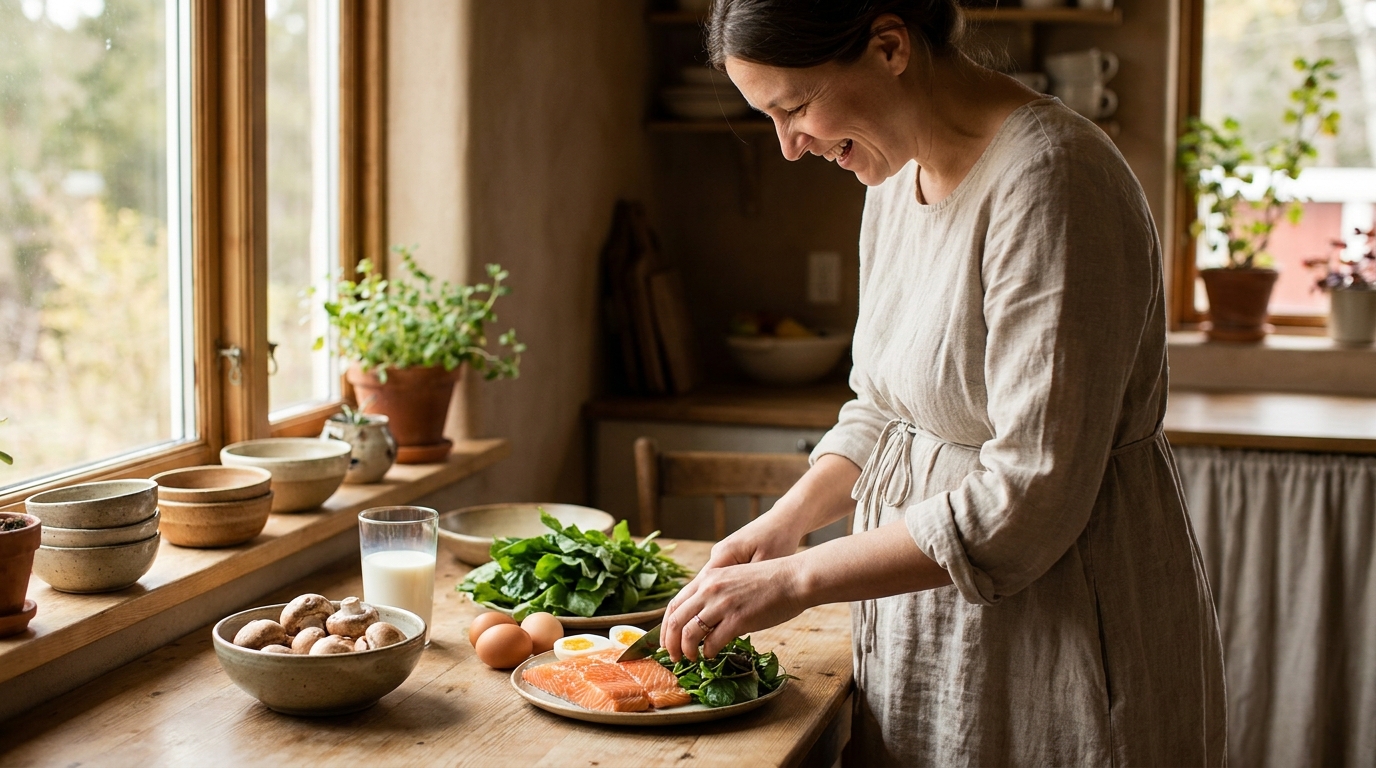
Okay, can we talk about why this one matters more once you're pregnant? Vitamin D isn't really a "vitamin" in the cute-supplement sense. It acts more like a hormone, and its main job is helping your body actually absorb the calcium you eat. No vitamin D, and that calcium kind of just passes through — which is a problem when a tiny skeleton is being built inside you.
According to the NIH Office of Dietary Supplements, vitamin D supports your baby's bone growth, your own bones and teeth, and immune function for both of you. The same fact sheet notes that low vitamin D in pregnancy is linked to a higher chance of things like low birth weight and preeclampsia — which is exactly why nobody wants you running on empty here.
Here's the catch that surprised me: your prenatal vitamin probably has some vitamin D, but not necessarily enough if you started the pregnancy already depleted. And a lot of us do start depleted — more on why in a second.
Vitamin D rich foods: the IU-per-serving chart
First, a tiny bit of decoding, because the labels are confusing on purpose: vitamin D is measured in IU (International Units) or in micrograms (mcg). Per the NIH conversion, 1 mcg = 40 IU — so the NHS "10 micrograms" and "400 IU" you keep seeing are the exact same amount, written two ways.
Now the part everyone screenshots — real values from the USDA FoodData Central and the NIH fact sheet. I added an "everyday translation" column because I never know what "3.5 oz of salmon" actually looks like on a plate.
| Food | Serving | Vitamin D (IU) | Vitamin D (mcg) | Everyday translation |
|---|---|---|---|---|
| Wild salmon (cooked) | 3.5 oz / 100 g | ~600–1,000 | ~15–25 | One dinner fillet, palm-sized |
| Farmed salmon (cooked) | 3.5 oz / 100 g | ~440 | ~11 | Same fillet, supermarket type |
| Canned tuna (light, drained) | 3 oz / 85 g | ~150 | ~3.8 | One small lunch can |
| Fortified cow's milk | 1 cup / 240 ml | ~120 | ~3 | One glass with breakfast |
| Fortified soy / oat milk | 1 cup / 240 ml | ~100–120 | ~2.5–3 | One glass, splash in coffee counts |
| Fortified orange juice | 1 cup / 240 ml | ~100 | ~2.5 | One small breakfast glass |
| Fortified breakfast cereal | 1 serving | ~80 | ~2 | One bowl (check the box) |
| Egg yolk | 1 large yolk | ~40 | ~1 | One egg — eat the yolk, that's where it lives |
| Sardines (canned) | 2 sardines | ~46 | ~1.2 | Two little fish on toast |
| White mushrooms (UV-exposed) | 1/2 cup | ~360 | ~9 | A handful, sautéed — UV-treated only |
See the problem? A good salmon dinner hits the US target in one meal, but the next day it's eggs and milk and you're suddenly nowhere near. The fortified stuff — milk, plant milks, juice, cereal — quietly does more work than the glamorous salmon. One UK note from the NHS: skip liver and cod liver oil as a source, since they're high in vitamin A (retinol), which you want low in pregnancy. Full UK vs US targets are two sections down.
Sunlight: why latitude and season change everything
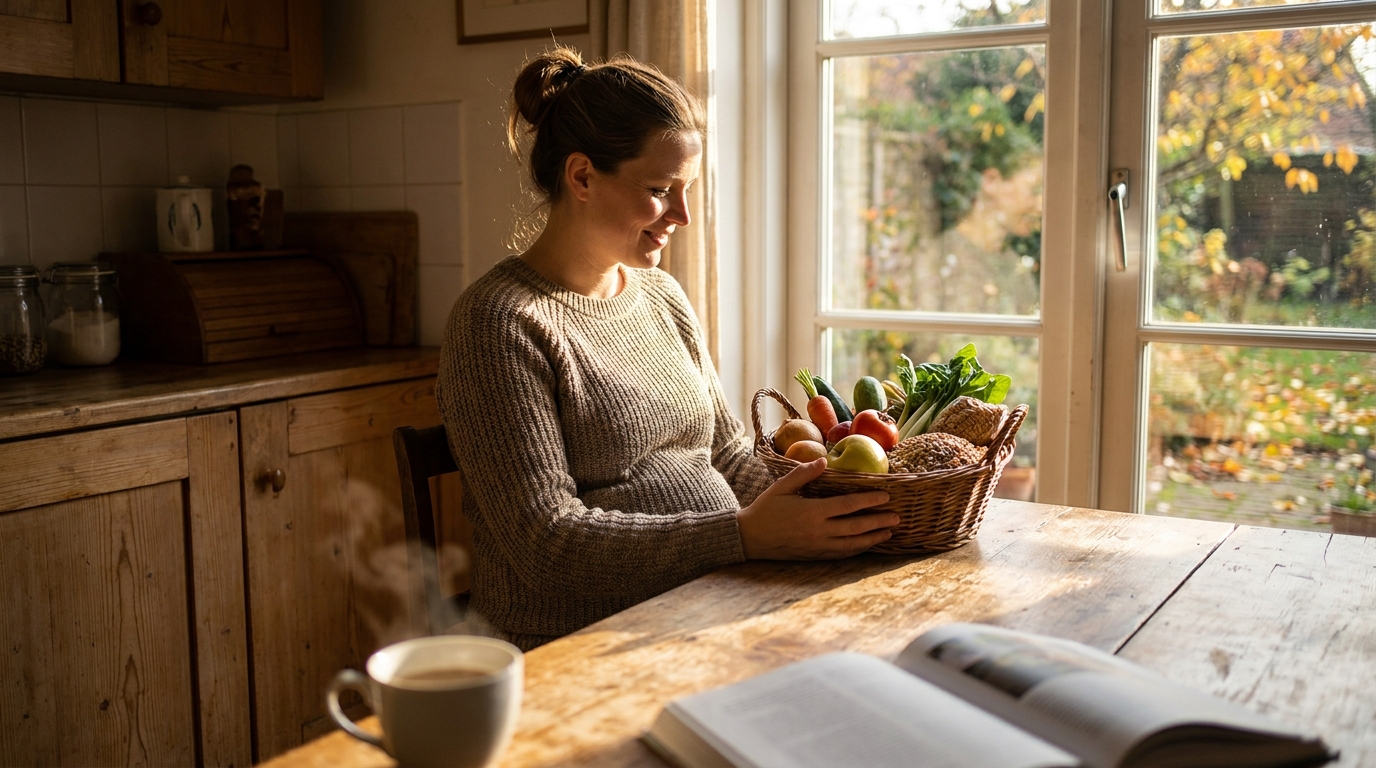
Here's the thing nobody tells you until you've already moved north and gotten tired all winter: your skin makes vitamin D from sunlight, but only from a specific slice of it (UVB rays), and that slice basically disappears for months depending on where you live.
Research at UK latitudes (summarized in this peer-reviewed study) found that for roughly anyone above about 35°N — think Atlanta and everywhere north of it, which is most of the US, all of the UK, and most of Europe — the skin makes very little to no vitamin D from late September through early March. The sun sits too low in the sky in winter; the angle is wrong and the UVB just doesn't reach you with enough strength.
This is why the NHS specifically tells everyone in the UK to take a vitamin D supplement from October to March — they've basically conceded that British winter sun cannot do the job. And it's not only winter: that same study noted darker skin tones make less vitamin D from the same sun exposure, because melanin is doing its protective thing. None of this is a flaw in you. It's just geometry and biology being inconvenient.
I'm not going to tell you to go sunbathe — sun safety in pregnancy is its own conversation, and your OB knows your full picture. The point is just: if you've been quietly relying on "I get outside enough," the calendar and your latitude might be voting against you.
US vs UK vitamin D targets (NIH vs NHS — the numbers differ)
This trips everyone up, because depending on which website your 2am search lands on, you'll see a different number. Both are "right" — they're just set by different bodies for different populations. Here's the side-by-side.
| Authority | Region | Daily target (pregnancy) | In the other unit | Notes |
|---|---|---|---|---|
| NIH ODS | US | 600 IU | 15 mcg | RDA for pregnancy; upper limit 4,000 IU/day |
| ACOG | US | 600 IU baseline | 15 mcg | For diagnosed deficiency, notes 1,000–2,000 IU/day is considered safe — provider-guided |
| NHS | UK | 400 IU | 10 mcg | Daily supplement advised, especially Oct–March; don't exceed 100 mcg/day |
| EFSA | EU | 600 IU | 15 mcg | Adequate intake for adults including pregnancy |
So the headline, per NIH and EFSA: the US and EU land around 600 IU (15 mcg), the UK sets a baseline of 400 IU (10 mcg), and everyone agrees that if you're actually deficient, the number your provider aims for can be a lot higher. That's the "leave it open" part — there's no single right number for a person who's already low, which is exactly why this is a conversation rather than a chart to obey. ACOG's wording is worth knowing: they don't recommend screening everyone, but for diagnosed deficiency, 1,000–2,000 IU/day is described as safe.
A script for your next appointment: ask your OB or midwife whether a vitamin D blood test makes sense for you specifically — ACOG flags it as risk-based, not routine, so it helps to ask directly.
Who's at higher risk of vitamin D deficiency in pregnancy
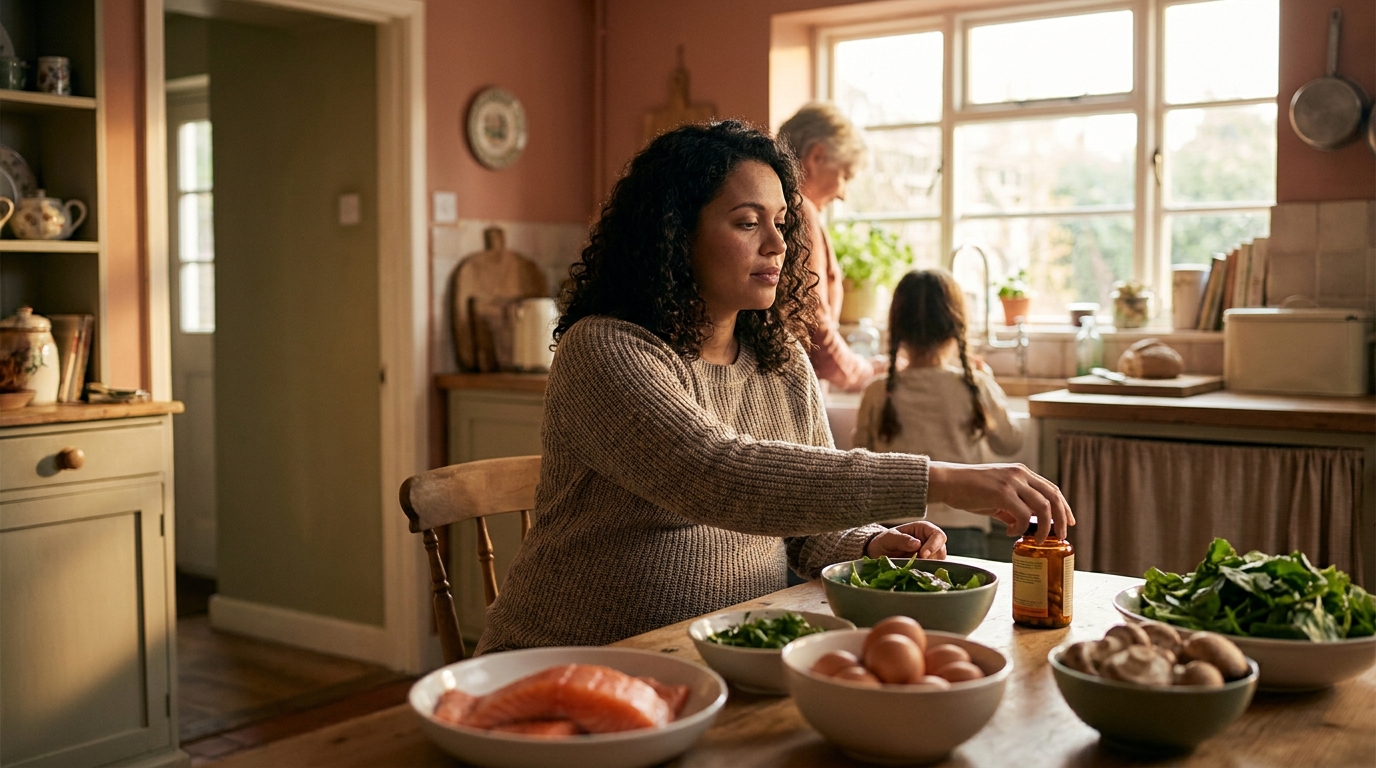
I'm not gonna lie, when I read the risk list I realized half the planet is on it. Vitamin D deficiency pregnancy is genuinely one of the most common nutrient gaps, and per ACOG and the latitude research above, you're more likely to run low if you:
- Have darker skin — more melanin means less vitamin D made from the same sun
- Live in a northern latitude (most of the UK, northern Europe, the northern US)
- Cover most of your skin for cultural or religious reasons, or are mostly indoors
- Don't eat fish, eggs, or fortified foods (vegan or limited-variety diets)
- Are pregnant through the autumn and winter months specifically
If two or more of those are you — that's not a reason to panic, it's just a reason to actually bring it up rather than assume your prenatal has it handled. The reassuring part: this is one of the easiest gaps to close once you and your provider know it's there.
Pairing vitamin D with calcium and dietary fat for absorption
Two small things make the vitamin D you do get work harder.
Eat it with fat. Vitamin D is fat-soluble, which is a fancy way of saying it needs a little dietary fat tagging along to actually get absorbed. So the yolk in the egg, the oil the salmon is cooked in, a splash of whole milk — that's not just calories, it's the delivery vehicle. A fat-free cereal eaten with water absorbs less than the same cereal with whole milk. Tiny detail, real difference.
Think of it as a duo with calcium. Vitamin D's headline job is helping you absorb calcium, so the two genuinely work as a team for your bones and your baby's. If you're already mapping out your calcium (especially dairy-free), pairing the two foods at the same meal is the efficient move — I went deep on the calcium side in our calcium without dairy guide.
Honestly, this absorption logic is the same reason iron and choline have their own pairing tricks. Our iron meals trimester guide and choline foods and absorption guide use the exact same "pair it for absorption" thinking. Full food-source IU chart is back up in section three if you want to screenshot one thing and go.
Frequently Asked Questions
How much vitamin D do I need during pregnancy?
The US (NIH) and EU (EFSA) targets are 600 IU (15 mcg) a day; the UK (NHS) baseline is 400 IU (10 mcg) a day, with a supplement advised especially October through March. If you're actually deficient, the number your provider aims for can be higher — ACOG notes 1,000–2,000 IU/day is considered safe in that case. There isn't one universal number, so confirm yours with your OB or midwife.
Can I get enough vitamin D from food alone?
Realistically, almost no one does. A salmon dinner can hit the US target in one meal, but the next day of eggs, milk, and cereal lands you well short. That's why both the NHS and ACOG expect most of your vitamin D to come from a mix of food, sunlight, and a supplement in your prenatal — food carries part of the load, not all of it.
Why is vitamin D deficiency so common in pregnancy?
Three reasons stack up: most foods contain very little vitamin D, your skin makes almost none from sunlight during winter months if you live above roughly 35°N (most of the US, UK, and Europe per the latitude research), and many people start pregnancy already low. Darker skin and indoor lifestyles lower skin production further. It's so common that the NHS advises a supplement for essentially everyone who's pregnant.
Does sunlight really give you vitamin D in winter?
At higher latitudes, mostly no. Peer-reviewed UK research found the skin makes very little vitamin D from late September to early March, because the sun sits too low and the UVB rays that trigger production don't reach you with enough strength. This is exactly why the NHS recommends a supplement specifically through autumn and winter.
What foods are highest in vitamin D?
Per USDA FoodData Central, wild salmon is the clear winner (roughly 600–1,000 IU per 3.5 oz fillet), followed by UV-exposed mushrooms, farmed salmon, canned tuna and sardines, then fortified everyday foods — milk, plant milks, orange juice, and cereal — which quietly add up. Egg yolks have a little. One UK note: skip liver and cod liver oil, since they're high in vitamin A, which you want to keep low in pregnancy.
A quick note: this guide is here to make the official guidance easier to read in real life — it isn't medical advice, and it can't know your bloodwork or history. Your OB-GYN, midwife, or dietitian is the one to set your actual numbers, especially if you might be deficient.