What foods should I completely avoid during pregnancy?
The non-negotiable "avoid" list is short: unpasteurized (raw) milk and mould-ripened or blue soft cheeses, raw or undercooked meat and eggs, pâté, high-mercury fish like shark and swordfish, and any alcohol — the CDC flags these because listeria infection is about 10 times more likely during pregnancy. Everything else is dose or preparation. The full food-by-food table, the reasons, and a safe swap for each are below.
I made this list because at week 6, foggy and queasy, I had 14 browser tabs open and none of them agreed with each other. So I built the one page I actually wanted: every "no," the real reason, and something I could eat instead.
Which foods carry listeria, salmonella, or toxoplasma?
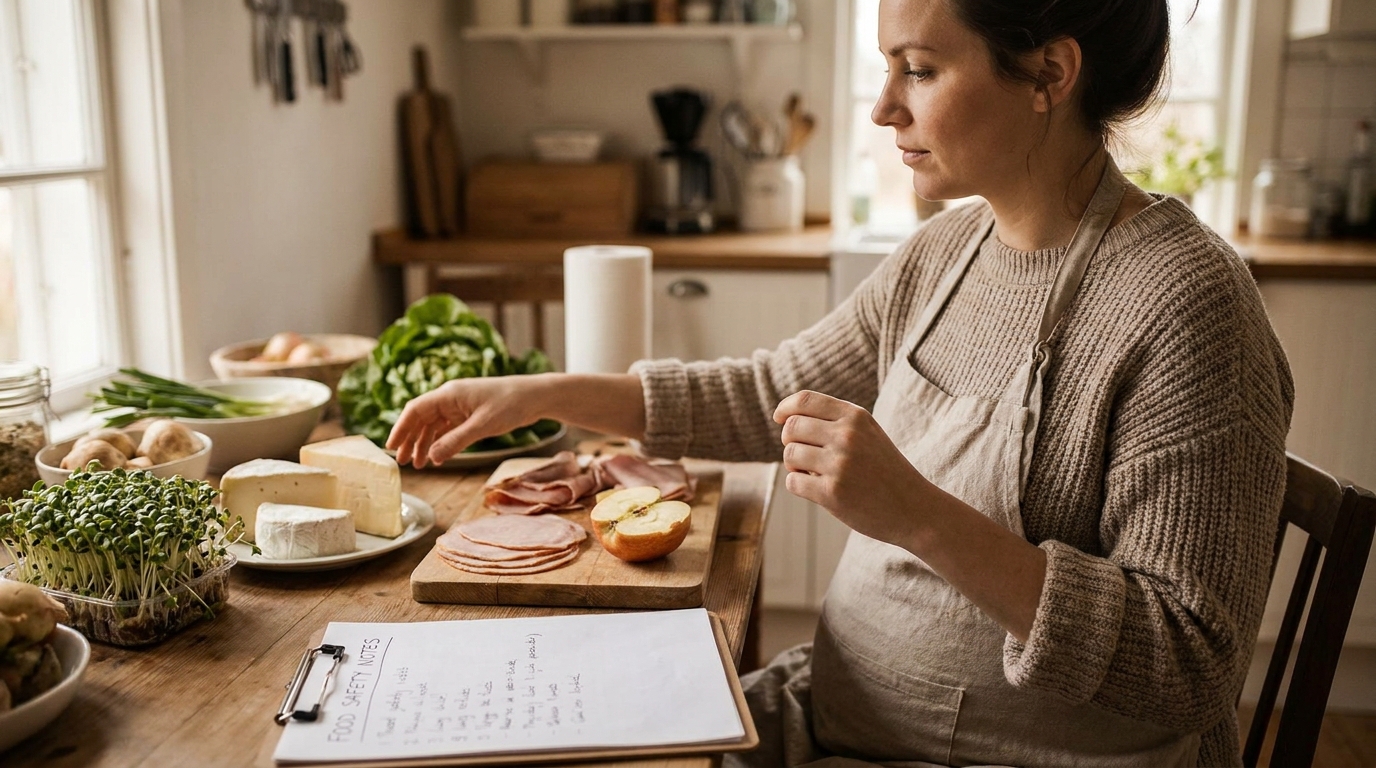
The riskiest foods are the ones eaten raw or aged: unpasteurized soft cheese and deli meats carry Listeria, undercooked eggs and poultry carry Salmonella, and undercooked cured or wild meat carries Toxoplasma. The NHS advises avoiding mould-ripened soft cheeses such as brie and camembert plus all blue cheese during pregnancy, because listeria survives at fridge temperatures where most bacteria stall. Full swaps sit in the table further down.
Here is the part I misread for weeks: the danger is not "cheese," it is unpasteurized and soft. A hard cheese like cheddar, or a mozzarella made from pasteurized milk, was on my yes-list the whole time. The ACOG nutrition guidance draws the same line: heat and pasteurization are what make these foods safe again. If you want the deep version, my pregnancy-safe cheese guide sorts every common cheese into yes, no, or cook-it-first, and the listeria in pregnancy explainer covers what to watch for.
| Food | Main risk | Why it's risky | Safe version | Source |
|---|---|---|---|---|
| Brie, camembert, blue cheese | Listeria | Mould-ripened, moist, ~pH 7 — listeria grows even at 4°C fridge temp | Cooked until steaming hot (74°C), or hard/pasteurized cheese | NHS |
| Deli meat / cold cuts | Listeria | Ready-to-eat, no kill step after slicing | Heated to steaming just before eating | CDC |
| Runny or raw eggs | Salmonella | Undercooked yolk can carry live bacteria | Cooked until yolk is firm (or UK Lion-marked) | NHS |
| Pâté (all types) | Listeria | Even vegetable pâté; often stored chilled and unheated | Skip, or a heated meat spread | NHS |
| Undercooked meat, cured salami | Toxoplasma | Parasite in raw/cured muscle | Cooked to 71°C, or freeze cured meats first | CDC |
Which fish should I avoid, and how much is safe?
Skip the four high-mercury fish entirely — shark, swordfish, king mackerel, and tilefish — and cap total fish at 8 to 12 ounces a week, per the joint FDA and EPA advice. Mercury crosses the placenta and can affect a baby's developing nervous system, which is why the limit is about amount, not abstinence. The full portion math and the UK's slightly different tuna rule are in the table.
The number that finally stuck for me: 8 to 12 ounces a week is roughly two to three servings, and a serving is about the size of my palm. Salmon, cooked shrimp, tilapia, and canned light tuna are the FDA's "best choices." Albacore (white) tuna is the one to meter — the FDA says no more than 4 ounces a week because it runs higher in mercury than light tuna. Raw fish is a separate question; I unpack it in is sushi safe during pregnancy.
| Fish | Weekly limit | Approx. amount | Reason | Source |
|---|---|---|---|---|
| Shark, swordfish, king mackerel, tilefish | 0 servings | None | Highest mercury of common fish | FDA/EPA |
| Albacore (white) tuna | ≤ 4 oz | ~1 serving | Higher mercury than light tuna | FDA/EPA |
| Canned light tuna, salmon, shrimp | 8–12 oz | 2–3 servings | "Best choices," low mercury | FDA/EPA |
| Oily fish (salmon, sardines, mackerel) | ≤ 2 portions | ~2 × 140g | NHS caps oily fish at 2 portions/week | NHS |
| Raw shellfish, raw sushi-grade fish | 0 (raw) | Cook first | Listeria, parasites, norovirus | FDA |
How much caffeine and alcohol are safe in pregnancy?
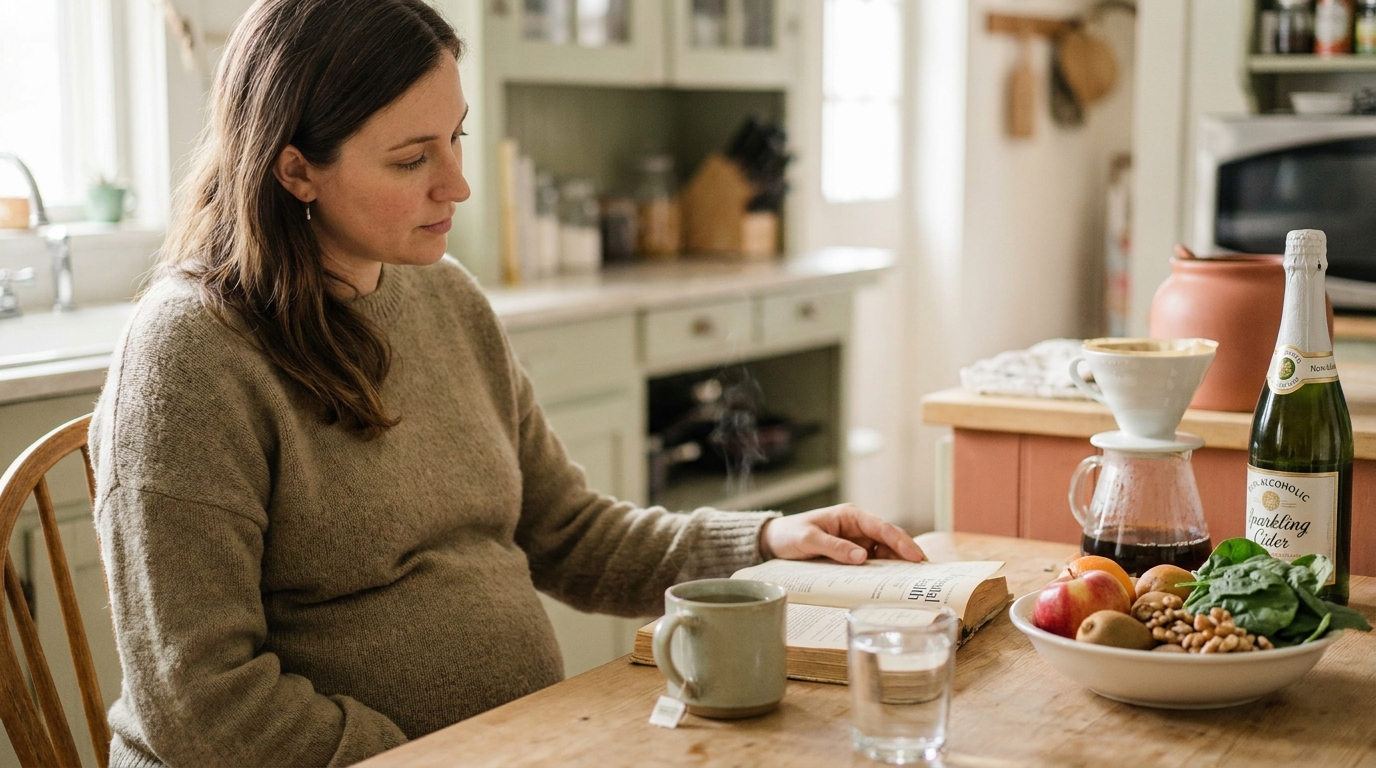
For alcohol the guidance is zero — the ACOG states no amount is known to be safe at any point in pregnancy. Caffeine has a ceiling rather than a ban: both the NHS and EFSA set the limit at 200mg a day. Undercooked foods stay off the table for the bacteria reasons above. The exact caffeine-in-a-cup breakdown is below.
200mg is roughly one 12oz filter coffee, or about two mugs of tea — and caffeine hides in cola, dark chocolate, and green tea too, so it adds up faster than you'd think. In my first trimester the only warm drink I could face by 2pm was a cold half-decaf; the smell of a fresh espresso sent me straight to the sink. That accidental swap kept me well under the line without any willpower involved.
What can I eat instead of each avoided food?
Almost every "avoid" has a close, satisfying substitute: hard or pasteurized cheese for soft cheese, well-cooked eggs for runny ones, low-mercury salmon for swordfish, and decaf for coffee. The NHS frames pregnancy eating as preparation and pasteurization, not deprivation — the nutrients you'd lose from the "no" list are easy to replace. Here is the swap-for-swap map.
| Instead of | Eat this | Keeps the nutrient | Prep note | Source |
|---|---|---|---|---|
| Soft mould-ripened cheese | Cheddar, pasteurized mozzarella, cream cheese | ~200mg calcium per 30g (USDA) | Check label reads "pasteurized" | NHS |
| Runny egg / homemade mayo | Fully cooked egg, jarred mayo | ~6g protein per egg (USDA) | Cook until yolk sets | NHS |
| Swordfish, shark | Salmon, sardines | Omega-3 DHA, low mercury | Cook to 63°C | FDA/EPA |
| Deli ham sandwich | Ham heated until steaming, or tinned salmon | Protein, iron | Heat to steaming first | CDC |
| Second/third coffee | Decaf, rooibos, half-caf | Warm-drink ritual, ~0mg caffeine | Stay under 200mg total/day | EFSA |
How do US and UK pregnancy food rules differ?
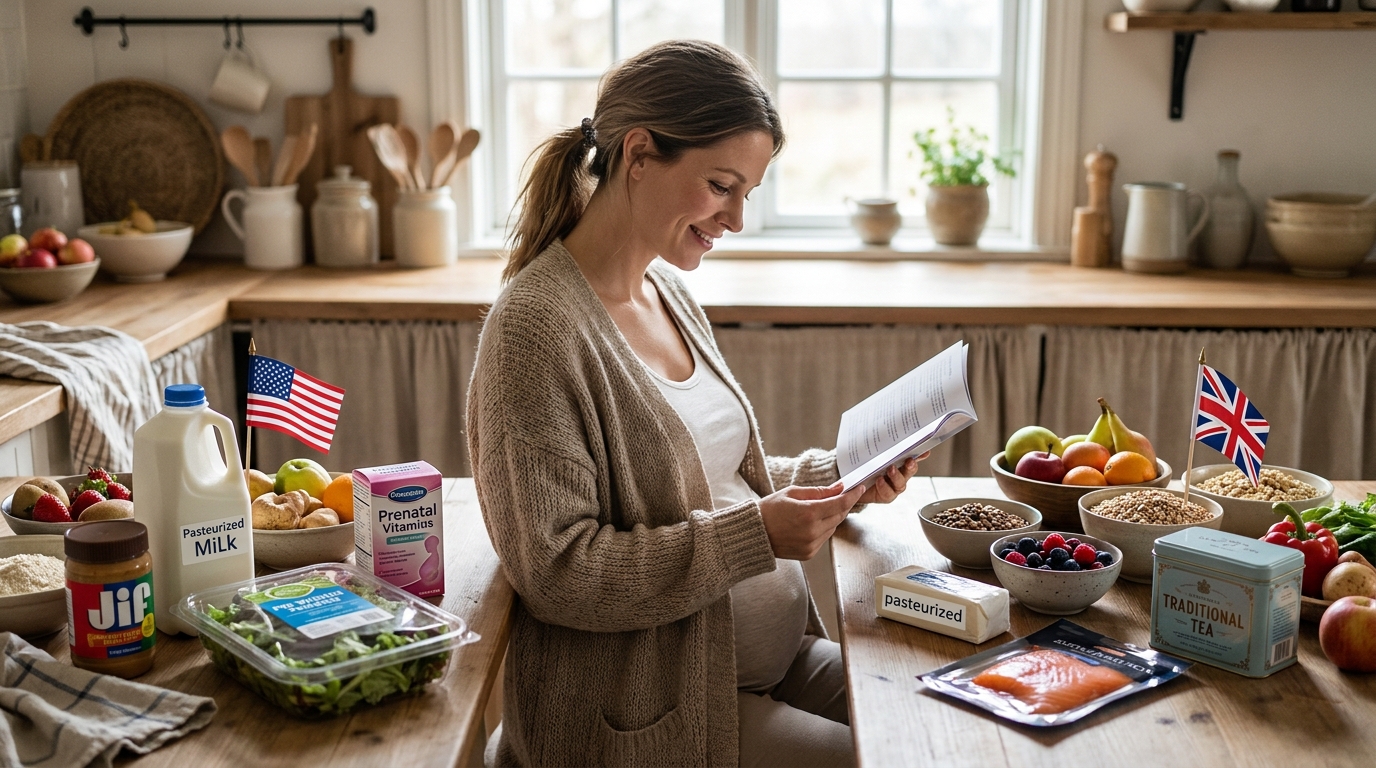
The big three overlaps are identical — avoid raw meat, unpasteurized soft cheese, and high-mercury fish — but two rules split. The UK's NHS now says British Lion-marked eggs are safe to eat runny, while the US FDA advises cooking all eggs until firm. The full contrast is in the table.
The tuna rule splits too: the NHS limits tuna to no more than two tuna steaks or four medium cans a week, framed around portions, while the FDA meters albacore by ounces. If you're reading US and UK sites at once — which I did, constantly — this is why the numbers seemed to clash. They're aimed at the same goal through different food-labelling systems.
| Topic | US (FDA/CDC) | UK (NHS) | Same goal? |
|---|---|---|---|
| Runny eggs | Cook until firm | OK if British Lion-marked | Cut salmonella risk |
| Tuna limit | Albacore ≤ 4 oz/week | ≤ 2 steaks or 4 cans/week | Cap mercury |
| Total fish | 8–12 oz/week | Oily fish ≤ 2 portions/week | Balance omega-3 vs mercury |
| Soft cheese | Avoid unpasteurized | Avoid mould-ripened + blue | Cut listeria risk |
| Cold deli meat | Heat until steaming | Lower risk, heating optional | Cut listeria risk |
Frequently Asked Questions
Why are some cheeses unsafe in pregnancy?
It comes down to moisture and acidity, not the word "cheese." The NHS advises avoiding mould-ripened soft cheeses (brie, camembert) and all blue cheese because their soft, low-acid texture lets Listeria multiply even at fridge temperature. Hard cheeses and anything made from pasteurized milk are considered safe. Cooking a soft cheese until it is steaming hot also kills listeria, so a baked camembert is a different food from a raw one.
Can I eat deli meat during pregnancy?
Cold, straight from the packet, the CDC advises against it, because sliced ready-to-eat meats can carry Listeria with no cooking step to kill it. The fix is simple: heat deli meat until it is steaming hot, then let it cool if you like. That single step drops the risk substantially. In the UK the NHS treats the risk as lower, but heating is still the safest route if you want the sandwich.
Is any amount of alcohol safe while pregnant?
No — ACOG states that no amount of alcohol is known to be safe at any stage of pregnancy, and the safest choice is none. Alcohol crosses the placenta directly, and there is no established "safe" threshold or trimester. If you drank before you knew you were pregnant, that is common and worth a calm chat with your midwife rather than panic. Mocktails, alcohol-free wine, and sparkling water with bitters cover the ritual.
How much caffeine can I have per day?
Both the NHS and EFSA put the ceiling at 200mg a day, which is roughly one mug of filter coffee plus a cup of tea. Caffeine also appears in cola, energy drinks, green tea, and dark chocolate, so the total counts everything, not just coffee. Going over occasionally is not a crisis, but staying under 200mg is the number the guidelines agree on across the US, UK, and EU.