Okay, can we talk about lunch? Breakfast I'd more or less cracked, dinner I could plan around — but midday, especially the week I got my gestational diabetes diagnosis, was the meal that kept sandbagging my numbers. I'd eat something that felt healthy, test an hour later, and watch the reading climb. So here's the thing I wish someone had handed me on day one: it's less about eating tiny sad salads and more about the shape of the plate.
Quick answer: the plate formula that keeps lunch steady
Build lunch around a palm of lean protein, half a plate of non-starchy veg, a small fist of a fibre-rich smart carb, and a thumb of healthy fat — that combo slows how fast sugar hits your blood. Rough target most people land near is around 30–45g of carbs at midday, but your own numbers decide. The full 15-plate list, carb counts and packed-lunch tricks are all below.
How gestational diabetes actually changes lunch
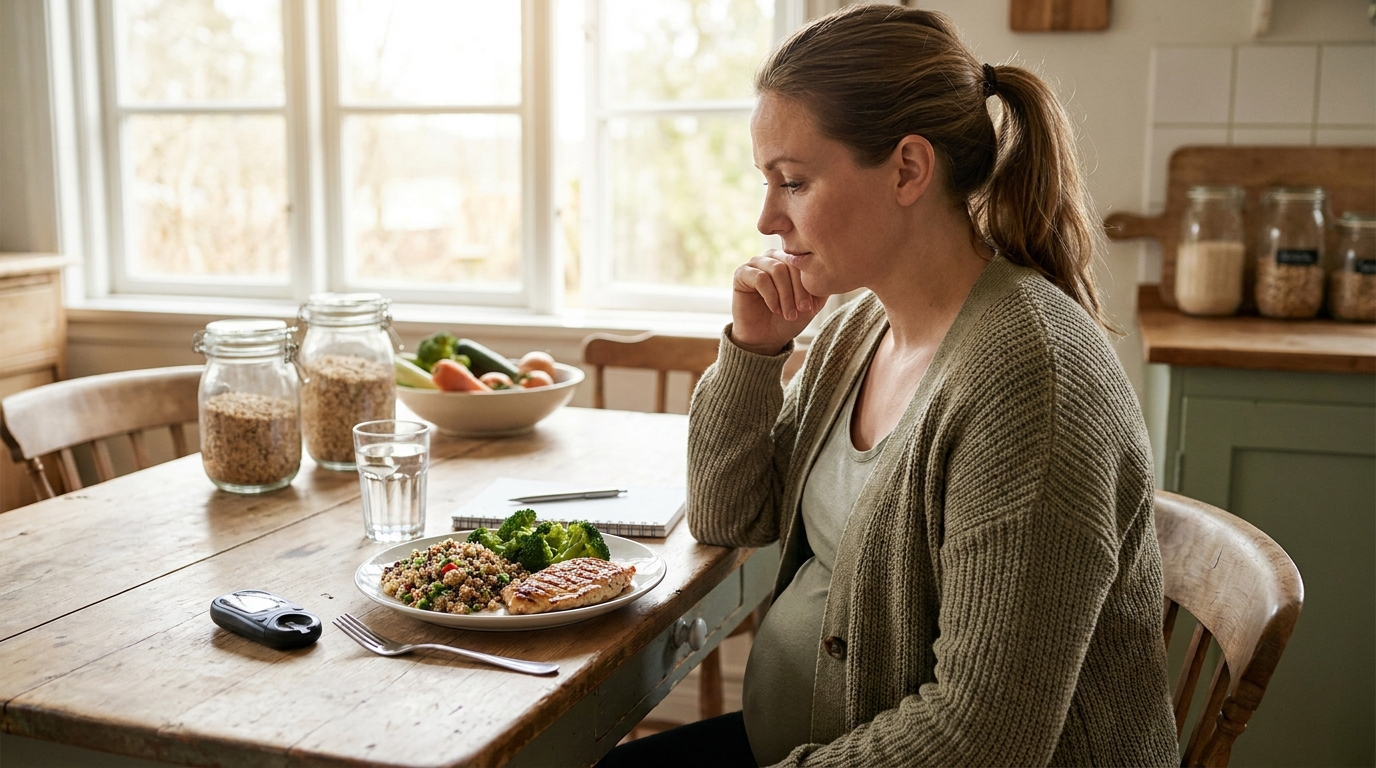
Gestational diabetes changes lunch in three practical ways: you spread carbs out instead of piling them in, you pair every carb with protein and fat, and a short walk afterward becomes part of the meal. The ADA's plate method is the shortcut I use so I'm not doing maths at the counter.
Here's the why. Pregnancy hormones from the placenta make your body more resistant to insulin, so the same jacket potato that was fine last year now sends your reading up. ACOG estimates gestational diabetes affects up to 10% of pregnancies in the US, so if this is you — you're in very good company. The fix isn't cutting carbs to zero; ACOG actually advises a minimum of around 175g of carbohydrate a day in pregnancy to fuel you and the baby, just distributed across meals and snacks rather than dumped at once.
Two habits do the heavy lifting at lunch. First, protein and fat blunt the spike — they slow digestion so glucose trickles in instead of flooding. Second, movement: the NHS notes that being active after eating helps lower blood glucose, and a 10–15 minute walk after lunch is the single easiest lever I found. I test one hour post-meal because NICE guideline NG3 sets a target of below 7.8 mmol/L one hour after eating — that number tells me instantly whether a plate worked for my body.
15 balanced GD lunch plates (with net carbs + protein)
These 15 plates all follow the same formula — protein + non-starchy veg + a measured smart carb + fat — and sit roughly in the 10–35g net-carb range so most people stay under their one-hour target. Net carbs mean total carbs minus fibre, since fibre doesn't raise blood sugar the same way. Counts are estimates; treat your glucose meter as the final word. All 15 with numbers are in the table below.
| Lunch plate | Net carbs (g) | Protein (g) | Fibre highlight | Best for |
|---|---|---|---|---|
| Grilled chicken + quinoa tabbouleh + cucumber | 32 | 35 | Quinoa, parsley | A filling desk lunch |
| Baked salmon + roasted veg + small sweet potato | 30 | 34 | Sweet potato skin | Omega-3 day |
| Turkey + avocado lettuce wraps | 12 | 28 | Avocado, lettuce | Very low-carb |
| Lentil soup + side salad + Greek yogurt | 35 | 24 | Lentils | Cosy, batch-cook |
| Egg salad, open-faced on seeded rye + cucumber | 22 | 20 | Seeded rye | 5-minute assembly |
| Chickpea + feta + tomato salad | 33 | 18 | Chickpeas | Meat-free |
| Tuna-stuffed avocado + cherry tomatoes | 10 | 30 | Avocado | Lowest carb |
| Chicken + veg stir-fry over cauliflower rice | 18 | 33 | Broccoli, peppers | Takeaway swap |
| Beef + bean chilli + side of greens | 30 | 32 | Kidney beans | Freezer friendly |
| Cottage cheese + berries + almonds | 20 | 26 | Berries, almonds | No-cook day |
| Whole-grain wrap: hummus, turkey, spinach | 30 | 24 | Whole-grain wrap | Grab-and-go |
| Shakshuka (2 eggs) + 1 slice sourdough | 25 | 22 | Tomato, peppers | Brunch-style |
| Prawn + edamame salad, half portion soba | 33 | 27 | Edamame | Fresh + light |
| Tofu + broccoli peanut bowl, ½ cup brown rice | 30 | 24 | Broccoli, brown rice | Plant-based |
| Mackerel + small potato salad + rocket | 28 | 30 | Rocket, potato skin | Omega-3, no cook |
I'm not gonna lie — the tuna-stuffed avocado carried me through my whole first trimester when the thought of most food made me queasy. Low effort, low carb, and it stayed calm on my meter every single time.
Building blocks: smart carbs, lean protein, fibre, fat
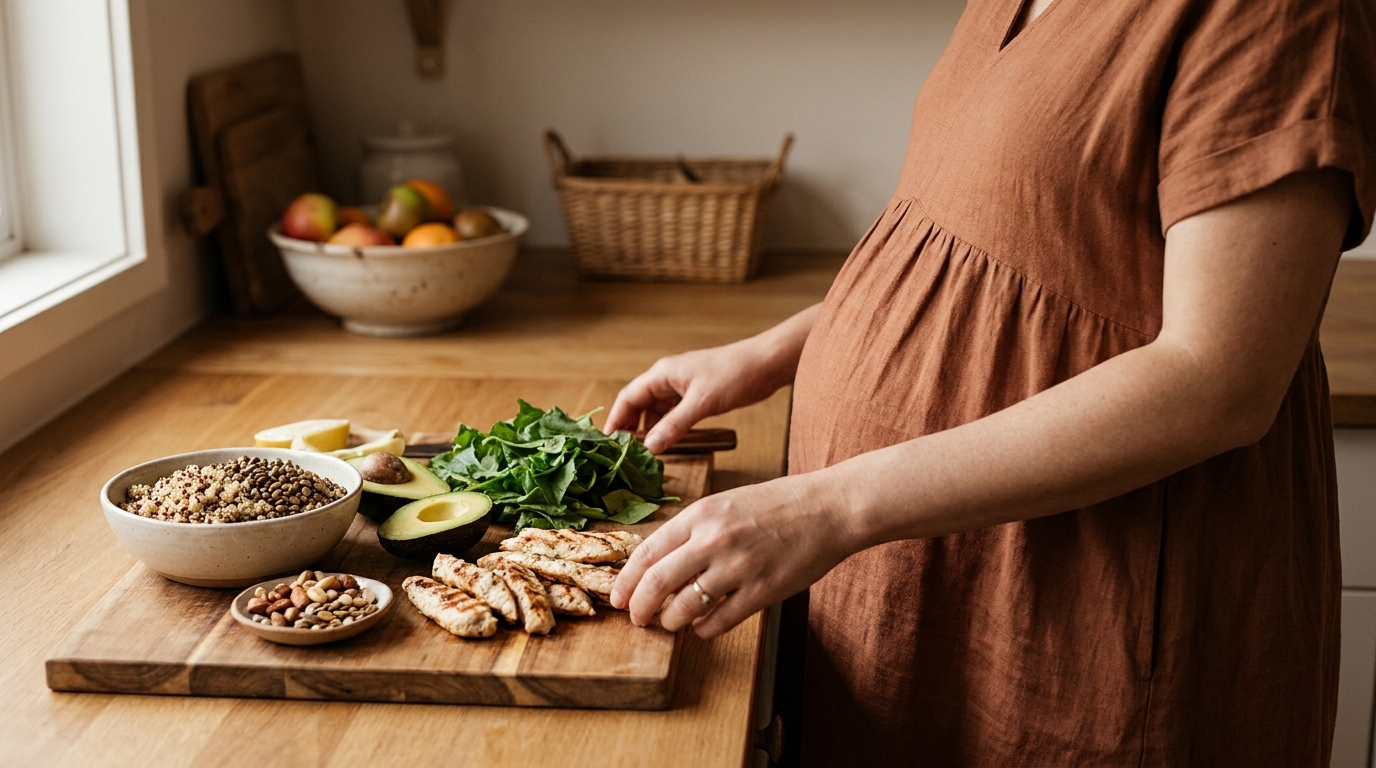
Every steady plate above is just four building blocks in the right ratio: a slow, high-fibre carb, a solid hit of lean protein, extra fibre from veg, and a little healthy fat to slow it all down. Get the ratio right and you can improvise your own plates forever. The ADA plate method frames it as half your plate non-starchy veg, a quarter protein, a quarter carbs.
- Smart carbs — the slow, fibre-rich kind: lentils, chickpeas, quinoa, oats, whole-grain and seeded bread, a small sweet potato. They raise blood sugar more gently than white bread, white rice or sugary drinks. The NHS advises choosing high-fibre, lower-glycaemic starchy foods and keeping portions measured.
- Lean protein — chicken, turkey, eggs, fish, tofu, cottage cheese, Greek yogurt, beans. Protein is the anti-spike anchor; it's why a wrap with turkey behaves so differently from a wrap alone.
- Fibre — non-starchy veg (leafy greens, peppers, courgette, tomatoes, broccoli) fill half the plate for barely any net carbs and slow digestion. It's the cheapest spike insurance there is.
- Healthy fat — avocado, olive oil, nuts, seeds, oily fish. A thumb-sized amount flattens the curve and keeps you full to your next snack.
If you want more of these ready-made, my GD-friendly breakfasts that don't spike use the exact same formula, and these high-protein pregnancy snacks bridge the gap between lunch and dinner.
Eating out and packing lunch with GD
Eating out and packed lunches both work on the same two rules: lead with protein and veg, and treat the carb as a measured side, not the main event. When I'm out I scan the menu for a grilled protein plus a salad or veg, ask for the bread or chips on the side, and swap the sugary drink for water or unsweetened tea.
For restaurants and cafés: grilled or baked over fried, dressings and sauces on the side, and half the rice or pasta boxed to take home before I start. A side salad or extra veg is the easiest add-on to slow a spike. For packed lunches — my real MVP for work — I batch-build on Sunday: mason-jar salads with the dressing at the bottom, pre-portioned protein, cut veg, and a fibre carb weighed out so I'm not guessing at noon. My fridge-to-pregnancy-meals guide has the prep system I actually use. Keep a fibre-and-protein snack in your bag too; a skipped meal can send numbers in the wrong direction as easily as an oversized one.
How this connects to your glucose log and care team

Your glucose log is the feedback loop that makes every plate on this page personal — it tells you which lunches your body handles and which it doesn't, and that data is exactly what your care team uses to adjust your plan. No article can replace your own one-hour readings. According to NICE guidance, self-monitoring is central to managing gestational diabetes, with a one-hour post-meal target below 7.8 mmol/L for most people.
Here's how I use mine: I note the plate, the portion, and the one-hour reading. Over a week, patterns jump out — maybe quinoa is fine but rice tips me over, or a post-lunch walk drops me by a full point. If a plate that should work keeps spiking, that's not a personal failure; it's information to bring to your midwife, diabetes nurse or OB-GYN. As ACOG notes, some people manage gestational diabetes with diet and activity alone while others need medication, and your readings — not willpower — decide which camp you're in. Bring your log to every appointment; it turns a vague "how's it going" into a real conversation.
Frequently asked questions
What's a good lunch for gestational diabetes?
A good GD lunch pairs lean protein (chicken, fish, eggs, tofu or beans) with half a plate of non-starchy veg, a small measured fibre-rich carb, and a little healthy fat. Think grilled chicken with quinoa tabbouleh, or tuna-stuffed avocado with tomatoes. The protein and fat slow how fast sugar reaches your blood, which is what keeps your one-hour reading in range. Any of the 15 plates in the table above fits this shape.
How many carbs should a GD lunch have?
Many people land somewhere around 30–45g of carbs at lunch, but there's no universal number — your own glucose readings decide. ACOG advises a minimum of roughly 175g of carbohydrate a day across pregnancy, spread over meals and snacks rather than concentrated in one sitting. Test one hour after eating and adjust portions up or down based on whether you stay under your target, which NICE sets at below 7.8 mmol/L one hour post-meal.
Can I eat sandwiches with gestational diabetes?
Yes, with a couple of tweaks. Choose seeded or whole-grain bread over white, and go open-faced or use just one slice to cut the carb load. Load it with protein — turkey, egg, tuna, chicken — plus salad, and add a fat like avocado. A protein-packed open sandwich behaves far better on your meter than a big white-bread one. The NHS advises higher-fibre, lower-glycaemic starchy choices, and bread is fine within that.
Why does my blood sugar spike after lunch?
Usually it's a fast carb eaten on its own, a portion bigger than it looked, or sitting still afterward. Pregnancy hormones raise insulin resistance, so refined carbs hit harder than they used to. Pairing every carb with protein and fat, measuring the starchy portion, and taking a 10–15 minute walk after eating all flatten the curve — the NHS notes activity after meals helps lower blood glucose. If steady, balanced lunches still spike, log them and tell your care team.
What lunches travel well for GD at work?
Anything you can pre-portion and grab cold. Mason-jar salads with dressing at the bottom, tuna-stuffed avocado, cottage cheese with berries and almonds, a whole-grain wrap with hummus and turkey, or last night's chilli in a tub all pack well and hold their numbers. Prep on the weekend, weigh the carb portion in advance, and keep a protein-and-fibre snack in your bag so a delayed lunch doesn't push you off track.