Quick Answer
Stop GLP-1 medications like Ozempic, Wegovy, or Mounjaro at least two months before conception, with your prescriber — both FDA semaglutide labeling and ADA agree. A November 2025 JAMA study of 1,792 pregnancies found 30% higher gestational diabetes, 29% higher hypertensive disorders, and 34% higher preterm birth after discontinuation. Nutrition fix: 25-30 g protein per meal, carb-to-protein ratio under 2:1.
The 2025 JAMA Study: 1,792 Pregnancies After GLP-1
On November 24, 2025, JAMA published the largest analysis to date of what happens when women conceive after stopping a GLP-1 receptor agonist. The study, titled "Gestational Weight Gain and Pregnancy Outcomes After GLP-1 Receptor Agonist Discontinuation," was led by researchers at Mass General Brigham for Children and reviewed records from 1,792 pregnancies between 2016 and 2025. The full peer-reviewed analysis is indexed on PubMed Central (PMC12645404) and the corresponding citation record is at PubMed (PMID 41284263).
The study's lead author, Jacqueline Maya, the pediatric endocrinologist at Mass General Brigham who led the analysis, framed the question that started the research:
"The use of glucagon-like peptide-1 receptor agonists — or GLP-1 RAs — has increased dramatically, but recommendations suggest their discontinuation before pregnancy because there's not enough information about their safety for unborn babies."
That gap is what the team set out to measure. Maya described the goal in the same press release:
"We sought to assess how such discontinuation affects weight gain and outcomes during pregnancy."
The researchers compared two groups: women who took a GLP-1 medication and stopped before pregnancy, and a matched control group of women with similar baseline characteristics who had not used GLP-1 drugs. Across the four outcomes the team tracked, the discontinuation group consistently showed higher risk.
The Numbers That Matter
Five specific differences came out of the JAMA analysis of pregnancy after GLP-1 discontinuation. Each one is meaningful enough on its own that an obstetrician would want to know about it before a first prenatal visit.
Maya's clinical takeaway in Live Science's coverage was direct:
"These patients need to be closely monitored — there are obstetric outcomes we need to keep our eyes on."
The study is observational, not a randomized trial, so it shows association rather than direct cause and effect. The signal across four independent outcomes is what makes it hard to dismiss.
Why Discontinuation Causes These Risks
Pregnancy after GLP-1 carries a different metabolic profile than pregnancy in a woman who has never used these medications, and the mechanism is not mysterious. GLP-1 medications work by mimicking a hormone the gut releases after eating. They slow gastric emptying, blunt appetite, and improve insulin sensitivity. Stopping the drug reverses each of those effects on a predictable timeline.
Four physiological shifts explain the patterns the JAMA study captured:
- Appetite rebound. The fullness signal disappears. Hunger and food cues return to pre-medication levels — sometimes more intensely in the first weeks after stopping.
- Insulin sensitivity drops. The metabolic boost the medication provided fades, and the pancreas faces the same workload it did before treatment.
- Pre-pregnancy BMI tends to climb. Many women regain weight in the months after stopping. Higher entry weight is itself a risk factor for gestational diabetes and hypertensive disorders.
- Rapid first-trimester gain. Hunger rebound combined with pregnancy hormones can produce faster-than-typical weight gain in the first 12 weeks, which is associated with worse outcomes later.
This is why nutrition strategy in the discontinuation window is not a cosmetic concern. It is a measurable risk-reduction lever during exactly the period the JAMA data flagged.
What to Eat: A 7-Step Post-GLP-1 Nutrition Plan
This plan maps to the three windows that matter most: the discontinuation period before conception, the first trimester, and the second-and-third-trimester window when gestational diabetes typically appears.
Pre-Pregnancy: The Discontinuation Window
- Stop the medication at least 2 months before conception. Both FDA semaglutide labeling and the ADA Standards of Care 2026 recommend discontinuing GLP-1 receptor agonists before pregnancy and using contraception while taking them, because of the medication's long half-life.
- Build every meal around 25-30 g of protein. The current ACOG guidance on pregnancy nutrition recommends 71 g of protein daily, distributed across meals. Protein is the strongest lever for managing rebound appetite. Lean chicken, fish, eggs, Greek yogurt, tofu, and lentils all hit the target.
- Keep the carb-to-protein ratio under 2:1. If a meal contains 30 g of protein, total carbohydrates should stay under 60 g. This threshold helps stabilize blood sugar during the metabolic re-adaptation phase. The same macro distribution is reflected in the CDC guidance for managing gestational diabetes.
First Trimester: Nausea and Weight Management
- Eat small, frequent meals every 2-3 hours. After stopping a GLP-1, the gut-brain satiety signal is no longer artificially extended. Smaller, more frequent meals — a pattern NIH lists for managing nausea — match the body's actual hunger pattern.
- Lean protein at every meal. Chicken, fish, Greek yogurt, eggs, lentils, edamame. A handful of high-protein pregnancy snacks between meals supports steady blood sugar and a more gradual weight-gain curve.

Second and Third Trimester: The Gestational Diabetes Window
- Ask about earlier gestational-diabetes screening. Standard glucose tolerance testing happens at 24-28 weeks per ACOG. Given the JAMA data, women in the post-GLP-1 group are reasonable candidates for earlier screening.
- Time carbohydrates to the body's insulin curve. Insulin resistance peaks in the morning during late pregnancy. Keep breakfast carbohydrate-light and shift larger carbohydrate portions to midday and evening.
The Gestational Diabetes Connection
For pregnancy after GLP-1, the 30% gestational diabetes signal in the JAMA study is the line item that deserves the most attention. Gestational diabetes affects placental function, fetal growth, and delivery timing — all of which connect back to the preterm birth and hypertensive disorder findings.
The carb-to-protein ratio is the practical control point. A simple example:
- Higher-risk plate: two slices of whole wheat toast with a thin smear of peanut butter — heavy on starch, light on protein, well above the 2:1 ratio.
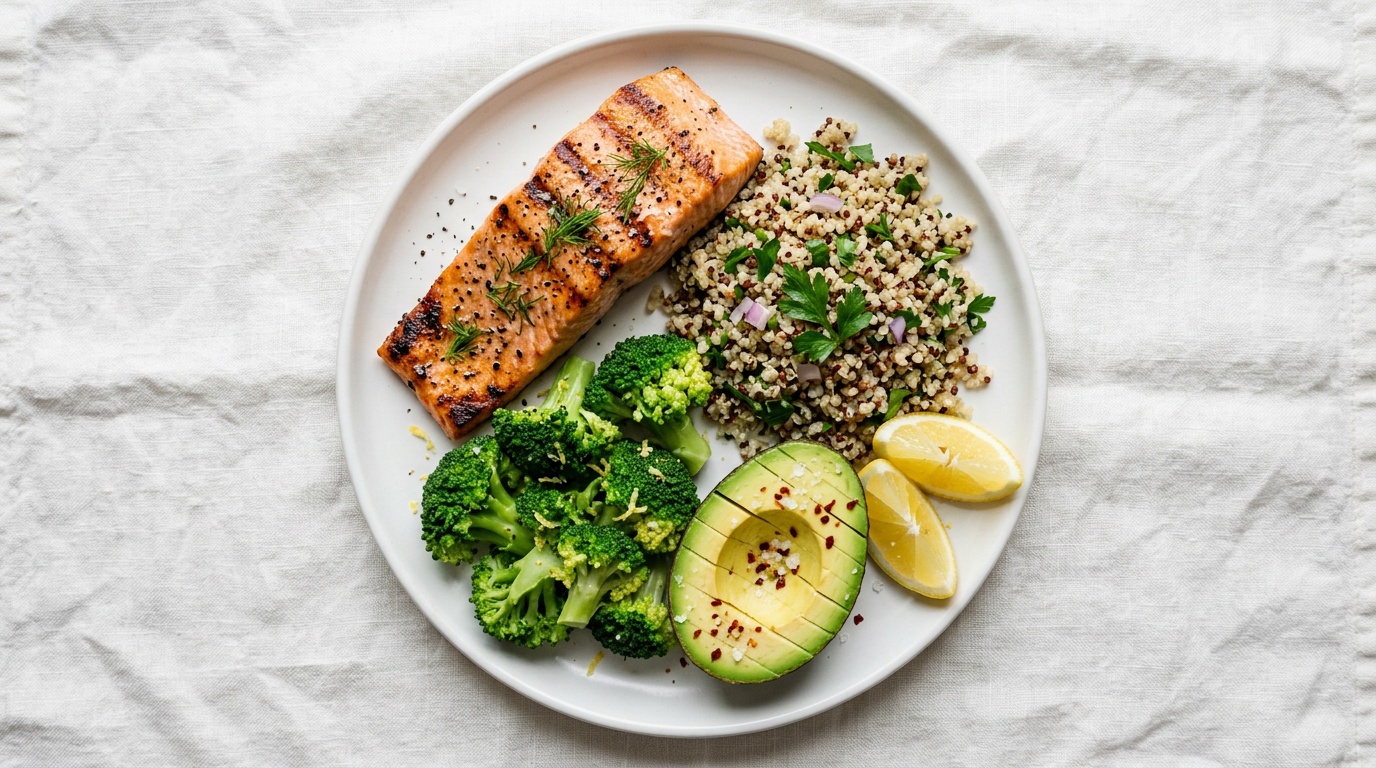
- Lower-risk plate: two eggs scrambled with spinach and feta, a single slice of whole wheat toast, and half an avocado — protein-forward, fiber-rich, well under the 2:1 ratio.
The second plate keeps blood sugar steadier, extends fullness, and supplies more of the nutrients pregnancy actually demands. ACOG's published guidance on gestational diabetes emphasizes the same balance: protein and fat at every meal, distributed carbohydrates, and consistent meal timing.
If you are already managing other pregnancy concerns — iron stores, fiber for constipation, or trying to limit ultra-processed foods — the same protein-forward, ratio-controlled plate handles those goals at the same time.
How We Approach This
Every recipe in our database is balanced for a carb-to-protein ratio under 2:1 — the same threshold ACOG flags for gestational diabetes prevention — with USDA-verified macros and a trimester filter, so a post-GLP-1 mom can stack constraints (protein-forward, low-carb, GD-safe, first-trimester nausea-friendly) and the recipe list narrows without spreadsheet math. Our sourcing rules and what we never publish are documented in Mombite's editorial standards.
Frequently Asked Questions
The most common questions about pregnancy after GLP-1, drawn from prescriber FAQs and reader emails.
How long before pregnancy should I stop a GLP-1 medication?
The ADA Standards of Care 2026 and FDA semaglutide labeling both recommend discontinuing at least 2 months before a planned pregnancy due to the medication's long half-life. The exact window depends on which GLP-1 you are taking — your prescriber can confirm the right timeline for your specific medication.
Did the JAMA study find that GLP-1 medications themselves harm pregnancies?
No. The study looked at women who had already discontinued GLP-1 medications before pregnancy. The increased risks were associated with the metabolic and weight changes that follow discontinuation — not with the medication being present during pregnancy. The study is observational, so it shows association rather than direct cause.
Can I restart a GLP-1 medication after delivery if I am breastfeeding?
Current guidance from the ADA and manufacturer labeling recommends against GLP-1 use during breastfeeding because there is not enough safety data. Discuss the timing of restarting with both your endocrinologist and your pediatrician.
Is the increased gestational diabetes risk reversible with diet?
The JAMA study did not test diet interventions directly. Existing ACOG guidance on gestational diabetes prevention emphasizes protein at every meal, balanced carbohydrate distribution, physical activity, and weight gain within IOM-recommended ranges.
Should I be screened for gestational diabetes earlier than 24 weeks?
Have this conversation at the first prenatal visit. Standard screening is at 24-28 weeks, but women with elevated baseline risk — including prior GLP-1 use — are sometimes screened earlier. The decision is your obstetrician's.