Quick Answer: What's a good pregnancy breakfast?
A good pregnancy breakfast pairs a slow-burning carb with protein and one folate- or iron-rich food — think porridge with berries and nut butter, or eggs on wholegrain toast. That combo steadies blood sugar and covers nutrients your growing baby needs. I've got 15 specific ideas, a nutrient table, and queasy-morning swaps all mapped out below.
What makes a breakfast actually good for pregnancy?
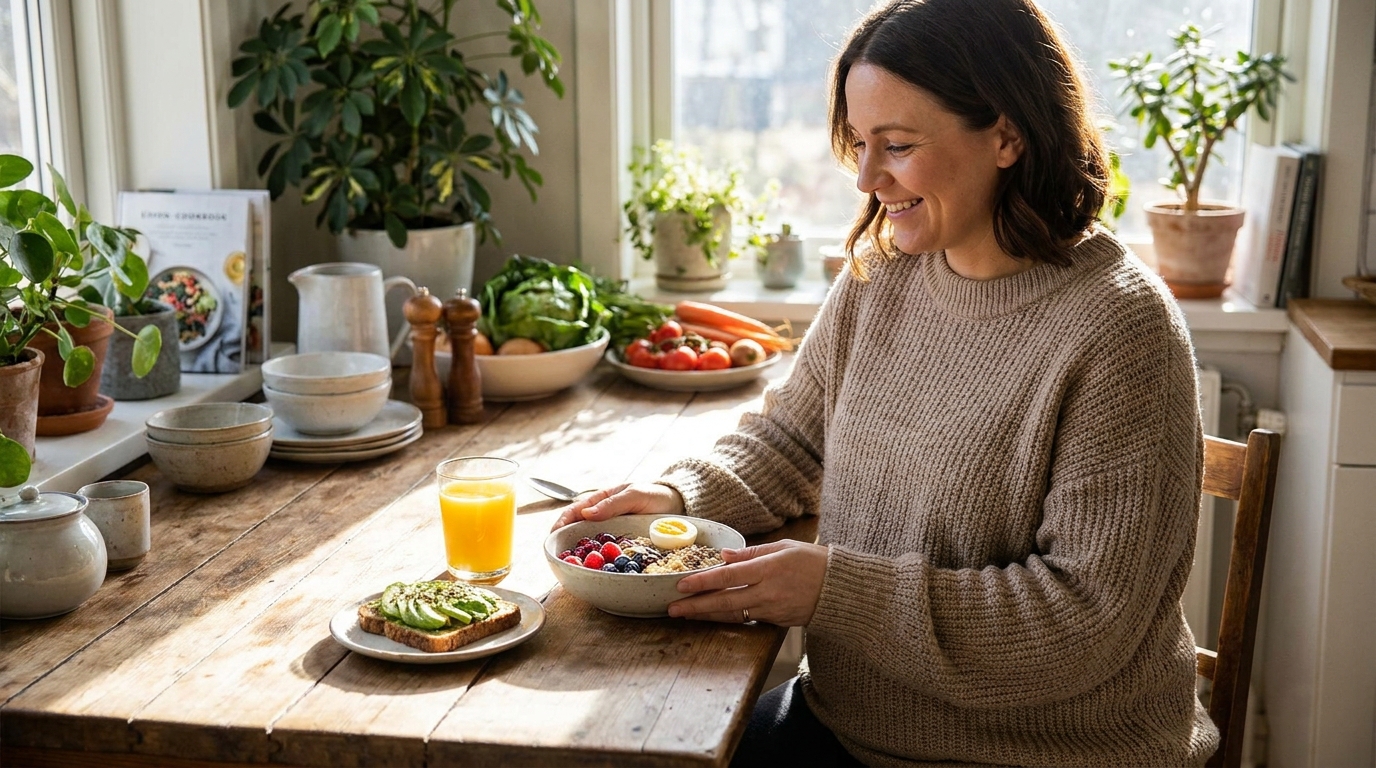
The short version: a pregnancy-friendly breakfast leans on four things — folate, iron, protein and calcium — wrapped around a wholegrain that won't spike then crash your blood sugar. Nail those and you've built a plate that supports your baby's development and keeps your own energy from bottoming out by 10am. Here's what each one is doing.
Folate comes first. The NHS advises taking 400 micrograms of folic acid daily until 12 weeks, ideally alongside folate-rich foods — that's roughly a big bowl of spinach plus a glass of orange juice on your plate (NHS). Iron matters too, because your blood volume climbs steeply; the NIH Office of Dietary Supplements sets the pregnancy iron target at 27mg a day, about what you'd get from a bowl of fortified oats topped with pumpkin seeds (NIH ODS).
Then protein, which builds your baby's tissues and blunts nausea. According to ACOG guidance on pregnancy nutrition, most pregnant people need around 71 grams of protein daily — a couple of eggs plus a pot of Greek yogurt handles a solid chunk of that by lunchtime (ACOG). Calcium rounds it out for your baby's bones. Want the full nutrient breakdown? My pregnancy nutrition guide goes deeper than I can here.
15 pregnancy breakfast ideas (the full list)
Here are 15 breakfasts that hit those nutrients without needing a cooking degree at 7am. Each one leans on a "star" nutrient so you can pick based on what you're low on. The table below maps every idea to what it delivers and who it's best for — scan it and grab whatever your stomach can face today.
| Breakfast idea | Star nutrient | Roughly gives you | Best for | Why it works |
|---|---|---|---|---|
| Porridge + berries + nut butter | Fibre & iron | A bowl of oats + a handful of berries | Constipation, energy dips | Slow carbs steady blood sugar |
| Scrambled eggs on wholegrain toast | Protein | Two eggs' worth of protein | First trimester nausea | Cooked-through eggs are filling and gentle |
| Greek yogurt + granola + banana | Calcium | A pot of yogurt + a banana | Bone support, quick mornings | No cooking, high protein |
| Spinach & cheese omelette | Folate | A big handful of cooked spinach | Folate top-ups | Leafy greens + protein in one pan |
| Fortified cereal + milk + orange juice | Iron & vitamin C | A bowl of fortified flakes | Low-iron days | Vitamin C boosts iron absorption |
| Wholegrain toast + smashed avocado + egg | Healthy fats | Half an avocado + one egg | Steady energy | Fats keep you full for hours |
| Overnight oats + chia + kiwi | Fibre & omega-3 | A jar of oats + chia | Prep-ahead mornings | Make it the night before, zero effort |
| Peanut butter banana smoothie | Protein | A tall glass, a banana, a spoon of PB | Can't face solid food | Sippable when chewing feels grim |
| Baked beans on wholegrain toast | Fibre & iron | Half a tin of beans | Budget mornings | Plant iron + fibre, cheap and fast |
| Cottage cheese + tomato + seeded crackers | Calcium & protein | A scoop of cottage cheese | Savoury cravings | High protein, low fuss |
| Wholegrain waffles + yogurt + strawberries | Calcium | A couple of waffles + berries | Weekend treat | Feels indulgent, still balanced |
| Lentil & veg breakfast hash | Iron & folate | A ladle of lentils | Plant-based eaters | Plant iron plus folate in one bowl |
| Fortified soy yogurt + berries + seeds | Calcium (dairy-free) | A pot of fortified soy yogurt | Dairy-free diets | Fortified for calcium and B12 |
| Cheese & tomato wholemeal toastie | Calcium | Two slices, one of hard cheese | Cold mornings | Hard cheese is a safe, easy win |
| Banana oat pancakes | Fibre & potassium | A banana + a scoop of oats | Feeding a craving | Naturally sweet, no added sugar needed |
| Salmon & scrambled egg bagel | Omega-3 & protein | A small fillet of cooked salmon | Brain-development boost | Cooked oily fish covers omega-3 |
All the pairings and portions stay on this page — bookmark it and rotate through the section above whenever breakfast inspiration runs dry.
Which breakfasts help with morning sickness?
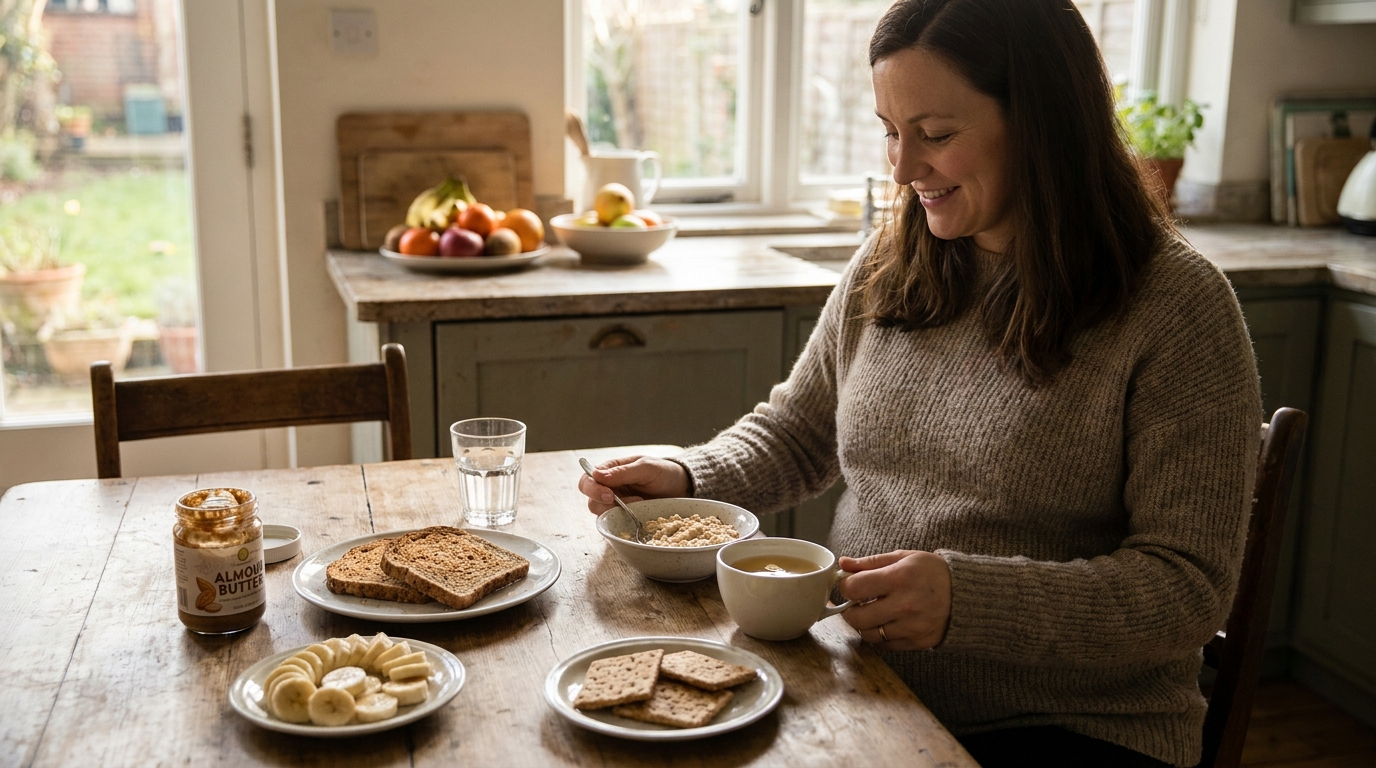
If nausea is running your mornings, the winning breakfasts are dry, bland, and grabbable before you even sit up — dry wholegrain toast, plain crackers, or a banana beside the bed. Nausea is genuinely common: the NHS notes that pregnancy sickness affects around 8 in 10 pregnant people in some form during the first trimester (NHS). So if you're there, you're in the majority.
I'm not gonna lie — in my first trimester the only thing I could stomach before noon was a slightly stale oatcake and cold ginger tea. What helped was eating something small before my feet hit the floor, because an empty stomach made the queasiness worse. Little and often beat any "proper" breakfast. RCOG guidance on pregnancy sickness also points to eating small, frequent, plain meals rather than forcing big ones (RCOG). For a fuller list of what to reach for, my morning sickness foods guide has the queasy-day rotation I lived on.
What breakfast foods should you avoid while pregnant?
A few breakfast staples are off the menu: unpasteurised milk and soft mould-ripened cheeses, undercooked or runny eggs (with one UK caveat), pâté, and cold cured meats eaten unheated. These carry a small but real risk of listeria or salmonella, which is why the guidance is cautious rather than fear-based. The point isn't panic — it's swapping a couple of items.
Here's where the US and UK actually differ. The NHS says eggs stamped with the British Lion mark are safe to eat runny or even raw in pregnancy, because of the vaccination and safety scheme behind them (NHS). In the US, ACOG and food-safety guidance advise cooking eggs until both yolk and white are firm, since there's no equivalent scheme (ACOG). So a runny yolk that's fine for a London mum isn't the standard advice in Chicago. On caffeine, EFSA sets the pregnancy limit at 200mg a day — roughly two mugs of instant coffee — so your morning cup is fine, just count it (EFSA). The full rundown lives in my foods to avoid in pregnancy post.
How do you build a balanced pregnancy breakfast plate?
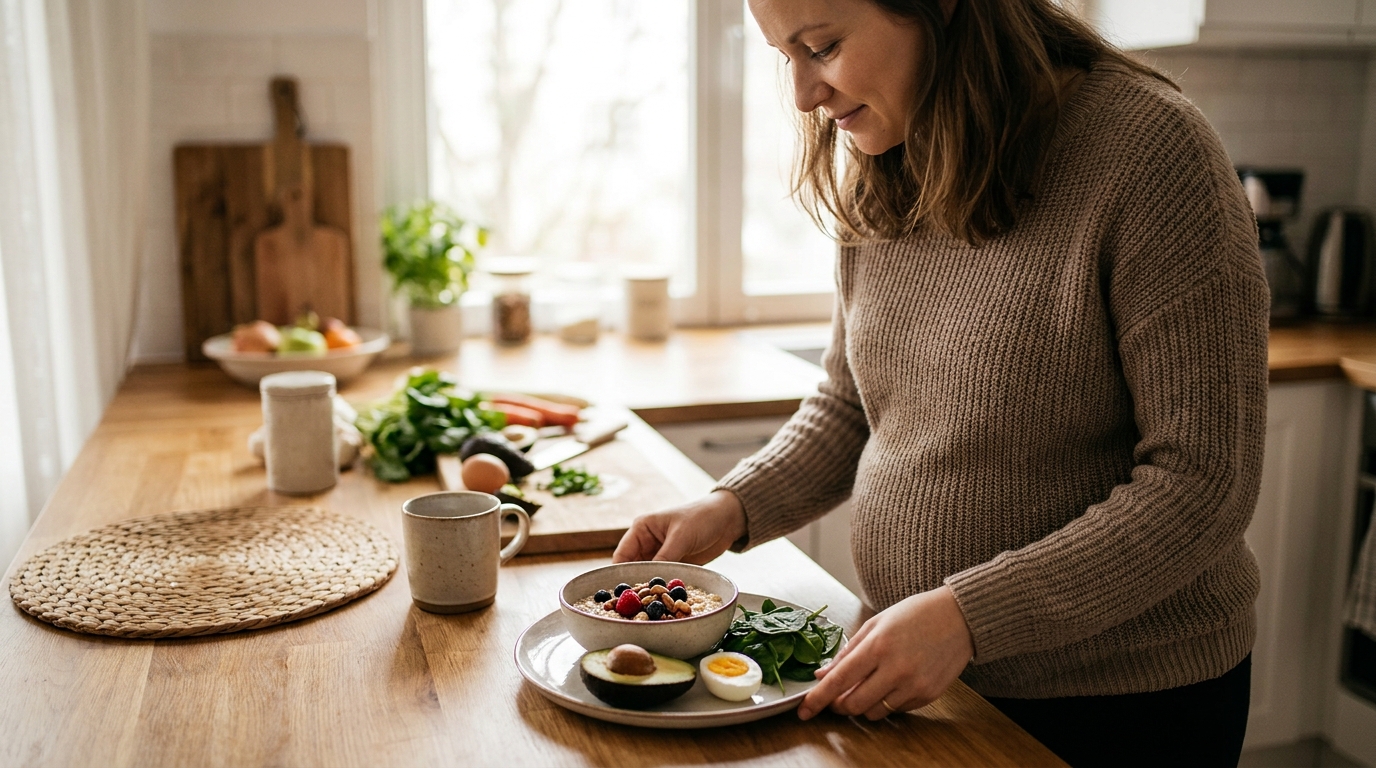
The simplest formula: one wholegrain carb + one protein + one fruit or veg + one calcium source. Follow that and you don't need to memorise a single number — the plate does the balancing for you. It's the framework I fall back on when I'm too tired to think, and it turns "what do I even eat" into a 30-second assembly job.
Start with the carb as your base — porridge, wholegrain toast, or overnight oats. Add protein for staying power and to help meet that ACOG target of around 71 grams of protein a day, spread across meals (ACOG). Layer in fruit or veg for folate and fibre, and pair anything iron-rich with a vitamin-C food like citrus or berries — the NIH notes vitamin C improves how well your body absorbs plant iron (NIH ODS). Finish with a calcium hit — yogurt, milk, or fortified plant milk. If you're low on iron specifically, my iron-rich foods list shows which breakfast add-ins punch hardest.
Frequently Asked Questions
Is it okay to skip breakfast during pregnancy?
It's better not to make a habit of it. Going long stretches without eating can worsen nausea and leave your energy flat, and the NHS encourages regular meals during pregnancy to keep blood sugar steady. That said, if morning sickness makes a full breakfast impossible, something tiny — a cracker, a few sips of a smoothie — is far better than nothing. Aim for little and often rather than forcing a big plate you can't face.
What can I eat for breakfast if I'm too nauseous to cook?
Reach for zero-effort, bland options: dry wholegrain toast, plain crackers, a banana, cold overnight oats, or a fruit-and-yogurt smoothie you can sip slowly. RCOG guidance suggests keeping something plain by the bed to eat before you get up, since an empty stomach tends to make queasiness worse. Cold foods often smell less and trigger less nausea than hot ones, so don't feel you have to cook anything.
How much coffee can I have with breakfast while pregnant?
EFSA sets the pregnancy caffeine limit at 200mg a day, which is roughly two mugs of instant coffee — so one morning cup is generally fine. Just remember caffeine also hides in tea, cola, chocolate and some energy drinks, so count your whole day, not just the coffee. If you're a big tea drinker, that adds up faster than you'd think. When in doubt, decaf lets you keep the ritual without the tally.
Are eggs safe for pregnancy breakfast?
Yes, with one difference by country. In the UK, the NHS says eggs with the British Lion mark are safe even runny or raw, thanks to their salmonella-control scheme. In the US, ACOG advises cooking eggs until both the yolk and white are firm, because there's no equivalent certification. So a soft-boiled egg is fine for many UK mums but not the standard US recommendation. Either way, well-cooked scrambled or hard-boiled eggs are a safe, protein-rich choice everywhere.