Quick Answer: What Makes a Good Pregnancy Lunch?
So here's the short version: a solid pregnancy lunch pairs a protein, a folate-rich vegetable or legume, a slow carb, and something with iron or healthy fat. Think a lentil-and-spinach bowl, or salmon on wholegrain toast. That's the frame. The 20 actual meals, the nutrient table, and the make-ahead tricks are all further down the page.
Why Lunch Matters More Than You'd Think in Pregnancy
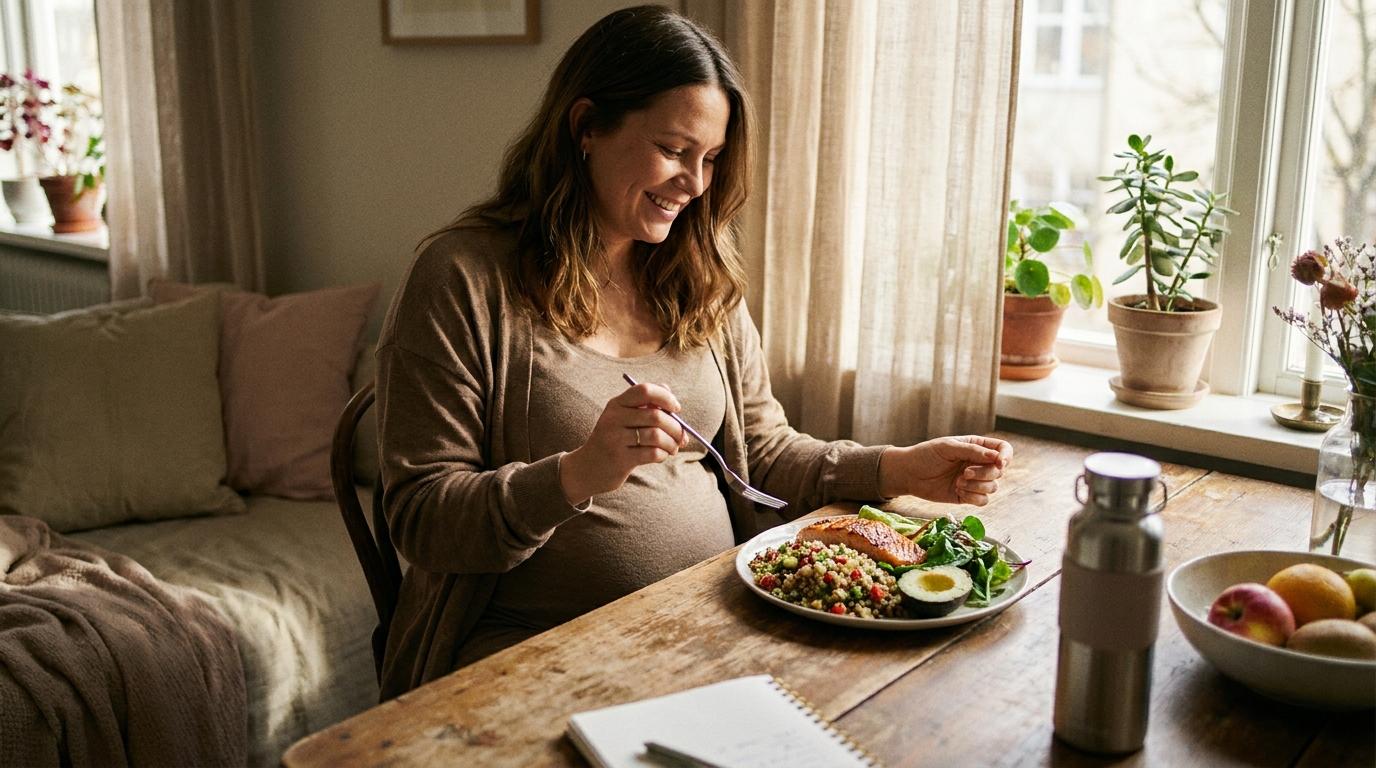
Okay, can we talk about the midday slump? In my second trimester, lunch was the meal that made or broke my whole afternoon. Skip it, and by 3pm I was dizzy and reaching for anything sugary. A steady lunch keeps blood sugar even and quietly delivers the nutrients that matter most right now.
The NHS notes that most pregnant people don't need extra calories until the third trimester, and even then it's only around an extra small snack's worth per day — roughly a slice of toast with peanut butter (NHS). So pregnancy lunch isn't about eating more. It's about making the plate you already eat work harder. Quality over quantity, basically.
The Building Blocks: What to Put on Your Plate
Every balanced pregnancy lunch is really four slots: a protein, a folate source, a slow-release carb, and an iron or healthy-fat anchor. ACOG recommends prioritising protein and folate through pregnancy, and hitting all four slots means you rarely have to think about macros again — you just build the plate.
Protein is your first slot. ACOG guidance points to roughly 71 grams of protein a day in pregnancy — picture a palm of chicken at lunch, a couple of eggs at breakfast, and a handful of nuts, and you're most of the way there (ACOG). Beans, lentils, tofu, fish, eggs and yoghurt all count.
Folate is the non-negotiable one. The NHS advises 400 micrograms of folic acid daily until 12 weeks, and encourages folate-rich foods throughout — a big bowl of cooked spinach or a serving of lentils goes a long way on the food side (NHS). I lean on leafy greens, chickpeas, and fortified wholegrains. If you want the full food list, I broke it down in our folate-rich foods guide.
Slow carbs and an iron anchor round it out. Wholegrain bread, brown rice, quinoa and sweet potato keep energy level; pairing iron-rich foods (red meat, beans, dark greens) with a squeeze of citrus helps you absorb the iron. EFSA sets vitamin C's role in iron absorption as well established, which is why I splash lemon on everything (EFSA).
20 Balanced Pregnancy Lunch Ideas
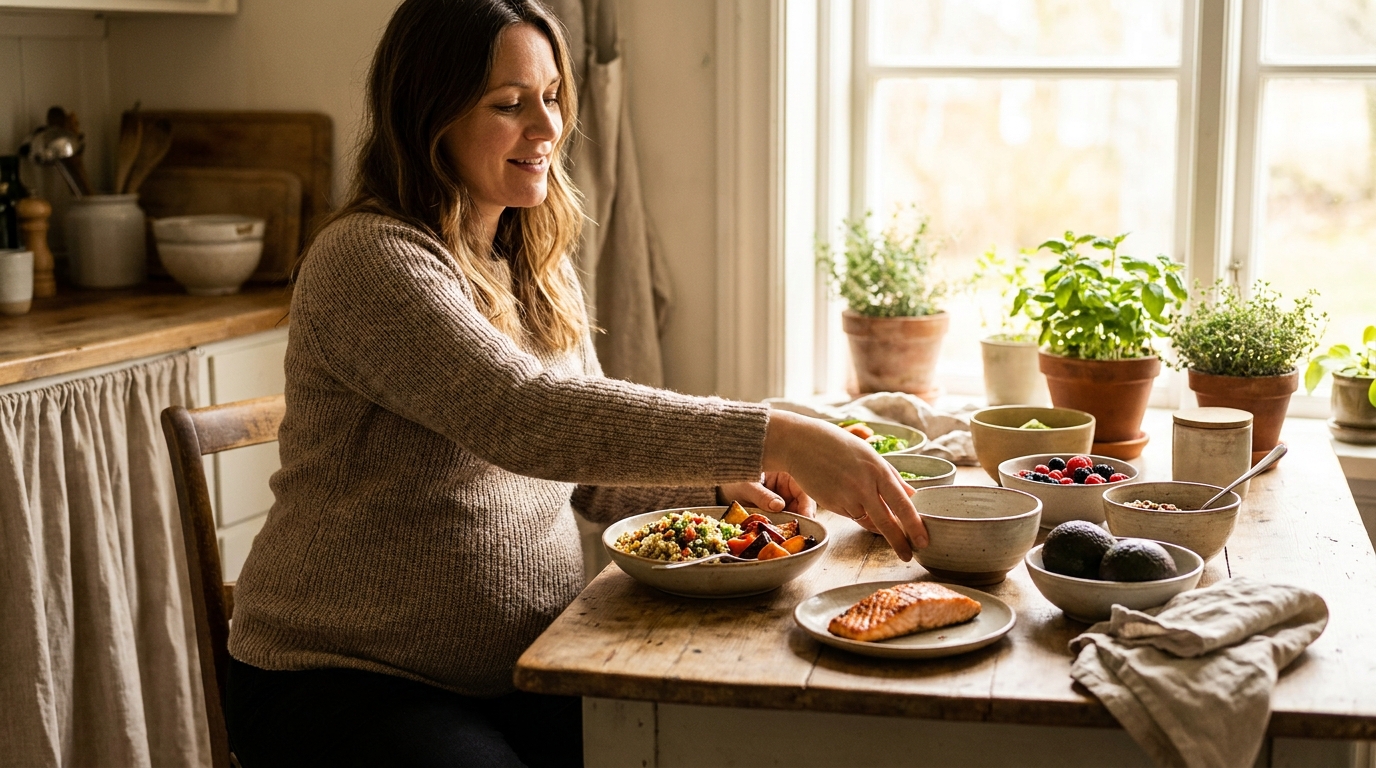
Here's the heart of it: 20 lunches that hit those four slots without much fuss. I've grouped them so you can grab one based on how much energy you actually have — because let's be honest, some days that's zero. All of these keep well or come together in under 15 minutes.
Five-minute, no-cook lunches:
- Wholegrain wrap with hummus, grated carrot, and tinned salmon.
- Greek yoghurt bowl with berries, chia, and a spoon of nut butter.
- Hard-boiled eggs, wholegrain crackers, cherry tomatoes, and a clementine.
- Chickpea and cucumber salad with feta (choose a pasteurised, cooked-style feta) and olive oil.
- Peanut butter and banana on wholegrain toast with a glass of fortified milk.
Warm bowls and soups (great make-ahead):
- Lentil and spinach soup with a wholegrain roll.
- Brown rice bowl with tofu, edamame, and shredded greens.
- Sweet potato and black bean chilli over quinoa.
- Minestrone loaded with beans, tomato, and pasta.
- Baked salmon with roasted vegetables and couscous.
- Chicken and vegetable stir-fry over brown rice.
- Butternut squash and red lentil dhal.
Sandwiches, toasts and eggs:
- Avocado and well-cooked egg on wholegrain sourdough.
- Roast chicken, spinach, and mustard on rye.
- Tuna and sweetcorn jacket potato (canned tuna, in moderation).
- Cheese (pasteurised) and tomato toastie with a side salad.
- Scrambled eggs with wilted spinach and wholegrain toast.
Salads with staying power:
- Quinoa tabbouleh with chickpeas, parsley, and lemon.
- Warm roasted-veg and butter-bean salad.
- Brown rice, black bean, corn, and avocado bowl with lime.
For grab-and-go days between meals, our pregnancy snacks list pairs neatly with any of these.
The Nutrient Cheat Sheet: What Each Lunch Delivers
Here's the at-a-glance version. This table maps a few standout lunches to their star nutrients, the authority behind why it matters, and whether it survives being made ahead — because meal-prep sanity is real.
| Lunch idea | Star nutrients | Why it helps (source) | Make-ahead friendly? |
|---|---|---|---|
| Lentil & spinach soup | Folate, iron, fibre | Folate supports neural tube development early on (NHS) | Yes — 3 days in fridge |
| Baked salmon + couscous | Omega-3, protein | Oily fish supports baby's brain and eye development (NHS advises up to 2 portions/week) | Best fresh |
| Chickpea & feta salad | Protein, folate, calcium | Protein needs rise in pregnancy (ACOG) | Yes — 2 days |
| Sweet potato & black bean chilli | Fibre, iron, vitamin A | Fibre eases pregnancy constipation (NHS) | Yes — freezes well |
| Greek yoghurt & berry bowl | Calcium, protein, probiotics | Calcium supports bone development (EFSA reference values) | Assemble fresh |
| Tofu & edamame rice bowl | Plant protein, iron | Plant iron pairs well with vitamin C for absorption (EFSA) | Yes — 3 days |
One honest note on the salmon line: the NHS recommends limiting oily fish to about two portions a week because of low levels of pollutants, so I rotate it with beans and eggs rather than eating it daily (NHS).
Safety Notes: What to Skip or Swap at Lunch
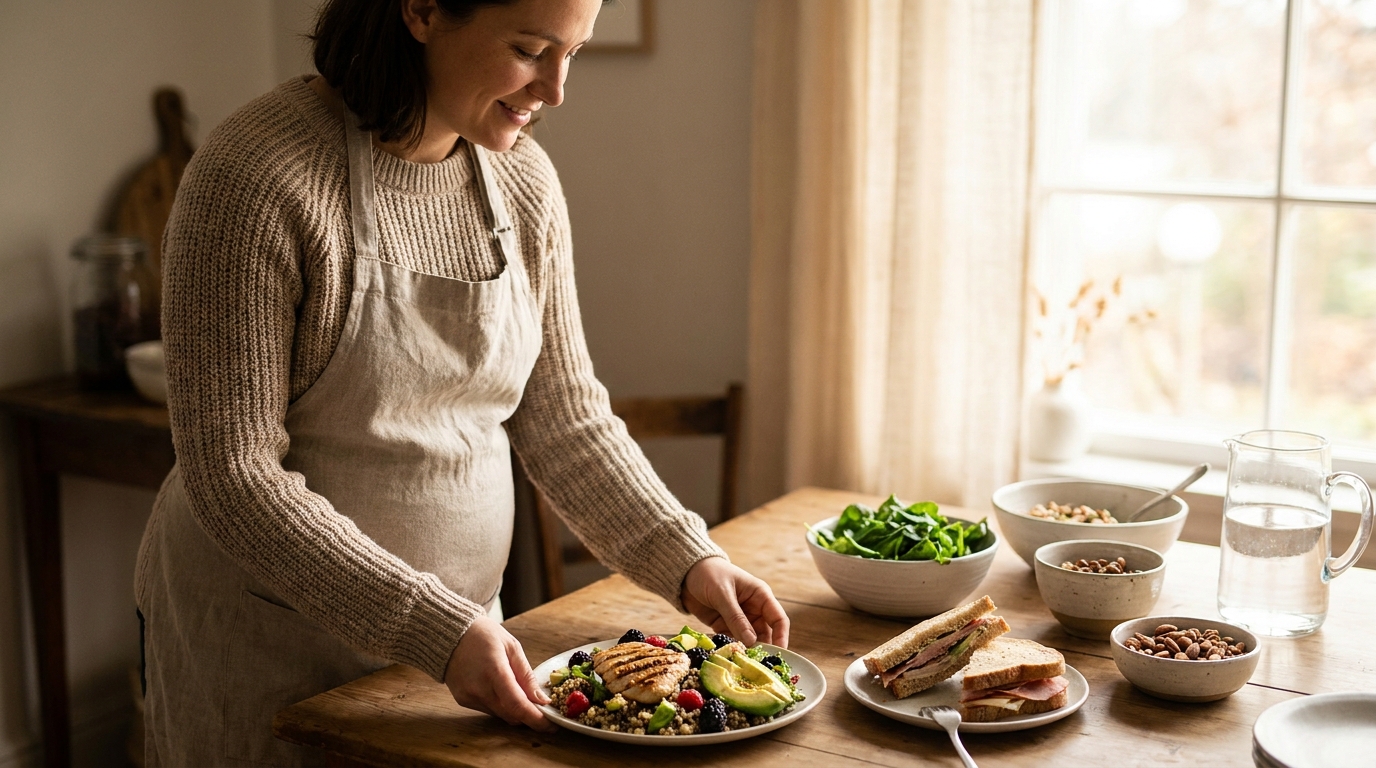
A quick guardrail before you build: a few common lunch foods need a swap in pregnancy. The NHS advises avoiding unpasteurised and mould-ripened soft cheeses, pâté, and cold cured or deli meats unless cooked through — so that classic ham-and-brie sandwich needs a rethink.
The big ones to watch at midday: unpasteurised soft cheeses (brie, blue, and traditional feta) and raw or undercooked eggs where the eggs aren't Red Lion / British Lion stamped (NHS). Swap cold deli meat for cooked chicken or tinned fish, and pick a pasteurised cheese. On the drinks side, EFSA sets the caffeine limit at 200 milligrams a day — roughly two mugs of instant coffee — so if lunch comes with a coffee, factor that in (EFSA). US readers: ACOG lands in a similar place, flagging under 200mg daily as the widely used ceiling.
Make-Ahead Strategy for Real, Tired Life
The single best thing I did was batch-cook one soup and one grain bowl on Sunday. That covered four lunches without any weekday decisions, which mattered a lot on the days nausea meant I couldn't even look at the fridge. Prep once, coast for half the week.
I'm not gonna lie — motivation to cook fresh at lunch when you're growing a human is basically nil some weeks. So I keep three "assembly" staples on rotation: a pot of cooked lentils or beans, a batch of roasted vegetables, and cooked grains. From those, most of the meals above come together in the time it takes to boil the kettle. If mornings are your better window, our pregnancy breakfast ideas use the same batch-and-build logic.
Frequently Asked Questions
What should I eat for lunch when pregnant with no appetite?
When appetite is low, go small and nutrient-dense rather than skipping. A Greek yoghurt bowl with berries, a few wholegrain crackers with cheese and tomato, or a smoothie with banana and nut butter all deliver protein and folate without feeling heavy. The NHS notes appetite dips are normal, especially in the first trimester — eating little and often usually works better than three big meals.
How much protein do I need at lunch during pregnancy?
There's no strict per-meal rule, but ACOG points to roughly 71 grams of protein across the whole day in pregnancy. Spread over meals, that's about a palm-sized portion at lunch — think a serving of chicken, fish, tofu, eggs, or a generous scoop of beans or lentils. Pairing protein with a slow carb also keeps you full through the afternoon.
Are salads safe to eat during pregnancy?
Yes, salads are a great pregnancy lunch as long as ingredients are washed and prepared safely. The NHS advises washing all fruit and vegetables well to remove soil, and avoiding pre-packed salads left at room temperature for long periods. Skip unpasteurised soft cheeses and cold deli meats as toppings, and choose cooked chicken, tinned fish, chickpeas, or pasteurised cheese instead.
Can I eat leftovers for lunch while pregnant?
Yes, with care. The NHS advises cooling leftovers quickly, refrigerating within a couple of hours, using them within two days, and reheating until piping hot all the way through — not lukewarm. That makes batch-cooked soups, chillis, and grain bowls genuinely pregnancy-friendly. Avoid reheating rice that's been left at room temperature for long, and never reheat any dish more than once.
What lunch foods help with pregnancy constipation?
Fibre and fluids are your friends. The NHS recommends fibre-rich foods to ease pregnancy constipation, so lean on lentil soup, bean chilli, wholegrain bread, and plenty of vegetables at lunch — a bowl of lentil soup plus a pear and a handful of almonds is an easy fibre win. Drink water alongside, since fibre works best with enough fluid.