Quick Answer: Which fruits are best during pregnancy?
The strongest all-round picks are oranges, berries, kiwi, banana, avocado, and mango — they cover folate, vitamin C, potassium, and fiber, the four things pregnancy leans on most. The NHS advises aiming for 5 portions of fruit and vegetables a day, and a portion of fruit is about 80g (roughly one medium apple or two small kiwis). No fruit is off-limits for most pregnancies — you just wash it well and watch portions if blood sugar is a concern. The full 12-fruit ranking, exact serving sizes, and a nutrient table are below.
Which fruits are highest in folate and iron during pregnancy?
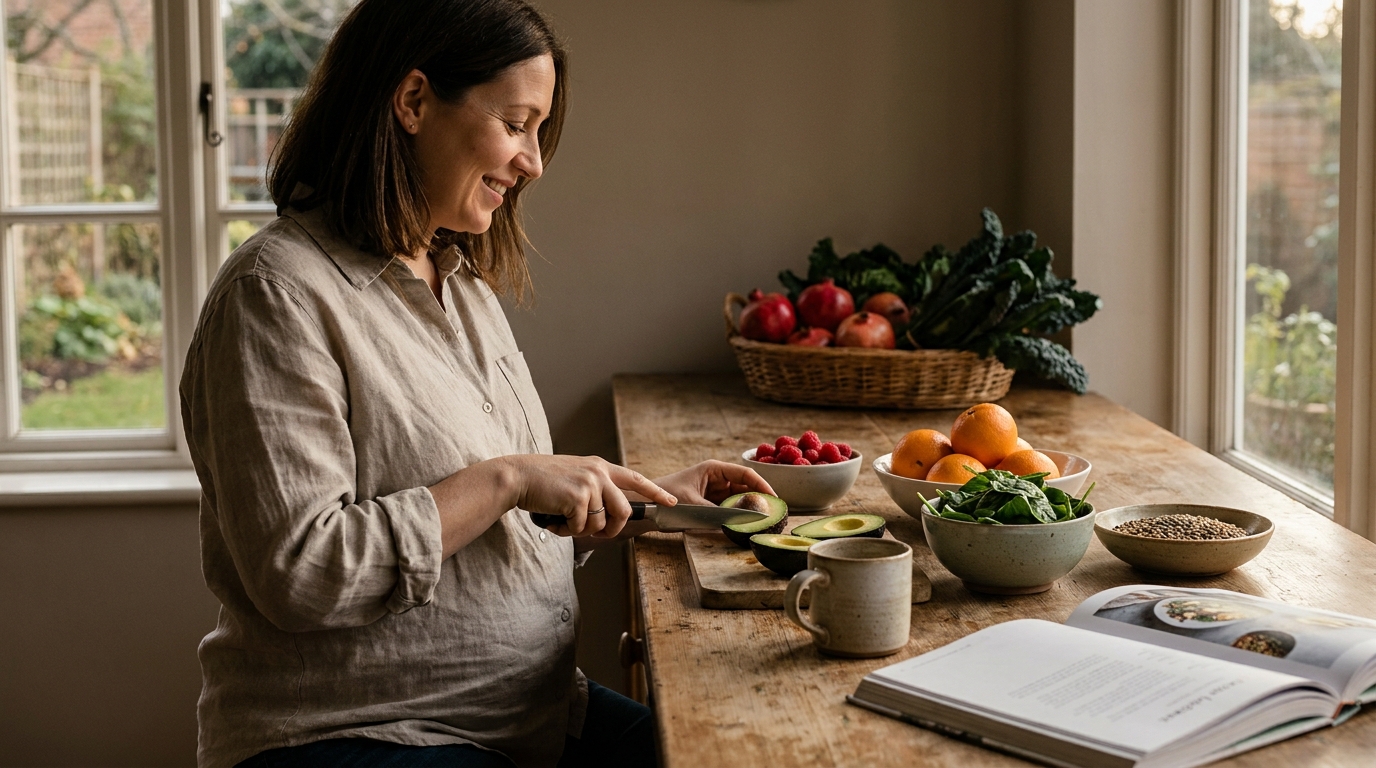
For folate, reach for oranges, avocado, and mango; a single orange delivers around 40mcg of folate, and the NHS names oranges specifically as a folate source. Fruit is not a strong iron source, but vitamin-C-rich fruit eaten alongside iron-rich meals helps your body absorb the iron — the NHS notes that vitamin C improves iron absorption from plant foods. So the smart move is pairing, not chasing iron in fruit itself.
Folate matters because it lowers the risk of neural tube defects, which is why ACOG recommends 400mcg of folic acid daily from supplements on top of food folate. Food can't fully replace the supplement here — think of folate-rich fruit as topping up a tank the pill already fills. In my first trimester I kept clementines in my coat pocket like emergency snacks; at week 9 I was peeling one on a freezing bus platform at 8am because it was the only thing that didn't turn my stomach. For the deeper list, see our guide to folate-rich foods in pregnancy.
Which fruits give the most vitamin C and immune support?
Kiwi, oranges, strawberries, and guava top the vitamin C list — one kiwi covers well over a day's vitamin C need on its own, and the NHS sets the adult vitamin C recommendation at 40mg a day. Vitamin C helps your body build the collagen that makes skin, cartilage, and blood vessels, and, as above, it unlocks iron from plant foods eaten in the same meal.
Berries are my personal MVP here: at week 14, when the nausea finally lifted, a bowl of cold strawberries and blueberries with plain yogurt was the first breakfast in months I genuinely wanted. Beyond vitamin C, berries bring fiber and antioxidants for very little sugar, which makes them an easy daily habit rather than a treat. Guava, if you can find it, is quietly the vitamin C champion — far higher per fruit than oranges, according to USDA FoodData Central.
Which fruits help with hydration and potassium?
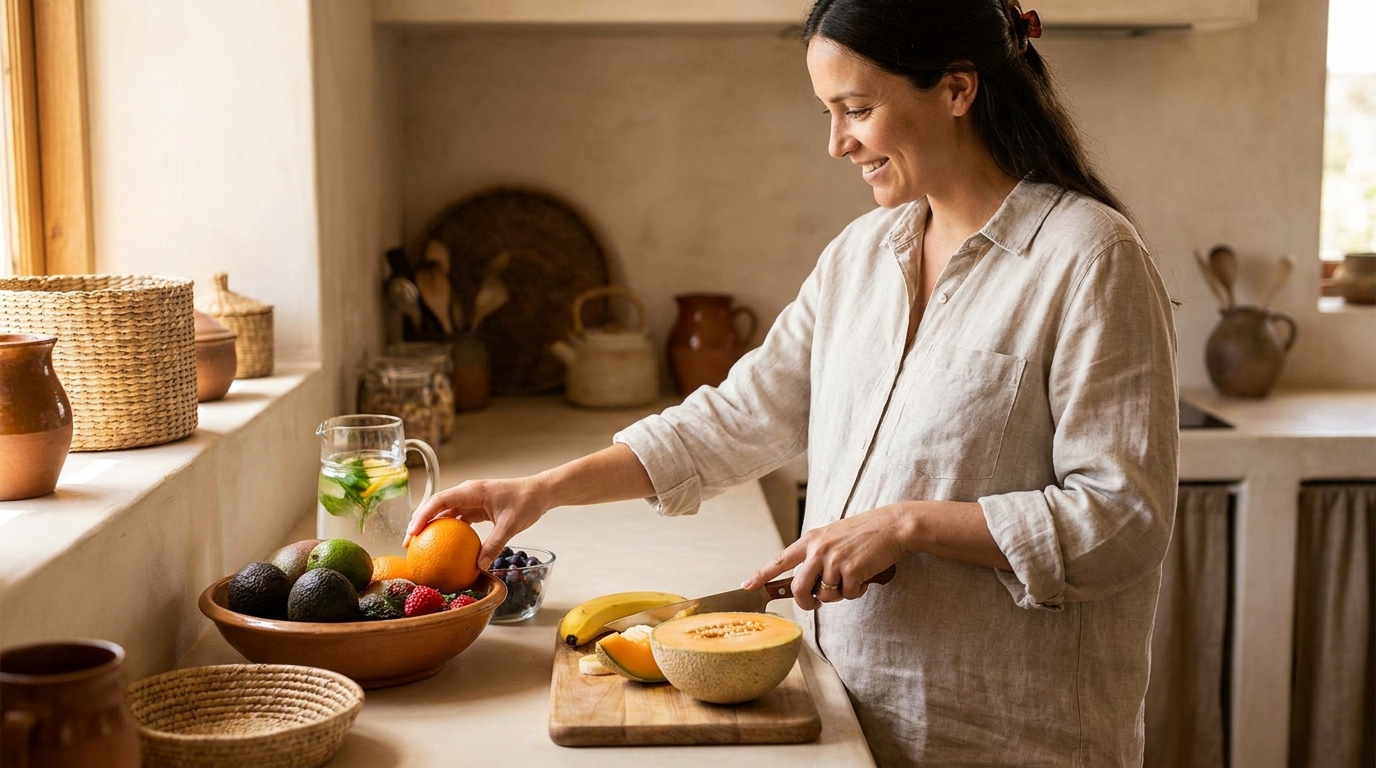
Watermelon, cantaloupe, oranges, and banana lead here — watermelon is roughly 92% water, per USDA FoodData Central, so it hydrates while it snacks. Banana is the classic potassium pick at around 420mg per medium fruit (USDA), and potassium helps balance the extra fluid your body carries in pregnancy and can ease the leg cramps that show up at night.
Hydration isn't a small thing while you're growing more blood volume. The EFSA sets total water intake for pregnant women at about 2.3 litres a day, and water-heavy fruit quietly contributes to that total alongside what you drink. During a July heatwave at week 22 I basically lived on chilled watermelon cubes — more details on fluids in our pregnancy hydration guide.
What are the serving sizes, and can too much fruit raise blood sugar?
A fruit portion is about 80g of fresh fruit, and the NHS counts a maximum of 150ml of fruit juice or smoothie as just one portion a day, no matter how much you drink — because juicing strips the fiber that slows sugar absorption. Whole fruit is the safer default: the fiber blunts the blood-sugar rise. Yes, fruit contains natural sugar, so large amounts can spike blood glucose, which matters if you have or are at risk of gestational diabetes.
| Fruit | Portion size | Vitamin C (mg) | Potassium (mg) | Folate (mcg) |
|---|---|---|---|---|
| Orange (1 medium) | ~130g | ~70mg | ~237mg | ~40mcg |
| Kiwi (2 small) | ~140g | ~130mg | ~430mg | ~35mcg |
| Strawberries (7 med) | ~100g | ~59mg | ~150mg | ~24mcg |
| Banana (1 medium) | ~120g | ~10mg | ~420mg | ~24mcg |
| Avocado (½ fruit) | ~100g | ~10mg | ~485mg | ~81mcg |
| Mango (¾ cup) | ~125g | ~46mg | ~210mg | ~54mcg |
| Watermelon (1 cup) | ~150g | ~12mg | ~170mg | ~5mcg |
If gestational diabetes is on your radar, pairing fruit with protein or fat (an apple with nut butter, berries with yogurt) softens the glucose curve. Our gestational-diabetes snack ideas go deeper on this.
Are there any fruits to avoid, and how should I wash them?
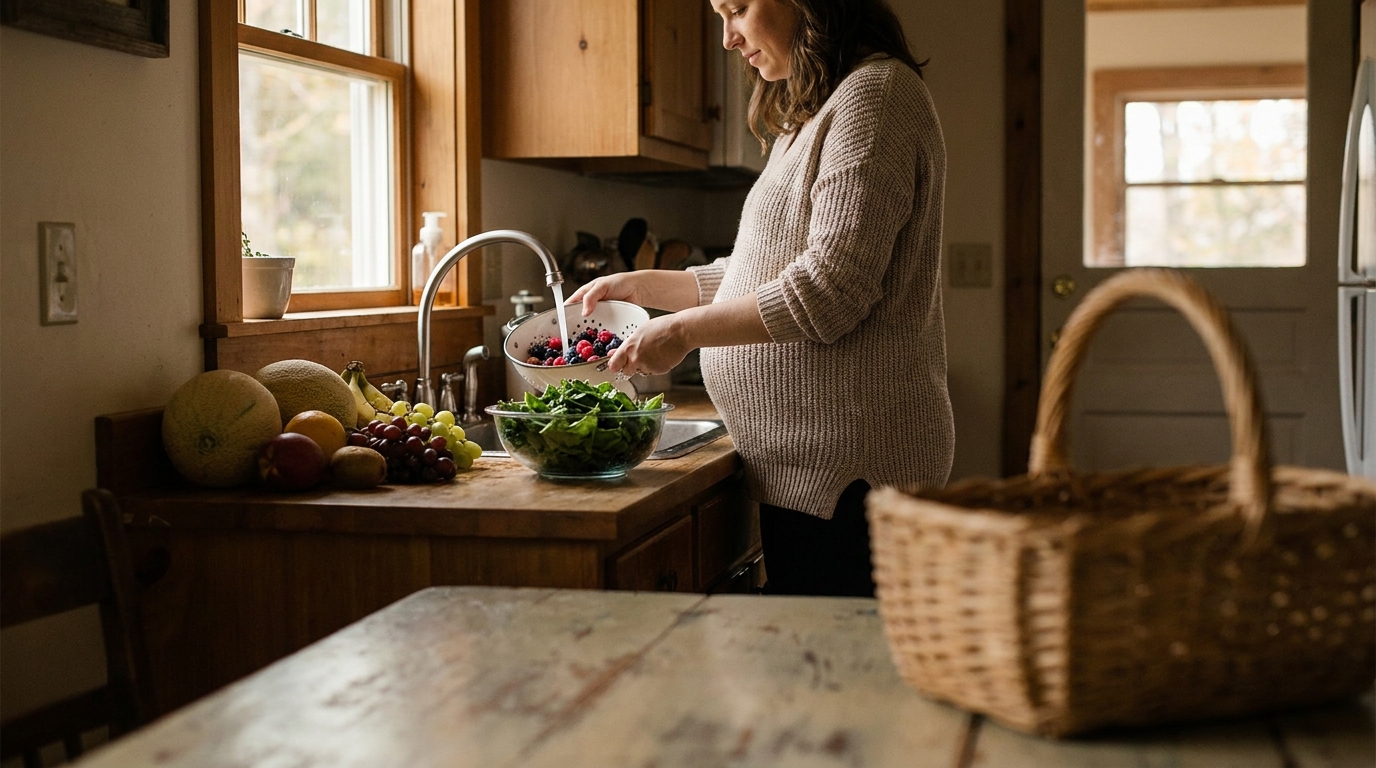
No fruit is universally banned in pregnancy, but washing is non-negotiable: the NHS advises washing all fruit and vegetables thoroughly to remove any soil that could carry toxoplasma or listeria. Rinse under running water even for produce you'll peel, since the knife can drag surface bacteria into the flesh. Unpasteurized fresh juices bought loose are best skipped for the same food-safety reason.
Beyond hygiene, the only real limit is moderation on the sugary, juice-form end — whole fruit in normal portions is genuinely encouraged. The CDC lists listeria among the foodborne infections pregnant women are more vulnerable to, which is exactly why that 30-second rinse earns its place. I keep a colander by the sink now; at week 30 it's the one kitchen habit that actually stuck.
Frequently Asked Questions
How much fruit should I eat per day when pregnant?
Aim for a share of the NHS's 5-a-day, where one fruit portion is about 80g — roughly a medium apple, a banana, or two small kiwis. Two to three fruit portions a day, with vegetables making up the rest, is a sensible target for most pregnancies. Whole fruit beats juice, since juice counts as only one portion daily regardless of amount.
Are there any fruits to avoid during pregnancy?
For most pregnancies, no fruit is off the table. The real cautions are washing everything thoroughly to avoid toxoplasma and listeria, per NHS guidance, and skipping loose unpasteurized fresh juices. If you have gestational diabetes, you don't avoid fruit but you do portion it and pair it with protein to steady blood sugar.
Which fruits are highest in folate and iron?
Avocado, mango, and oranges lead among fruits for folate, with avocado offering around 81mcg per half fruit (USDA). Fruit isn't a meaningful iron source, but vitamin-C-rich fruit eaten with iron-containing meals boosts iron absorption, which the NHS confirms. So pair citrus or kiwi with your iron foods rather than looking for iron in fruit itself.
Can too much fruit raise blood sugar in pregnancy?
Yes — fruit contains natural sugar, so large servings, and especially juice, can raise blood glucose. Whole fruit's fiber slows that rise, which is why the NHS caps juice at one portion daily. If you have gestational diabetes, keep to measured portions and combine fruit with protein or fat; your OB-GYN or midwife can help set your personal limits.
Which fruits are best for hydration in hot weather?
Watermelon and cantaloupe are the standouts, with watermelon around 92% water per USDA FoodData Central, followed by oranges and strawberries. They contribute to the roughly 2.3 litres of daily total water EFSA sets for pregnant women, though they supplement rather than replace actual drinks. Chilled melon cubes are an easy, low-effort way to sip through water on a stifling afternoon.