Is a gluten-free pregnancy diet actually safe?
Yes — a gluten-free diet is safe in pregnancy when it's medically needed, and the NHS confirms a well-planned one meets your nutritional needs. The catch isn't the missing gluten; it's the missing fortification. Standard wheat bread, pasta and cereal are enriched with folate and iron, and most gluten-free swaps quietly skip that step. The full nutrient-gap chart and fixes are in section three.
I spent my whole first trimester assuming "gluten-free" meant "healthier by default." It doesn't — it just means a different label to read.
Should I go gluten-free if I don't have celiac disease?
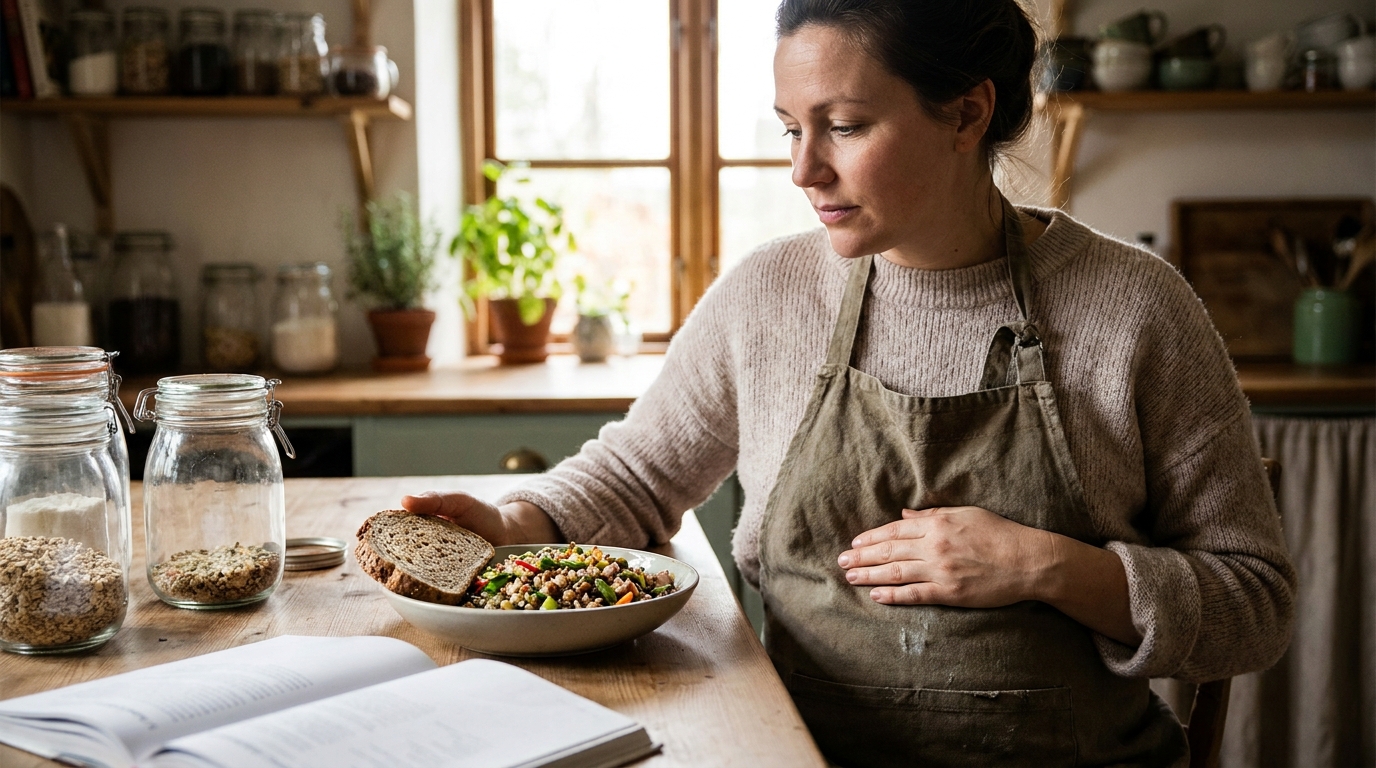
Only if you have a diagnosed reason. Celiac disease affects roughly 1 in 100 people according to the NIH, and for that group strict gluten avoidance is essential — but there's no evidence that cutting gluten helps an unaffected pregnancy, and doing it casually can cost you the fortified grains that carry folate and iron. The NHS advises testing for celiac disease before you remove gluten, because going gluten-free first can mask the diagnosis.
Three groups genuinely benefit from a gluten-free plan in pregnancy:
- Diagnosed celiac disease — an autoimmune condition where gluten damages the small intestine's lining (the bit that absorbs nutrients).
- Confirmed non-celiac gluten sensitivity, diagnosed after celiac disease has been ruled out.
- Diagnosed wheat allergy.
If you're gluten-free "just in case," talk to your OB or midwife first. In my case a cousin with celiac disease had me convinced I should copy her — my midwife gently pointed out I'd be dropping my most reliable folate source for no reason.
Why do gluten-free foods often lack pregnancy nutrients?
Because wheat flour is fortified by law in many countries, and rice or corn flour usually isn't. In the US, the FDA requires enriched wheat flour to add folic acid, iron, thiamin, niacin and riboflavin — the exact nutrients pregnancy demands more of. Swap to a gluten-free loaf and you often lose all five in one bite. This is the single biggest reason a gluten-free pregnancy needs planning, not panic.
Two numbers make it concrete. The NIH sets iron needs at 27 mg per day during pregnancy — nearly double the non-pregnant amount — and enriched wheat bread was doing quiet work toward that total. ACOG recommends 400 micrograms of folic acid daily around conception and early pregnancy, and fortified cereal grains are a major source in the general diet. Remove them without a plan and both targets get harder to hit.
The fix is not to fear gluten-free eating — it's to rebuild those nutrients from naturally gluten-free whole foods plus your prenatal supplement. Here's exactly what to reach for.
Which nutrients slip on a gluten-free diet — and what fixes each?
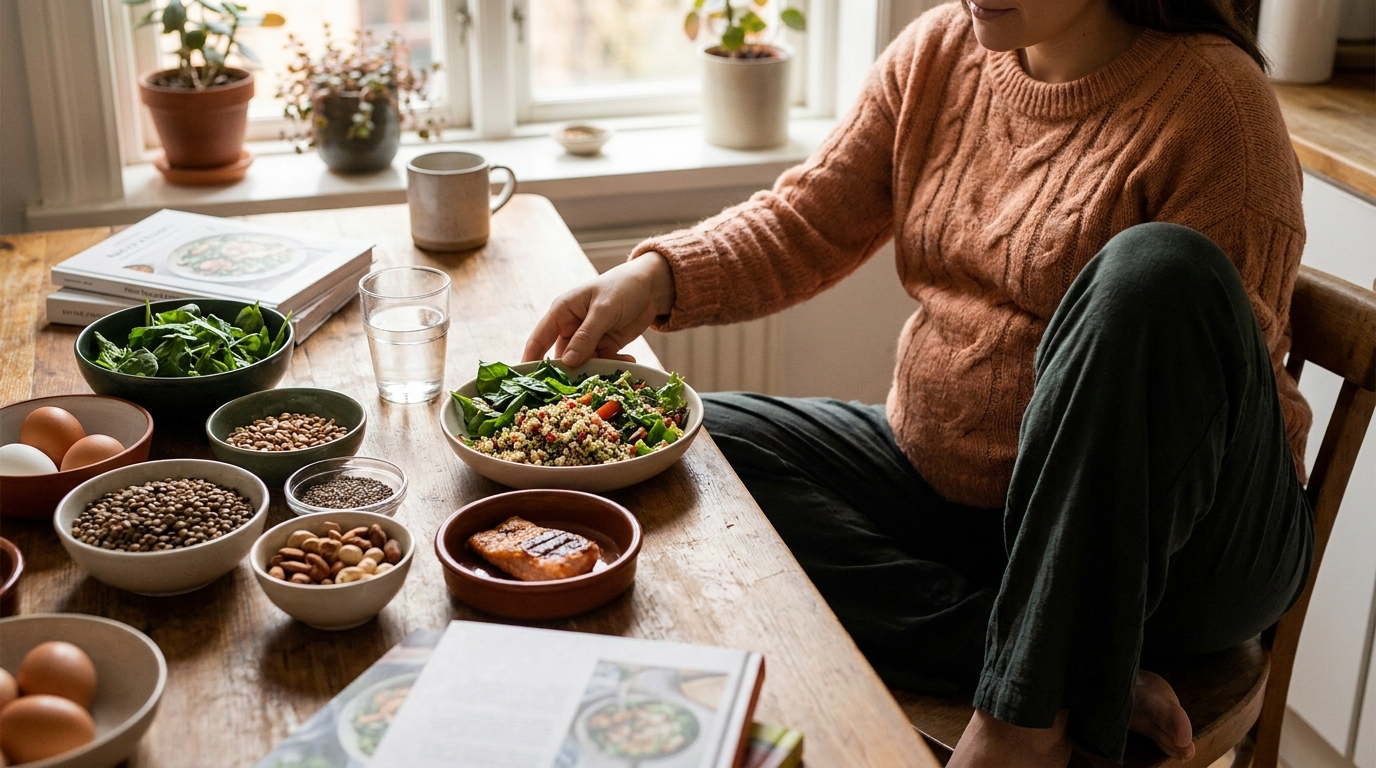
Four nutrients do most of the slipping: folate, iron, fiber and the B vitamins thiamin and niacin. Each one has a naturally gluten-free whole-food fix that carries real numbers, not vibes. Use the chart below as your shopping anchor, and lean on your prenatal supplement for the folic acid baseline your food can't guarantee.
| Nutrient at risk | Why GF foods fall short | Naturally GF fix (per serving) | Pregnancy target (authority) |
|---|---|---|---|
| Folate | GF flours skip the folic-acid enrichment added to wheat flour | 1 cup cooked lentils ≈ 358 mcg folate (USDA) | 400 mcg folic acid/day (ACOG) |
| Iron | No mandatory iron enrichment in most rice/corn flours | 1 cup cooked lentils ≈ 6.6 mg iron (USDA) | 27 mg/day (NIH) |
| Fiber | Refined GF starches (rice, tapioca) are low-fiber | 1 cup cooked quinoa ≈ 5 g fiber (USDA) | 25 g/day adequate intake (EFSA) |
| Thiamin (B1) | Removed with the enriched-wheat swap | 1 oz sunflower seeds ≈ 0.4 mg thiamin (USDA) | 1.4 mg/day in pregnancy (NIH) |
| Iodine | GF grains + low dairy days lower intake | 1 large egg ≈ 26 mcg iodine (USDA) | 250 mcg/day (EFSA) |
Notice lentils appear twice — one bowl of lentil soup covers a chunk of both your folate and iron gap, which is why they became my dinner default. Pair iron-rich foods with vitamin C (a squeeze of lemon, a handful of strawberries) to absorb more of it; there's a fuller breakdown in our iron pregnancy meals guide. For the folate-versus-folic-acid question that trips up so many of us, see folate vs folic acid.
What are safe gluten-free swaps for common pregnancy cravings?
Every classic first-trimester craving has a naturally gluten-free stand-in that keeps the nutrients in. The trick is choosing swaps built on whole grains and legumes rather than refined rice starch, so you're not trading gluten for a fiber and iron hole. Here are the swaps I actually rotated through the weeks I could barely look at food.
- Toast → corn tortilla or oat-based bread labelled gluten-free (oats must say "gluten-free" to avoid cross-contamination, per the NHS).
- Pasta → lentil or chickpea pasta — a legume base adds iron and fiber a rice-flour version won't.
- Cereal → gluten-free oats or plain buckwheat porridge (buckwheat is a seed, not wheat, and naturally gluten-free).
- Crackers → rice cakes topped with nut butter, or plain corn tortilla chips with hummus.
- Pizza night → a naturally GF base like polenta or a chickpea-flour socca.
Around week 9 the only thing I could stomach after 3pm was buttered gluten-free toast and a boiled egg — not glamorous, but the egg quietly added iodine and protein on a day nothing else stayed down. If protein is your struggle too, our high-protein pregnancy snacks list has more GF-friendly picks.
How do I manage celiac disease safely during pregnancy?
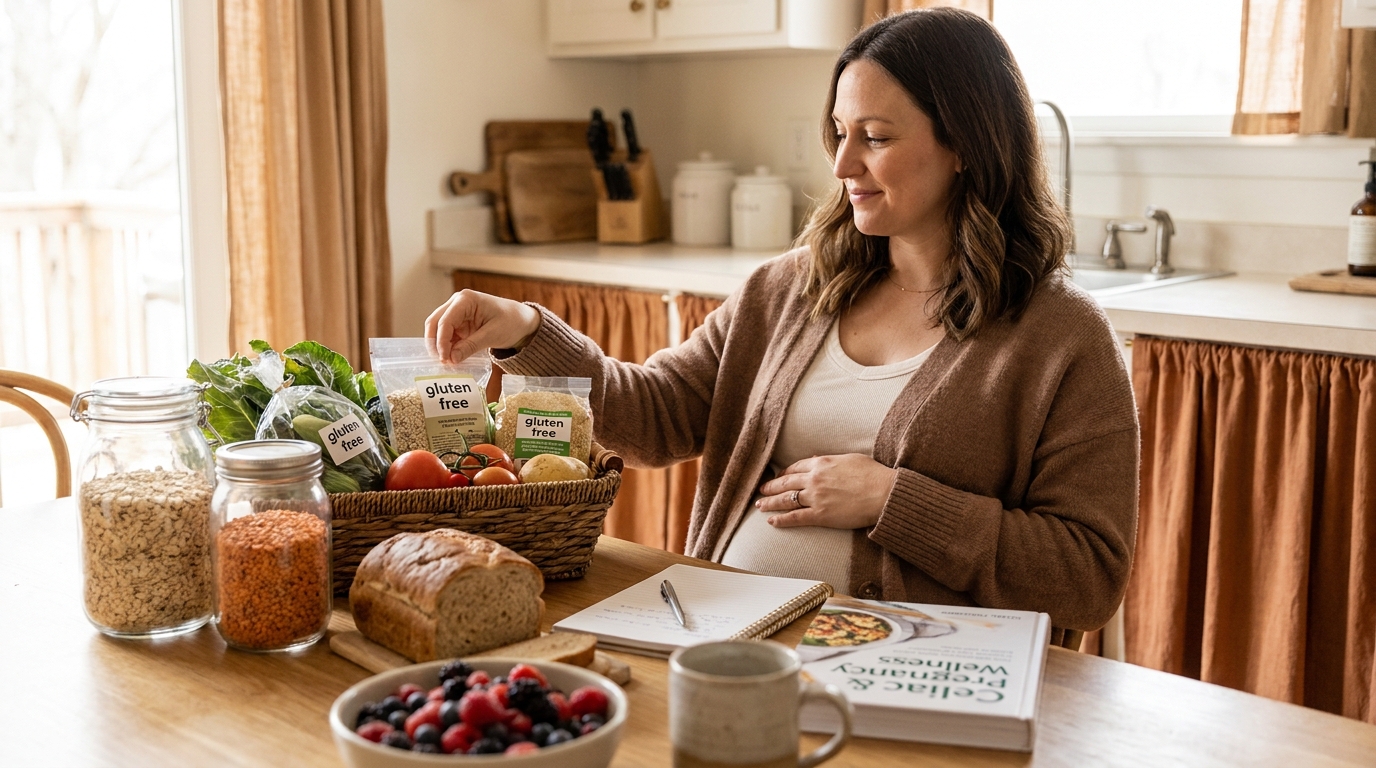
For celiac disease, the non-negotiable is zero gluten plus zero cross-contamination — and a dietitian on your team. Well-controlled celiac disease supports a healthy pregnancy, but untreated or newly-diagnosed disease is linked to higher risks, which is why the NHS routes celiac patients to a registered dietitian rather than leaving it to guesswork. Pregnancy is the moment to tighten the plan, not relax it.
Cross-contamination is where good intentions leak: a shared toaster, a wooden spoon used for regular pasta, flour dust on a bakery counter, oats processed alongside wheat. A trace of gluten still damages the celiac gut lining, which then absorbs less of the iron and folate your baby needs. Practical guardrails:
- Keep a dedicated toaster (or toaster bags) and separate condiment jars to avoid crumb transfer.
- Choose oats and grains explicitly labelled gluten-free — plain "oats" are often processed with wheat.
- Ask your OB or midwife to check ferritin (iron stores) and folate, since celiac disease raises the odds of deficiency even on a strict diet.
- Loop in a registered dietitian early — the NHS specifically recommends dietitian support for celiac disease in pregnancy.
This is guidance to make the authorities readable, not personal medical care — your dietitian tailors the numbers to you.
What does a balanced gluten-free pregnancy day look like?
A solid gluten-free pregnancy day stacks naturally GF whole foods so folate, iron, fiber and iodine land without a single fortified wheat product — plus your prenatal supplement covering the folic-acid baseline ACOG recommends. Here's a real, un-fancy template you can shuffle around nausea.
- Breakfast: gluten-free oat porridge with berries and a spoon of ground seeds — fiber toward the EFSA 25 g/day adequate intake, plus a vitamin-C hit from the fruit.
- Lunch: quinoa bowl with chickpeas, spinach and lemon — iron plus the vitamin C that helps you absorb it.
- Snack: rice cakes with nut butter, or a boiled egg for iodine.
- Dinner: lentil soup (one bowl covers a real slice of the NIH 27 mg/day iron and folate goals) with a side salad.
- Daily: your prenatal with 400 micrograms folic acid, which the NHS advises taking until at least week 12.
On the days nausea wins, a boiled egg and a rice cake still count. Progress over polish — that was the whole ethos of my second trimester.
Frequently Asked Questions
Is a gluten-free diet safe during pregnancy?
Yes, when it's medically needed. The NHS confirms a well-planned gluten-free diet meets nutritional needs in pregnancy. The one thing to manage is fortification: standard wheat products are enriched with folate and iron, and most gluten-free versions aren't, so you rebuild those nutrients from naturally gluten-free whole foods like lentils, quinoa and eggs, plus your prenatal supplement.
Should I go gluten-free if I don't have celiac disease?
There's no evidence it benefits a pregnancy without a diagnosed reason such as celiac disease, gluten sensitivity or wheat allergy. Celiac disease affects around 1 in 100 people per the NIH, and testing should happen before you cut gluten — going gluten-free first can hide the diagnosis. Removing fortified grains casually just makes hitting folate and iron targets harder.
How do I get enough folate on a gluten-free diet?
Lean on your prenatal for the 400 micrograms of folic acid ACOG recommends, then stack naturally gluten-free folate foods: one cup of cooked lentils delivers about 358 mcg (USDA), and leafy greens, chickpeas and asparagus add more. Since gluten-free flours skip the folic-acid enrichment added to wheat, the supplement plus these whole foods does the work your bread used to.
What are good naturally gluten-free pregnancy foods?
Build meals from foods that were never near wheat: lentils, chickpeas and beans (iron and folate), quinoa and buckwheat (fiber), eggs (iodine and protein), rice, potatoes, fruit, vegetables, nuts and seeds. These carry the nutrients fortified wheat products used to supply, without any cross-contamination worry — the backbone of a well-planned gluten-free pregnancy.